
Dubai Holiday-Home Operator Silkhaus Shuts Down as Regional War Empties Skies
After five years in the Gulf holiday-home market, Silkhaus announced its closure citing sustained U.S.-Iran conflict and crushed international travel arrivals.
When a high-flying short-term rental operator in one of the premier tourism hubs in the world abruptly calls it quits, the entire industry takes notice. Dubai holiday-home company Silkhaus announced on LinkedIn that it will permanently cease operations at the end of November 2026, ending a five-year run managing residential units across the United Arab Emirates. The company directly attributed its shutdown to the ongoing U.S.-Iran war, which broke out in late February 2026 and continues to choke off international passenger traffic into the Gulf Cooperation Council region.
The collapse of Silkhaus marks a stark turning point for the Middle Eastern short-term rental market. For half a decade, regional operators scaled rapidly by acquiring leasehold inventory across Dubai towers, relying on an uninterrupted flow of long-haul European, Asian, and regional travelers. But when geopolitical conflict closed flight paths, raised insurance costs, and forced international air carriers to extend flight suspensions out of Dubai deep into 2027, the underlying financial math of master-leased holiday homes disintegrated within months.
This is not an isolated stumble by a single boutique firm. It is the first major corporate exit in what travel industry analysts warn will be a broader wave of liquidations among Gulf short-term rental companies. When international air corridors close, dynamic pricing software cannot fix a complete absence of inbound tourists, and fixed monthly lease commitments to building owners transform from growth engines into fatal balance-sheet liabilities.
What happened
In an official post published on LinkedIn on Friday, Silkhaus confirmed that its five-year venture in the UAE holiday-home market will conclude at the end of November 2026. According to the public announcement, the operation came to a close following sustained regional conflict and its compounding effect on travel across the GCC, which continues to impact all segments of tourism and hospitality.

The operational crisis began when military conflict between the United States and Iran erupted in late February 2026. The outbreak immediately disrupted commercial flight paths across Middle Eastern airspace, forcing international airlines to re-route or drop flights into major Gulf hubs. Skift reporter Deepthi Nair reported that several international airlines have decided to stay out of Dubai clear into 2027, severing the long-haul tourist pipeline that fills urban holiday rentals.
The timing of the conflict delivered a double blow to local rental operators. The initial shock of the March and April travel disruption emptied residential units during what is historically a high-margin spring travel window. While operators absorbed immediate losses in hopes of a standard winter recovery, forward bookings for late 2026 remained far below prior-year benchmarks. Skift noted that this winter peak season is unlikely to rescue smaller holiday-home operators, with industry watchers expecting more corporate exits across the region.
By deciding to wind down operations at the end of November 2026, Silkhaus chose to stop ongoing capital loss rather than burn cash through a second consecutive winter season without international guest arrivals. The company exit shows how quickly geopolitical conflict can dismantle short-term rental models that depend on fixed landlord overhead and continuous long-haul flight schedules.
The master lease trap in desert hubs
To understand why Silkhaus folded while traditional real estate survived, one must look at how property management contracts are structured in high-growth tourism hubs. Short-term rental companies generally expand using two distinct approaches: property management contracts based on revenue share, or master leases where the operator pays guaranteed fixed rent directly to building owners. In rapidly expanding real estate markets, master leases are the weapon of choice for fast-growing venture-backed management firms.
Under a standard master lease, the short-term rental operator guarantees the property owner a fixed annual rent, paid in quarterly or semi-annual installments, regardless of whether the apartment sits empty or full. When international travel flourishes and nightly rental rates spike during high season, master leases yield high profits. The operator offered property owners a choice between a revenue share and a fixed lease rent, allowing it to turn high occupancy into strong cash flow.
The fatal flaw of the master lease model is its total lack of downside protection. When inbound visitor volume drops to zero, the fixed rent obligations to property owners remain completely unchanged. Unlike a hotel owner who can scale down staff or a revenue-share property manager whose fee simply drops in tandem with gross bookings, a master-lease operator remains legally bound to pay full rent on dozens or hundreds of empty apartments every month.
When long-haul flights into Dubai were cut following the outbreak of conflict in late February 2026, operators carrying large portfolios of master-leased units were caught in a liquidity squeeze. Monthly rental collections from guests collapsed overnight, while quarter-end lease checks to private property owners and corporate real estate developers remained strictly due. Without massive cash reserves to subsidize empty units for over a year, the master lease model becomes a countdown to insolvency.
When international flight corridors collapse
Short-term rental markets fall into two fundamental categories: drive-to leisure markets and international flight hubs. Drive-to markets like the Florida coast, the Great Smoky Mountains, or the French countryside possess natural demand cushions. If an international shock hits, regional road-trippers and domestic travelers frequently fill the gap, adjusting for lower nightly rates but keeping baseline occupancy alive.
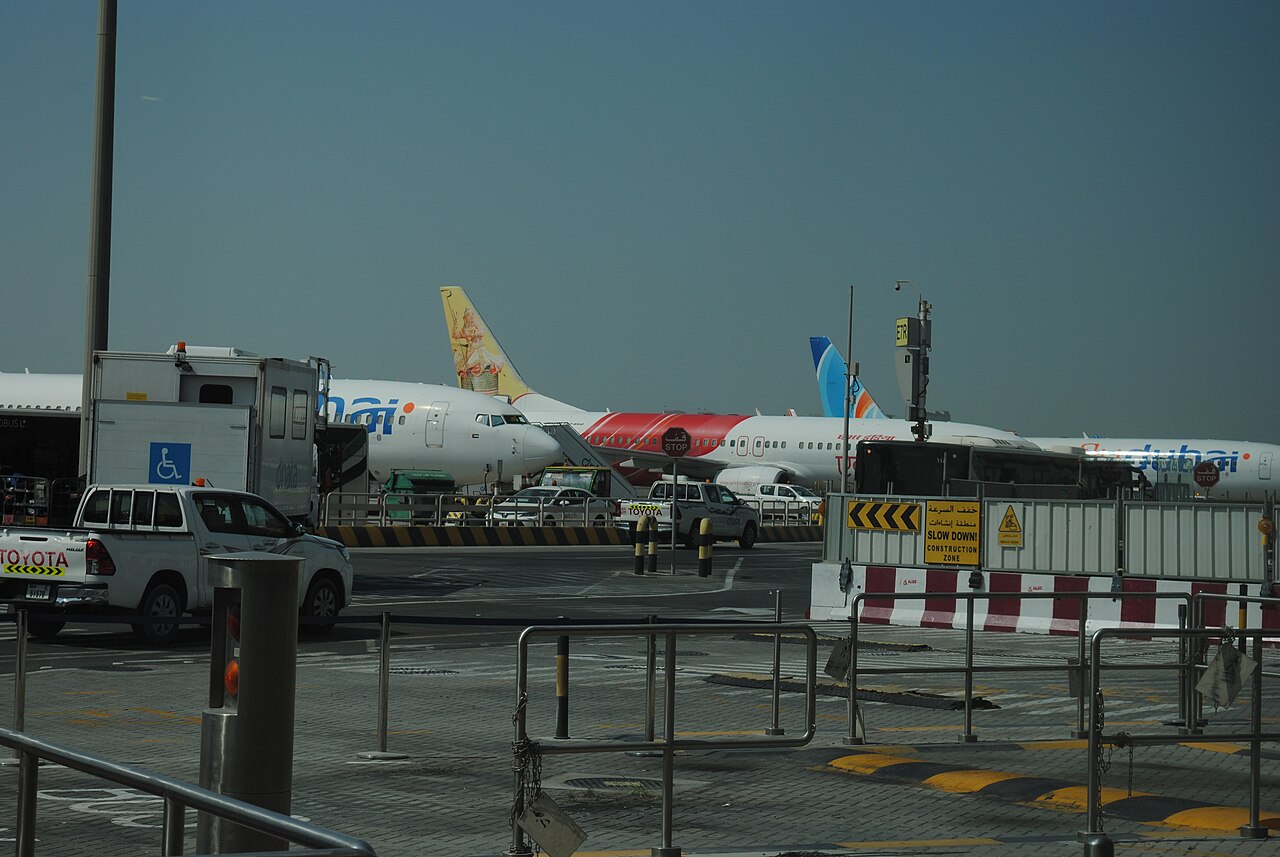
International aviation hubs enjoy no such safety net. Markets in the Gulf rely almost entirely on long-haul airline passenger traffic to sustain local tourism and corporate travel demand. When regional airspace closures force global airlines to suspend flights into 2027, the domestic population alone cannot absorb thousands of vacant short-term rental units. A city built on global transit cannot replace missing transcontinental passengers with local weekend staycations.
The current disruption highlights how vulnerable short-term rental inventory is to geopolitical flight suspensions. When major long-haul carriers cut route frequencies, airfares jump for remaining seats, flight times lengthen due to altered flight corridors, and corporate travel budgets are reallocated away from affected zones. The guest funnel does not merely slow down; for specific feeder markets, it dries up entirely.
For Silkhaus and similar short-term rental companies, the long-term nature of airline schedule cuts killed any realistic prospect of a quick operational turnaround. Skift reported that key international carriers have already pulled scheduled flights out of Dubai into 2027. When global airlines signal that normal flight operations will not resume for at least another year, property managers running high-overhead operations face a mathematical wall that no short-term marketing campaign can overcome.
The winter peak that never arrived
In the hospitality cycle of the Middle East, winter is everything. From November through April, pleasant weather drives massive international tourism, trade shows, and leisure travel across the United Arab Emirates. Short-term rental operators generate the vast majority of their annual operating profit during these six months, using winter earnings to build cash reserves that carry their businesses through the quiet summer heat.
The outbreak of the U.S.-Iran war in late February 2026 shattered this annual cash-generation cycle mid-stride. Operators were forced to absorb cancellations and refunds during March and April, cutting short what should have been their highest-earning spring period. Instead of exiting the winter season with strong cash reserves, operators entered the low summer season already drained of working capital.
Most operators chose to endure the slow summer months of 2026 by cutting variable expenses, deferring non-essential maintenance, and negotiating temporary payment extensions with property owners. The universal strategy was to hold out for the return of international travelers in November 2026, relying on winter peak bookings to replenish depleted bank balances and restore financial health.
That calculation failed when forward booking data for late 2026 revealed that international travelers were choosing alternative global destinations. With flight availability restricted and regional security concerns lingering, forward bookings for the 2026–2027 winter season remained well below historical averages. Realizing that the upcoming winter peak would not generate enough cash to cover accumulated debt and ongoing lease obligations, Silkhaus made the calculated decision to end operations at the end of November 2026.
When international air corridors close, dynamic pricing software cannot fix a complete absence of inbound tourists.
Who cashes in and who eats the loss
The closure of an established holiday-home operator creates immediate financial ripples across the real estate landscape, redistributing risk and value among owners, competitors, and service providers. The biggest losers in the shutdown of Silkhaus are the venture equity investors who funded the expansion, alongside private property owners who now face vacant apartments and broken master-lease contracts mid-season.
Individual apartment owners who leased their properties to Silkhaus under multi-year master contracts must now take back direct operational responsibility. These landlords must decide whether to hand their properties to alternative managers on lower-yielding revenue-share arrangements, attempt to self-manage through direct OTA listings, or exit the short-term market entirely by converting units back into conventional annual residential leases.
Conversely, traditional long-term residential landlords and traditional leasing brokerages stand to gain. As distressed short-term rental operators exit the market, hundreds of fully furnished, high-spec residential apartments are being pulled from vacation listing sites and pushed into the long-term rental pool. This sudden influx of furnished annual inventory gives corporate transferees and local residents expanded choices and stronger bargaining power on long-term rental rates.
Competitors operating strictly on third-party revenue-share models also stand to benefit over the long run. Management firms that charge property owners a percentage fee of gross booking revenue—rather than guaranteeing fixed monthly rent—have successfully insulated themselves from catastrophic downside risk. As master-lease competitors fold, these revenue-share operators can acquire prime inventory without taking on fixed debt, positioning themselves to capture market share when travel volumes eventually recover.
The broader wave of GCC rental exits
The shutdown of Silkhaus is widely viewed across the travel sector as an early indicator of wider consolidation. As Skift noted in its reporting, winter peak season performance is unlikely to rescue smaller holiday-home operators across the UAE, making further company exits highly probable throughout late 2026 and early 2027.
Across Dubai and Abu Dhabi, dozens of small-to-medium short-term rental companies expanded aggressively between 2021 and 2025, taking on master leases at peak rental valuations. Many of these firms operated on thin working capital margins, relying on high seasonal turn rates to cover monthly operational burn. With international visitor numbers depressed across the wider GCC, many of these smaller operators are running out of runway.
This wave of pressure is also forcing a fundamental reassessment of short-term rental underwriting across regional financial markets. Real estate investors who once viewed master-leased holiday homes as guaranteed passive income are discovering that tenant default risk is directly tied to global geopolitical stability. As master-tenant companies fail to meet lease commitments, property owners are rapidly losing confidence in fixed-rent arbitrage models.
The structural shift will permanently alter how short-term rental contracts are drafted in the Middle East. Moving forward, individual apartment owners and real estate investment trusts will demand higher financial guarantees, larger security deposits, and stricter force majeure clauses before handing unit keys to third-party operators. The era of unchecked master-lease expansion built on cheap credit and uninterrupted international tourism has come to a decisive end.
What hosts should do now
If you operate short-term rentals in markets heavily dependent on international flight connectivity or master-lease contracts, take proactive steps immediately to protect your cash flow and portfolio security.
- Convert fixed-rent master leases to revenue-share contracts during your next negotiation cycle to eliminate downside default risk during low-demand periods.
- Audit your guest demand sources to determine what percentage of your bookings depend on long-haul air travel versus regional or domestic drive-to traffic.
- Maintain a dedicated cash reserve equal to at least six months of fixed operating overhead to absorb sudden geopolitical or aviation disruptions.
- Establish clear force majeure and disruption clauses in landlord master leases that allow rent reductions or contract pauses if international air travel is suspended.
- Prepare a rapid pivot strategy to convert short-term listings into medium-term executive lets or annual residential leases if occupancy falls below break-even thresholds.
Geopolitical turbulence and flight suspensions can rewrite market fundamentals overnight. Operators who build flexibility into their contract structures and capital reserves will survive regional shocks, while those bound to rigid master leases will be forced out of the market long before international guests return.
Checked by the standards desk (Eleanor Quist): 25 specifics checked, 21 traced to the source material and the sources added below, 3 general background, 1 corrected to what a public source says, none removed.
Sources
- Skift - reported October 30, 2026.
- Skift - Dubai Holiday-Home Operator Silkhaus Shuts Down.
- thenationalnews.com - Middle East flights: KLM, Singapore Airlines and Air France extend suspensions | The National.
- ainonline.com - Iran War Continues To Weigh on Gulf Business Jet Traffic | Aviation International News.
- en.wikipedia.org - 2026 Iran war - Wikipedia.
Read and analysed by the Stay Gazette desk.
Report an error in this story · Corrections policy and log




Read the desk every morning.
The day's crackdowns and platform moves, the money, the design and the stays going viral, plus the desk's verdict, in one short email every morning.
Comments