Amazon Demands end to AI Moratoriums as Utility Bills Threaten Host Margins
AWS chief Matt Garman blasts municipal freezes on server hubs, but surging electricity demands and water strain are already clashing with short-term rental operations.
When a tech titan starts lecturing small-town planning boards about national security, you know the corporate lobby is losing the room. Amazon Web Services executive Matt Garman took to the keyboard to publish a 3,000-word manifesto demanding that American municipalities stop slamming the brakes on massive artificial intelligence data centers. He framed local pushback as an existential risk to national security, invoked the post-World War II highway system, and accused critics of swallowing foreign disinformation.
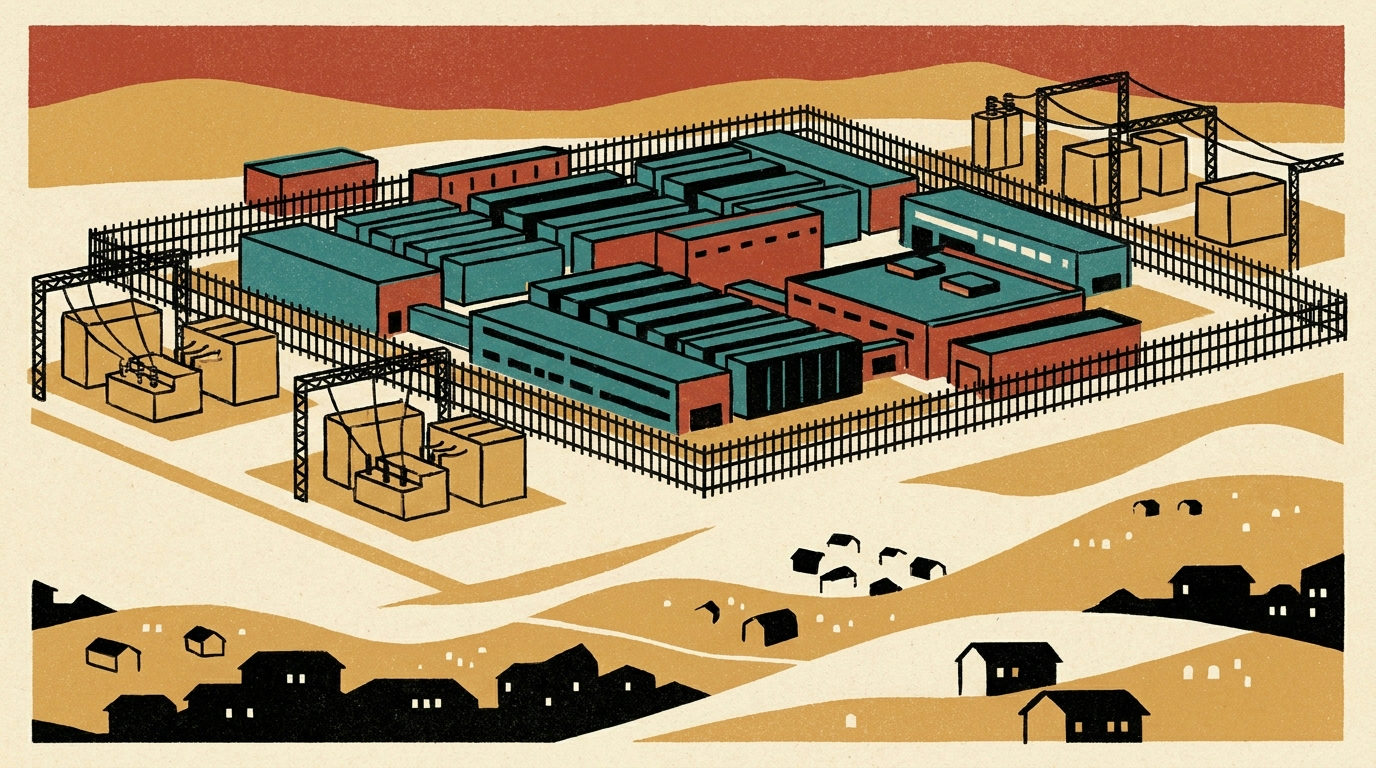
For anyone running a hospitality business in secondary and rural markets, that panicked corporate essay should ring alarm bells. The explosive buildout of energy-hungry server complexes is no longer just a headline for silicon valley watchers or utility analysts. It is an immediate infrastructure war over land, power grids, and water tables—the exact resources that determine whether a short-term rental property turns a clean margin or drowns under escalating utility bills and municipal restrictions.
When hyperscale technology companies consume localized electrical capacity, utility companies raise rates across the board. When county commissioners watch power grids wobble, they pass emergency development freezes that hit every land buyer in the jurisdiction. The fight over data centers is shifting the underlying cost structure of real estate, and hosts are sitting right in the splash zone.
What happened
Amazon Web Services Chief Executive Matt Garman released an extended public statement addressing what he characterized as dangerous opposition to computer infrastructure across the United States. According to reporting by Futurism, Garman pleaded directly with local communities to stop enacting bans and construction pauses on massive facilities designed to train and run artificial intelligence models.
Garman argued that the nation cannot afford to lose the global competitive race in technology, drawing an explicit parallel between current computing projects and the post-World War II federal highway system. In his post, he alleged that media outlets are spreading misinformation and outright lies regarding environmental damage and grid instability. Garman went further, alleging that foreign adversaries are intentionally seeding false reports inside American civic circles to trick local officials into slowing industrial approvals.
According to Garman, local leadership across the country is currently evaluating over 100 data center moratoriums. He asserted that passing such restrictions amounts to writing a losing ticket for American economic strength. In an effort to counter public pushback, Garman announced a brand initiative labeled Built Together, aimed at improving relations with host towns.
The public, however, remains unconvinced. A Wall Street Journal poll revealed that 62 percent of Americans favor a national pause on constructing AI data centers, with 40 percent identifying the issue as a top priority. Analysts cited in financial media have warned that unbridled data facility capital expenditures could represent a $6 trillion time bomb if energy infrastructure fails to keep pace.
Environmental disclosures continue to undercut corporate messaging. Last year, internal Amazon records leaked showing corporate discussions about managing public awareness regarding the true extent of water volume consumed by server cooling loops. Furthermore, reporting from Axios revealed that Amazon's expansion in computing facilities triggered a sharp jump in overall greenhouse emissions, putting pressure on its public commitment to hit a net-zero carbon footprint by 2040. In Texas, regulatory filings show that dozens of computing hubs bypass grid limits by running industrial backup diesel generators through policy loopholes, driving local pollution upward.
The utility bill squeeze on host margins
Every short-term rental operator knows that utility expenses represent one of the few flexible line items capable of destroying monthly profitability. Unlike long-term leases where tenants pay their own electric and gas charges, hospitality management requires heating, cooling, hot tubs, exterior lighting, and high-speed connections to be provided unconditionally. When industrial server operations drop into a regional energy market, electric rates do not stay flat.
Data centers require round-the-clock baseload electricity measuring in hundreds of megawatts—enough to power entire mid-sized cities. When regional power grids struggle to match that concentrated load, utility providers turn to expensive peaking generation and capital-intensive transmission builds. Regulators consistently allow utility firms to spread those multi-billion-dollar upgrades across the broader ratepayer base. That means every host operating central air conditioning or electric water heating subsidizes the power bills of corporate server racks.
In drive-to vacation corridors across the Sunbelt and Mountain West, hosts are already reporting sharp percentage increases in monthly power bills compared to previous years. When fixed operational overhead jumps by double digits while average daily rates remain constrained by guest price sensitivity, net profit contracts immediately. An extra three hundred dollars a month in utility charges across a portfolio of five cabins strips out thousands in annual owner distributions.
Furthermore, power grid fragility manifests directly in guest reviews. When localized heat waves clash with heavy industrial energy draw, brownouts and voltage sags follow. A guest arriving at a mountain chalet only to find a tripped HVAC system or an unheated pool does not leave a four-star review or care about regional power transmission challenges. They demand immediate refunds.
The moratorium contagion from servers to short-term rentals
When a municipal council decides to pass a building moratorium, it rarely stops at a single industry. The surge of over 100 data center moratoriums noted by Amazon reflects a broader civic panic over land use, housing density, and infrastructure strain. Town halls across America are relearning the mechanics of emergency zoning bans—the exact legal mechanism previously honed during the anti-STR regulatory push.
Municipalities facing rapid industrial buildouts often institute blanket freezes on commercial utility hookups, septic permits, and land divisions while local boards rework their comprehensive master plans. A temporary ban intended to stall an AI complex often catches eco-resorts, tiny home developments, glamping projects, and short-term rental additions in the same regulatory net. Planning staff overburdened by multi-gigawatt power applications simply stop processing minor conditional use permits altogether.
There is also an administrative spillover effect. When rural county commissions spend their entire monthly legislative session debating water rights, sub-station set-backs, and sound attenuation for massive server sheds, other business grinds to a halt. Property management firms seeking routine zoning variances, accessory dwelling unit approvals, or short-term rental permit renewals find themselves stuck in year-long administrative backlogs.
The anti-development political consensus currently hardening around data centers creates a tough environment for all non-traditional lodging investments. Citizens showing up to town hall meetings with clipboards and red signs to block industrial computer hubs quickly turn their attention to short-term rental concentrations in the next agenda item. Panic over limited civic capacity feeds anti-growth policies across the board.
Water tables and rural hospitality assets
The environmental friction highlighted by Garman's essay extends deep into local hydrology. Server farms generate staggering amounts of heat, and traditional cooling designs rely on evaporative water systems that draw millions of gallons daily from local aquifers. Internal Amazon documents referenced in press reports acknowledge the sensitivity surrounding total water consumption metrics.
For hosts operating boutique desert stays, cabin compounds, or rural glamping sites, water security is an existential requirement. Rural short-term rentals frequently rely on private wells or small community water systems. When an industrial computer installation drops multiple wells into the same regional aquifer, water table drawdowns can cause shallow residential and commercial wells to run dry or experience severe pressure losses.
Lowering a deep well or trucking in potable water adds thousands of dollars in unrecoverable capital expenses. In arid regions of Arizona, Texas, and Oregon, local water authorities have begun placing strict volume caps on commercial connections. A short-term rental featuring high-water amenities like hot tubs, outdoor soaking tubs, or extensive landscaping suddenly faces steep penalty surcharges or outright usage restrictions.
The issue worsens when tech firms resort to off-grid power solutions to keep systems running during grid shortfalls. The discovery that dozens of data sites in Texas rely on backup diesel generators highlights the regulatory double standard. While local code enforcement officers cite short-term rental hosts for minor trash storage or outdoor fire pit infractions, industrial neighbors operate heavy combustion machinery under temporary emergency waivers.
The empty promise of economic windfalls
A core argument in corporate PR campaigns—including Amazon's new Built Together program—is that massive technology infrastructure brings permanent economic prosperity to rural counties. Garman highlighted the creation of thousands of construction jobs as a reason for towns to grant quick approvals. Yet economic analysis demonstrates that once the concrete pours end and the fiber lines are spliced, the ongoing employment footprint drops off a cliff.
A hundred-acre server complex typically employs only a few dozen permanent site technicians, security guards, and maintenance contractors. Unlike traditional manufacturing plants or hospitality developments, data hubs do not bring a sustained influx of paid workers who frequent local main streets, rent long-term housing, or spend money at local restaurants and shops. They occupy vast acreage while contributing minimal foot traffic to the local micro-economy.
For short-term rental operators, this dynamic yields zero direct booking demand. Unlike regional hospitals, universities, corporate headquarters, or tourist attractions that generate steady corporate and leisure travel, a data center is an economic ghost town. It consumes land that could otherwise support retail, housing, or outdoor recreation assets that actually drive tourism and night stays.
When local school districts and county budgets grant tax abatements to lure these tech complexes, the long-term tax base fails to materialise as advertised. The local municipality is left with stressed roads, depleted water reserves, and higher power infrastructure debt, forcing local leadership to look for new revenue sources. All too often, those local leaders turn to short-term rental lodging taxes, elevated commercial property tax rates, and aggressive host registration fees to cover the shortfall.
Corporate blame games and civic trust
Rather than addressing the fundamental physical constraints of power plants and water basins, top corporate leadership has opted to criticize local civic opposition. Garman’s 3,000-word post labeled media coverage misleading and asserted that foreign adversaries were orchestrating opposition campaigns inside local community meetings. That position demonstrates a disconnect from the real concerns of local landowners and business owners.
When corporate leaders dismiss localized concerns over electric grid reliability, rising water costs, and environmental degradation as foreign psy-ops or fake news, they erode public trust further. Everyday property owners do not need a foreign campaign to tell them that their monthly power bill jumped twenty percent or that the local stream running through their town hit historic low flows after an industrial park opened.
“If these measures are enacted, the US could be writing its own losing ticket to this race, and the consequences would last generations.”
By framing local zoning decisions as an all-or-nothing struggle for national survival, corporate tech executives are attempting to override local municipal authority. For the short-term rental industry, which has spent a decade fighting state and municipal preemption battles over land-use rights, this playbook is intimately familiar. When big capital fails to win over local communities through standard planning processes, it attempts to force top-down mandates from state legislatures or federal agencies.
If tech firms successfully secure federal preemption to override local zoning controls for computing sites, it establishes a precedent that threatens municipal authority over real estate development across the board. Land-use decisions belong at the local level, where the people who live with the physical consequences actually have a voice.
When hyperscale technology companies consume localized electrical capacity, utility companies raise rates across the board, leaving hosts to absorb the cost.
How tech expansion alters real estate valuation
The structural push for server space is quietly reshaping real estate land values in non-metropolitan markets. Tech land acquirers backstopped by cash-rich balance sheets are purchasing hundreds of acres of agricultural and light-industrial land at prices far exceeding traditional market rates. This land rush creates localized asset bubbles that spill over into residential parcels.
For short-term rental investors seeking to purchase land for boutique cabin developments, glamping operations, or outdoor hospitality resorts, land cost inflation poses a direct obstacle. When land costs double due to speculative industrial interest, project underwriting breaks down. Equity requirements expand, debt service burdens increase, and projected yields shrink past acceptable risk thresholds.
Concurrently, adjacent property values can take a severe hit. A short-term rental property located next to a high-voltage electrical substation or a sprawling server warehouse with humming industrial cooling units loses its scenic appeal. Guests seeking peaceful rural escapes do not pay premium nightly rates to stay beside high-voltage power corridors or industrial concrete structures. Hosts in these zones face declining occupancy rates, lower average daily rates, and diminished property resale values.
The real estate market is splitting into winners and losers. Industrial land speculators and utility providers harvest the gains, while local small business owners, real estate operators, and hosts absorb the external costs of industrial infrastructure expansion.
What hosts should do now
Navigating the indirect fallout of industrial infrastructure expansion requires proactive asset management and operational adjustment. Here are the immediate operational steps property managers and hosts should take:
- Audit utility exposure and switch to fixed rates: Review historic electricity and gas consumption across your portfolio. Where deregulated energy markets exist, enter long-term fixed-rate utility contracts to insulate your operating margins from sudden grid rate hikes.
- Invest in localized power resilience: Install solar panels, battery storage, and smart thermostats across your top-performing properties. Offsetting peak electrical demand shields your cash flow from utility rate inflation and keeps your HVAC systems running during localized brownouts.
- Monitor municipal planning agendas: Track county commission and city council dockets for proposed data center permits, utility substation expansions, and temporary development moratoriums. Engage with local business associations early to protect residential lodging zones.
- Verify well depth and water rights: If operating rural stays reliant on private wells, arrange for professional pump testing and check local aquifer drawdown figures. Consider installing multi-day potable water storage tanks to protect against pressure drops.
- Adjust revenue underwriting for utility inflation: Incorporate higher baseline utility cost assumptions into your annual budget forecasting and acquisition models. Do not assume historic operating margins will hold if local utility providers are funding regional power line builds.
The conflict between corporate tech expansion and local land use is just getting started. Short-term rental hosts who understand the systemic impacts on power, water, and zoning will protect their margins, safeguard their guest experience, and stay ahead of the regulatory wave.
Checked by the standards desk (Eleanor Quist): 27 specifics checked, 25 traced to the source material and the sources added below, 2 general background, none removed.
Sources
- Travel + Leisure - reported October 25, 2026.
- Futurism - Amazon Warns Local Communities to Stop Defying Its Massive AI Data Centers.
- n8nlab.io - Amazon Warns Data Center Moratoriums Risk Losing the AI Race | n8n Lab News.
Read and analysed by the Stay Gazette desk.
Report an error in this story · Corrections policy and log




Read the desk every morning.
The day's crackdowns and platform moves, the money, the design and the stays going viral, plus the desk's verdict, in one short email every morning.
Comments