
ADA Lawsuits Target Vacation Cabins as Serial Plaintiffs Move Down Market
Serial accessibility plaintiffs are suing short-term rental property managers over direct-booking sites and mountain cabins, turning federal rules into financial traps.
A registered letter arrives at the regional office of a mountain property management agency. Inside sits a federal civil complaint alleging violations of Title III of the Americans with Disabilities Act of 1990. The filing names the management company, lists a standalone wood-frame cabin perched on a steep hillside, and asserts that the operator failed to provide equal access to a place of public accommodation. Attached to the complaint is a printout of the management company’s direct-booking site showing a total absence of detailed accessibility disclosures.
For decades, short-term rental operators operated under the comfortable assumption that standalone single-family vacation homes sat far outside the reach of commercial lodging regulations. That assumption is collapsing under a wave of targeted litigation. Serial plaintiffs and specialized law firms, having systematically blanketed commercial hotels and corporate retail chains with accessibility lawsuits, have turned their attention toward short-term rental management firms. By combining digital crawlers that inspect direct-booking websites with automated land record reviews, these litigators are targeting operators who aggregate private vacation homes into commercial inventory pools.
The collision between historic cabin design and modern public accommodation law creates an immediate existential threat for independent property managers. Upgrading a commercial hotel lobby requires capital, but upgrading an elevated timber cabin resting on a thirty-degree slope presents engineering, financial, and regulatory obstacles that often exceed the property’s entire annual operating margin. As federal courts grapple with tester standing and state civil rights statutes amplify statutory financial penalties, short-term rental managers find themselves trapped between landlord contracts, software limitations, and ruthless financial settlements.
How it actually works
To understand why standalone cabins are entering the crosshairs of federal litigation, one must examine how public accommodation law intersects with short-term rental aggregation. Title III of the Americans with Disabilities Act, codified at 42 U.S.C. Section 12181 et seq., explicitly covers places of public accommodation. The statute explicitly lists an inn, hotel, motel, or other place of lodging as covered commercial facilities. It includes an exception for small owner-occupied establishments, commonly known as the boarding house exemption, which shields facilities located within a building containing no more than five rooms for rent where the primary proprietor resides on site.
A single homeowner renting out a secondary home twice a year on an informal basis might argue their residence remains a private housing unit outside Title III scope. However, when that same residence is handed over to a professional property management company, pooled into a commercial portfolio of fifty units, marketed through an online direct-booking engine, and leased on a nightly transient basis, the legal classification shifts dramatically. Courts and regulatory frameworks increasingly view the operating entity as a commercial lodging firm operating dispersed hotel inventory.
The primary mechanism driving these lawsuits rests on two distinct operational pillars: digital reservation accessibility and physical facility accessibility. Federal regulations governing lodging reservations, detailed in 28 C.F.R. Section 36.302(e), require any place of lodging to identify and describe accessible features and inaccessible barriers in its reservation services. The objective of this regulation is to enable individuals with disabilities to assess independently whether a specific facility meets their accessibility needs prior to booking. When a property manager operates a direct-booking engine that lists a mountain cabin with zero accessibility details, a violation of federal reservation rules occurs the moment that listing goes live on the internet.
The second pillar involves physical barriers under the 2010 ADA Standards for Accessible Design. These standards specify exact geometric parameters: clear width for door openings must measure at least 32 inches; threshold height changes cannot exceed one-quarter inch, or one-half inch with a bevel; slope ratios for ramps must not exceed 1:12; and accessible routes must present continuous, unobstructed, firm, and slip-resistant surfaces from parking spaces to entry points. Standalone mountain cabins, built across rugged topographies with elevated timber decks, stone steps, and narrow timber doorways, routinely violate every single one of these physical specifications.
At the federal level, Title III does not provide for monetary damages for private individual plaintiffs; it restricts remedies to injunctive relief, court orders compelling architectural or operational changes, and attorney fees. However, plaintiffs routinely couple federal Title III actions with state civil rights statutes. The most prominent example is California’s Unruh Civil Rights Act (Cal. Civ. Code Section 51), which mandates minimum statutory damages of $4,000 per violation regardless of whether the plaintiff suffered actual economic loss, along with mandatory legal fee shifting. Similar statutory mechanisms exist in New York and Florida, creating financial incentives for high-volume filing operations.
The anatomy of a drive-by lawsuit
The mechanics of drive-by litigation rely on modern software automation combined with legal fee-shifting provisions. Law firms specializing in serial accessibility claims do not begin by physically inspecting rural mountain highways. Instead, they deploy web crawling software designed to scrape direct-booking websites powered by property management software systems. These crawlers audit the checkout flow, analyze room description metadata, search for structural keyword disclaimers, and flag missing accessibility disclosures across thousands of property pages in minutes.
Once an automated tool identifies an inventory management site lacking granular accessibility descriptions under 28 C.F.R. Section 36.302(e), a designated plaintiff, often functioning as an accessibility tester, visits the website. The Supreme Court of the United States addressed the legal standing of accessibility testers in the 2023 case Acheson Hotels, LLC v. Laufer. While the Supreme Court ultimately dismissed that specific case as moot because the plaintiff dropped her claims, lower federal courts continue to issue conflicting rulings on whether a tester who has no genuine intention of staying at a property possesses standing under Article III of the Constitution to file suit.
Despite this constitutional debate, the filing strategy remains functional at the pre-trial level. The tester captures screenshots of the reservation system, documents the absence of step-free access disclosures or bathroom grab bar descriptions, and files a complaint in federal district court. Simultaneously, the law firm sends a formal demand letter directly to the property management company. The letter offers a standard choice: spend tens of thousands of dollars on federal legal defense fees with no guarantee of success, or execute a confidential settlement agreement containing a cash payment and a legally binding commitment to modify the booking site and physical facilities.
Because property management companies operate on thin profit margins, the financial math overwhelmingly favors immediate settlement. A single demand letter requesting a substantial cash settlement and website remediation costs can wipe out the entire annual profit from multiple properties in one stroke.
The residential versus commercial trap
The core tension in short-term rental accessibility litigation lies in the legal ambiguity surrounding residential real estate converted to commercial transient use. Long-term residential housing is governed by the Fair Housing Act (FHA), which mandates that multi-family housing constructed after March 13, 1991, include specific accessible design features. Single-family detached residential homes are generally exempt from physical construction retrofits under the FHA unless federally subsidized. Property owners have long relied on this residential status to build custom architectural designs on private land without adhering to commercial accessibility codes.
However, short-term rentals operate at the intersection of residential housing and commercial lodging. When a municipal authority mandates that short-term rental operators collect transient occupancy taxes (TOT), register for commercial business permits, submit to fire marshal commercial safety inspections, and maintain commercial general liability insurance, the argument that the dwelling is purely residential breaks down in court. Plaintiffs leverage these municipal commercial records to demonstrate that the home functions as a place of lodging under Title III of the ADA.
Property management companies are particularly vulnerable because they represent commercial enterprises distinct from the private homeowner. While an individual property owner listing a single cabin on a peer-to-peer platform might invoke individual residential exemptions, the management agency aggregating dozens of those homes into a centralized reservation portal cannot easily claim private residential status. The court evaluates the management firm’s operational scale, public branding, automated booking features, and commercial holding structure when evaluating public accommodation duties.
This dynamic creates a severe conflict between property management companies and property owners. Most standard property management agreements contain clauses requiring the homeowner to maintain the property in compliance with all applicable laws. However, individual homeowners frequently refuse to fund five-figure accessibility modifications on private vacation homes, arguing that the management company’s direct-booking site triggered the lawsuit. If the homeowner refuses to perform structural retrofits and the management agency lacks the authority to modify private property, the management agency remains legally exposed as the public-facing commercial operator.
The economics of the settlement mill
The economic engine behind accessibility litigation is rooted in the statutory fee-shifting structure established by Congress under federal civil rights laws. Section 12205 of Title 42 authorises federal courts to award reasonable attorney fees and litigation costs to prevailing parties in ADA litigation. Because proving that a direct-booking website lacks detailed accessibility language under 28 C.F.R. Section 36.302(e) requires little more than a screenshot, plaintiffs establish liability with minimal legal labor. Once liability is demonstrated, the plaintiff’s law firm accumulates billable legal hours that the defendant must cover if the case proceeds to judgment.
Commercial insurance policies offer little shelter from these claims. Standard Commercial General Liability (CGL) policies purchased by short-term rental managers generally cover bodily injury, property damage, and third-party personal injury. They typically contain explicit exclusions for statutory violations, administrative fines, legal fee awards, and architectural remediation costs arising from civil rights non-compliance. Specialized Cyber Liability or Employment Practices Liability Insurance (EPLI) policies rarely extend coverage to physical barrier removal or WCAG site remediation, leaving management agencies to pay settlements directly from operational cash reserves.
Consider the cumulative financial strain on a medium-sized short-term rental business operating in a mountain destination market:
Faced with these financial mechanics, property managers quickly realize that defending an ADA lawsuit on constitutional or technical grounds is a money-losing proposition. Retaining a federal defense attorney requires a substantial initial retainer. Filing motions to dismiss based on tester standing or residential exemptions costs thousands of dollars in billable hours, with a high risk that federal judges will allow state claims under supplemental jurisdiction to proceed. Consequently, the vast majority of accessibility complaints targeting lodging operators resolve through negotiated financial settlements short of trial.
The settlement settlement structure typically involves three commitments: a cash payment to cover the plaintiff’s statutory damages and legal fees, a signed agreement to audit and update all digital reservation channels within 90 to 180 days, and a commitment to either audit physical barriers or remove non-compliant properties from direct-booking portals. This economic reality transforms federal accessibility law into a system of private enforcement that functions, in practice, like a administrative penalty imposed on digital marketing operators.
The retrofit nightmare in mountain and rural markets
While digital website updates can be executed by software engineers within weeks, solving physical accessibility non-compliance on standalone mountain cabins presents severe engineering and architectural hurdles. Modern commercial hotel buildings are constructed on grade with concrete slab foundations, wide elevators, uniform door framing, and paved parking lots designed specifically to meet the 2010 ADA Standards for Accessible Design. In contrast, standalone vacation cabins are historically built to emphasize privacy, elevated views, and rustic structural aesthetic features.
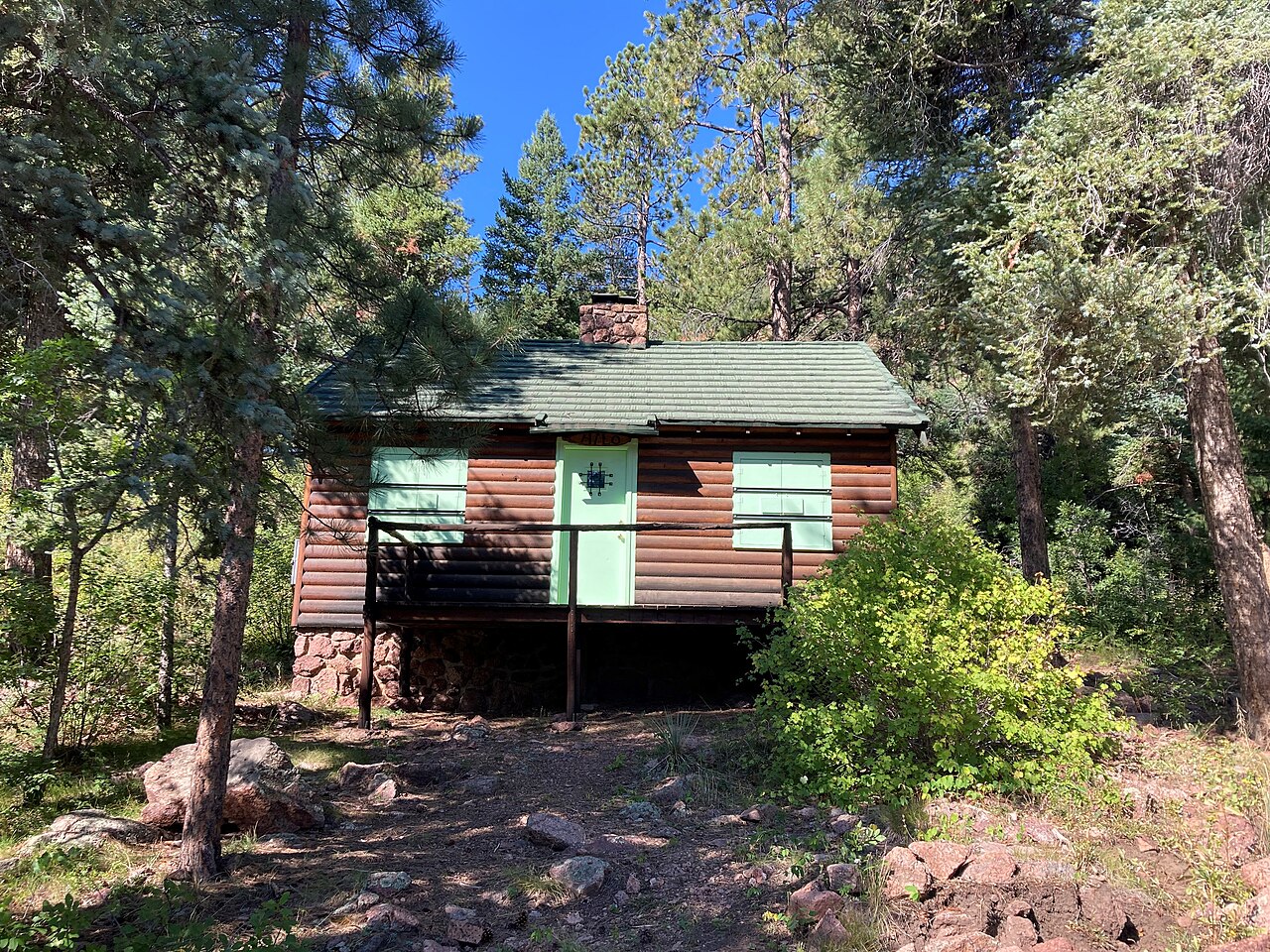
Consider the mechanical requirements for establishing a compliant accessible route to a standalone mountain cabin built on an elevated timber platform twelve feet above ground level. Under the 2010 ADA Standards, a ramp must maintain a maximum slope of 1:12, meaning every inch of vertical rise requires twelve inches (one horizontal foot) of continuous ramp run. A twelve-foot elevation change demands 144 linear feet of continuous ramping. Furthermore, the standards mandate intermediate landing platforms measuring at least 5 feet by 5 feet for every 30 inches of vertical rise, as well as handrails, edge protection, and 60-inch turning spaces at landings.
Installing 150-plus feet of switchback timber ramping built across a sloped rock face requires structural engineering plans, soil stability studies, concrete footings, and local zoning approval. Construction costs in remote or mountainous markets for custom exterior ramping can be exceptionally high, resulting in significant retrofit expenditures for a single cabin entry point. This financial cost often exceeds the total equity value added to the residential property, while drastically altering the architectural footprint of the site.
Inside the cabin, physical barriers are equally difficult to eliminate. Log homes and post-and-beam timber structures utilize load-bearing exterior walls with framed door openings measuring 28 to 30 inches wide. Widening an exterior or interior door opening to achieve the required 32-inch clear width requires cutting load-bearing timber wall segments, installing engineered headers, and re-routing electrical conduit embedded inside wood logs. Structural wall modifications inside custom timber buildings are costly per doorway, before addressing zero-threshold bathroom entries, roll-in showers, and compliant grab bar installation.
Environmental and municipal land-use regulations further complicate physical retrofitting efforts. Standalone cabins in rural markets often operate on strict municipal lot-coverage limits, environmental stream buffer setbacks, and designated septic drain-field constraints. Constructing expansive concrete access walkways, paved van-accessible parking pads, and exterior ramps can push a residential property over its allowed site coverage threshold or encroach into environmental setbacks, triggering municipal zoning violations. Property owners find themselves caught in a direct regulatory conflict between federal accessibility mandates and local land-use laws.
Platform shield or platform liability
As accessibility litigation spreads across the short-term rental industry, major Online Travel Agencies (OTAs) such as Airbnb and Vrbo have altered their technological infrastructure to manage regulatory risks. Airbnb, for instance, developed standardized accessibility feature submission workflows that allow hosts to select precise accessibility attributes—such as step-free paths to the entrance, wide entryways, step-free shower access, and fixed grab bars—supported by mandatory host photos that are reviewed prior to publication. Vrbo similarly expanded structured accessibility fields within its partner management software interfaces.
However, these platforms operate under terms of service designed to shield the platform operator from legal liability while transferring legal exposure directly to property hosts and third-party managers. Platform terms explicitly state that property hosts are solely responsible for ensuring the accuracy of property descriptions, complying with local, state, and federal laws, and maintaining physical premises. When a lawsuit is filed, platform legal teams routinely point to these indemnification provisions to isolate themselves from direct Title III liabilities.
The core exposure point for professional property management companies lies outside third-party OTAs. To build brand equity, reduce booking commission costs, and manage direct guest communications, established managers invest in custom direct-booking software applications (powered by software engines like Hospitable, Guesty, OwnerRez, or Streamline). While these direct-booking engines aggregate pricing and availability, many historically lacked native, fine-grained accessibility disclosure metadata fields required by 28 C.F.R. Section 36.302(e).
When a guest or legal tester accesses a manager's direct-booking site, no third-party platform interface stands between the operator and federal court jurisdiction. If the direct checkout system fails to display granular accessibility disclosures, or fails to allow guests to identify whether a specific cabin possesses accessible features, the property management firm functions as the sole commercial owner and operator of that reservation site. Litigators focus their crawling software on direct-booking portals because they lack the legal defense infrastructure maintained by multi-billion-dollar technology platforms.
The statutory landmine: State-by-state exposure
The geographic distribution of accessibility lawsuits targeting short-term rental operators reflects the concentration of favorable state civil rights statutes. While federal court jurisdiction under Title III of the ADA exists nationwide, filing activity concentrates heavily in jurisdictions that combine statutory financial damages with mandatory legal fee shifting.
California remains the primary center for accessibility litigation due to the structural mechanics of the Unruh Civil Rights Act. Under California law, any violation of the federal ADA constitutes an automatic violation of the Unruh Act, exposing the business owner to minimum statutory damages of $4,000 per offense, plus legal fees. A property manager operating twenty vacation cabins in Lake Tahoe, Palm Springs, or the Russian River area whose direct-booking engine lacks 28 C.F.R. Section 36.302(e) compliance faces theoretical statutory damages of $4,000 per cabin listing, accumulating into six-figure exposure before formal trial proceedings even commence.
New York represents another high-exposure market under the New York State Human Rights Law and the New York City Human Rights Law. Local regulations in New York allow for statutory damages, civil penalties, and attorney fees, while maintaining strict public accommodation definitions that cover short-term lodging inventory. Property management firms operating in destination regions like the Catskills, the Hamptons, or the Finger Lakes face high litigation costs when direct-booking interfaces fail to meet digital Web Content Accessibility Guidelines (WCAG) 2.1 AA standards or federal reservation rules.
In Florida and Colorado, high litigation volumes are driven predominantly through federal court filings under ADA Title III fee-shifting mechanisms. In these states, specialized law firms file dozens of standardized federal complaints per week targeting resort-town lodging operators, coastal vacation communities, and mountain cabin management networks. Even in jurisdictions where state civil rights statutes do not provide automatic cash damages, the threat of legal defense fees forces small to medium-sized management companies to execute rapid financial settlements.
A single direct-booking page that omits accessibility details converts an entire mountain rental portfolio into an active target for federal civil litigation.
What hosts should do now
Navigating the legal terrain of accessibility compliance requires professional property managers and individual hosts to take immediate, proactive operational steps across digital marketing channels and physical properties.
- Audit direct-booking software interfaces: Review direct-booking engines to ensure checkout flows comply with 28 C.F.R. Section 36.302(e) by displaying granular accessibility metadata for every property listing.
- Publish explicit physical accessibility descriptions: Document step-free access paths, doorway clear widths, threshold heights, shower design details, and sloped terrain features accurately across all channel listings.
- Implement digital accessibility compliance: Ensure all direct-booking websites comply with WCAG 2.1 AA digital guidelines, including screen-reader compatibility, keyboard navigation, and alternative image text.
- Update management contracts: Amend agreements with homeowners to clarify legal indemnification, risk distribution, and financial responsibilities for accessibility modifications and legal defense costs.
- Commission physical property assessments: Retain certified access specialists to conduct physical barrier audits and establish documented readily achievable barrier removal plans under federal guidelines.
Ignoring public accommodation requirements exposes short-term rental businesses to predictable legal action. Operators who establish comprehensive digital disclosures and transparent property physical profiles will protect their business capital and secure their portfolios against drive-by litigation.
Checked by the standards desk (Eleanor Quist): 6 specifics were removed or attributed as unverified before publication.
About this piece
An original expert-analysis column by the Stay Gazette desk. Figures are illustrative of how the market behaves; confirm specifics for your own market before you act.




Read the desk every morning.
The day's crackdowns and platform moves, the money, the design and the stays going viral, plus the desk's verdict, in one short email every morning.