
Airbnb Drops $7.1 Million in Los Angeles Elections to Secure Olympic Rental Expansion
The booking platform is spending record cash on L.A. politics to temporarily permit 15,000 second-home vacation rentals before the 2028 Olympic Games.
Seven point one million dollars buys a staggering amount of political airtime in Los Angeles, but in the short-term rental business, money spent on municipal elections is never just about campaigns. It is an infrastructure investment. Airbnb has poured millions into the 2026 L.A. mayoral and city council contests, transforming a local election cycle into the most expensive short-term rental policy battle in North American history. The platform is not merely asking for friendly relations with City Hall. It is underwriting a systematic effort to reshape local law before the world arrives for the 2028 Olympic Games.
At the center of this financial blitz is a single, explicit policy goal: passing a proposed Vacation Rental Ordinance that would temporarily suspend the city’s strict primary-residence requirement. If enacted, the measure would allow property owners to list second homes as short-term rentals, unlocking an estimated 15,000 additional units across the metropolis. To sell the idea to a city facing severe budget constraints, Airbnb and its allies are promising a windfall of up to $110 million in bed tax revenue. But beneath the public relations campaigns, labor coalition endorsements, and high-dollar independent expenditures lies a battle over real estate, lodging supply, and market access that will determine who profits from the largest sporting event on earth.
For independent hosts, professional property managers, and real estate investors, the financial stakes could not be higher. If Airbnb succeeds in opening the market to second-home inventory, host supply will surge, fundamentally altering neighborhood dynamics and daily rental yields. If the political gambit fails, enforcement will almost certainly tighten, cutting off illicit listings and leaving non-compliant operators stranded. What is unfolding in Los Angeles is a preview of how platform capital interacts with municipal power when billions of dollars in event tourism are on the table.
What happened
According to campaign finance disclosures reported by Capital & Main, the Airbnb-sponsored Committee to Expand the Middle Class has emerged as one of the largest spenders in Los Angeles politics this year. As of mid-October, the corporate committee has contributed about 30 times more money to L.A. local elections than it spent in all previous municipal contests combined going back to 2018. The company has directed $7.1 million into independent expenditure committees supporting Mayor Karen Bass’ reelection campaign and three candidates for local office.
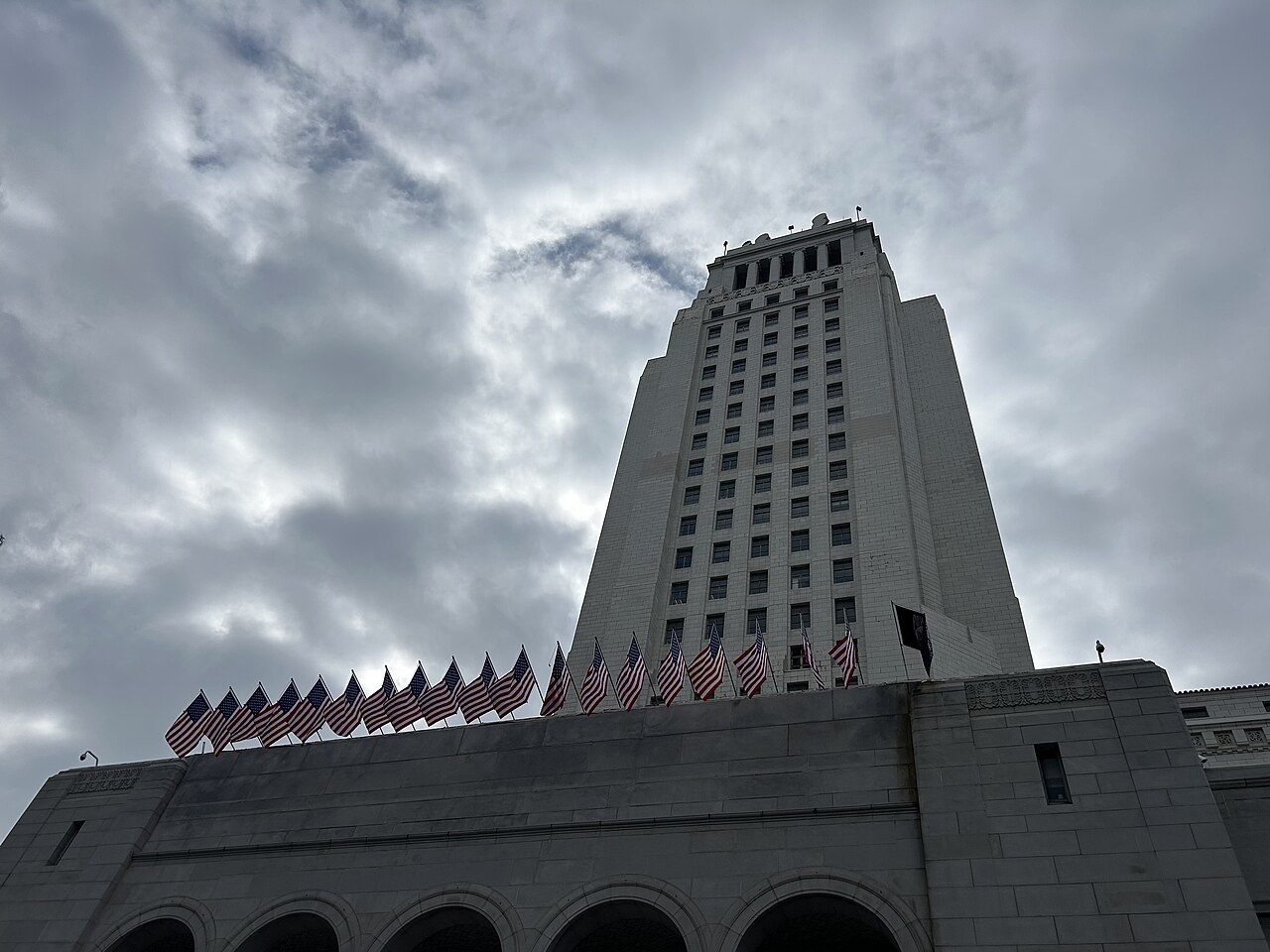
The spending targets specific seats across the city legislative landscape. Airbnb’s contributions back Mayor Karen Bass, city attorney candidate John McKinney, and City Council candidates Tim Gaspar in District 3 in the west San Fernando Valley and Jose Ugarte in District 9 in South Los Angeles. The platform also backed incumbent Traci Park in District 11 on the Westside, who secured her seat outright during the June primary. To deploy this capital, the Airbnb committee directed more than $6.1 million to political action committees sponsored by the Central City Association, a downtown business advocacy group. That cash included $750,000 for a committee supporting Bass and $3.3 million for committees supporting McKinney. An additional $750,000 went to a political action committee sponsored by the International Brotherhood of Electrical Workers Local 18, which backs Ugarte.
The scale of Airbnb’s spending has reshaped the financial landscape of L.A. politics. The company’s political giving has outpaced traditional powerhouses such as the Los Angeles Police Protective League, which had spent more than $4 million supporting Bass, McKinney, Gaspar, and Ugarte as of early October. Airbnb’s spending rivals that of hedge fund manager Aaron Sosnick, who donated roughly $7 million to committees supporting Bass’ mayoral challenger, City Councilmember Nithya Raman. Estuardo Mazariegos, a council candidate in South Los Angeles opposing short-term rental expansions, publicly accused Airbnb of trying to buy the election.
In response to inquiries, Airbnb spokesperson Justin Wesson defended the company’s record spending in a public statement. He stated that the nationwide campaign is designed to back candidates who champion building local economies, including a tourism economy that benefits everyday homeowners looking to make extra money by sharing their home rather than concentrating revenue solely among corporate hotel chains. Yet the policy target behind the spending is far broader than individual spare rooms.
The 15,000-unit gambit
The central policy issue driving Airbnb’s financial engagement is the proposed Vacation Rental Ordinance, a long-debated policy that would rewrite L.A.’s short-term rental framework. Under the city’s existing Home Sharing Ordinance, adopted in 2018, Angelenos are permitted to short-term rent only their primary residence—defined as the home where they live for more than six months of the year. That policy was designed to prevent residential housing from being converted into dedicated tourist accommodations during an ongoing regional housing shortage.

The proposed Vacation Rental Ordinance would temporarily suspend that core restriction. It would allow property owners to list second homes as short-term rentals across Los Angeles, adding up to 15,000 new units to the legal market ahead of the 2028 Olympic Games. Under the draft terms, the policy contains a strict sunset clause, expiring in December 2028, five months after the Olympic closing ceremonies. The idea of opening second homes to short-term renting is not new; it was first introduced in 2018 by then-Councilmember Herb Wesson—father of current Airbnb spokesperson Justin Wesson—and current City Council President Marqueece Harris-Dawson.
Mayor Karen Bass has publicly signaled support for the temporary expansion. Speaking to NBC4 in May, Bass argued that loosening rules would help the city accommodate the massive influx of international visitors expected for the Olympic Games. Bass noted that her support was strictly conditional on the policy remaining temporary, stating that she would otherwise be concerned about long-term impacts on the city’s housing supply. Her opponent, Councilmember Nithya Raman, takes the opposite position. Speaking at a candidate forum sponsored by Caló News in October, Raman pledged to block the mayor’s push to deregulate short-term rentals, arguing that expanding commercial rentals harms local tenants. Raman has led efforts inside City Council to enforce existing laws against non-compliant operators.
The political division creates a stark divide for property owners. Passing the ordinance creates a multi-year window for real estate investors to operationalize non-primary properties legally, capturing elevated nightly rates during major pre-Olympic events and the Games themselves. Failing to pass it leaves thousands of unpermitted second-home listings vulnerable to municipal crackdowns and platform removal.
The family ties and lobbying engine
Political contributions represent only one leg of Airbnb’s campaign in Southern California. City Ethics Commission disclosures reveal that over an 18-month period, Airbnb spent nearly $4.2 million on direct lobbying in Los Angeles, focused almost entirely on securing passage of the Vacation Rental Ordinance. A substantial portion of that money built a broad political coalition designed to project local community support.
Airbnb allocated almost $3.7 million of its lobbying expenditure toward media and canvassing efforts operated under an entity called Save Our Services. The coalition brought together diverse local groups, including labor union locals, regional chambers of commerce, and community organizations. Members ranged from the organizers of the Koreatown cultural festival to the Crenshaw Chamber of Commerce, alongside labor representatives such as the International Brotherhood of Electrical Workers Local 18.
The core message of the lobbying effort focuses heavily on municipal finances. In a January letter sent to the L.A. City Council, Airbnb spokesperson Justin Wesson argued that adopting the Vacation Rental Ordinance would generate up to $110 million in additional transient occupancy tax revenue for city coffers. At a May meeting of the City Council’s Planning and Land Use Committee, coalition representatives echoed those exact financial figures. Kevin Norton, representing IBEW Local 18, asked council members whether it made sense for the city to claim it lacked funding for critical public services while blocking a proven source of municipal income, urging lawmakers to act smart fiscally by amending the home-sharing law.
This coordinated pressure campaign highlights how modern platform lobbying operates. By pairing direct candidate contributions with grassroots coalition building and tax-windfall messaging, Airbnb has constructed an intense lobby to overturn primary-residence mandates. But city administrative departments have pushed back against the platform’s financial projections.
The planning department’s cold shower
Despite the high-profile projections of a $110 million tax windfall, municipal planning officials have repeatedly poured cold water on the financial claims made by Airbnb and its coalition. In official communications to the City Council, the Los Angeles Department of City Planning questioned whether expanding short-term rental permits to second homes would produce any net economic gain for the city budget.
In a 2021 analytical memo, Vincent Bertoni, L.A. director of city planning, explicitly refuted the assertion that the Vacation Rental Ordinance would generate major new tax revenue. Bertoni explained that permitting second homes does not fundamentally increase the number of tourists visiting Los Angeles. Instead, it merely shifts existing travelers away from traditional hotels and existing legal home-shares into newly permitted second-home units. Because transient occupancy taxes are levied on guest stays regardless of accommodation type, redistributing guests across more properties does not automatically increase total tax collections.
Bertoni reiterated those findings in another memo issued in April, writing that the actual supply of available second homes across the city is not large enough to produce a significant increase in city tax revenues. City Councilmember Bob Blumenfield, who chairs the influential Planning and Land Use Committee, aligned himself with planning staff. Blumenfield told Capital & Main that he opposed allowing second homes as short-term rentals when the concept was proposed eight years ago, and he remains opposed today. Blumenfield warned that allowing second-home rentals, even temporarily, incentivizes landlords to withdraw residential housing units from the long-term rental market, compounding the city’s housing affordability crisis.
This divide between municipal planning staff and corporate lobbyists represents the central tension of short-term rental regulation. While corporate spenders frame regulation as an economic growth tool, city planners view secondary-unit deregulation as a zero-sum cannibalization of existing lodging taxes and housing inventory.
The hotel lobby strikes back
The fight over short-term rental expansion in Los Angeles is equally a battle between rival lodging sectors. Traditional hotel operators view Airbnb’s multi-million-dollar political intervention as a direct threat to their market share and nightly pricing power ahead of the 2028 Games.
During the May meeting of the Planning and Land Use Committee, three local hotel managers testified against the proposed ordinance. They told lawmakers that existing and planned hotel inventory across the Los Angeles basin is fully capable of accommodating expected visitors for the Olympic Games without expanding short-term rental authorizations into residential neighborhoods. Hotel operators argue that expanding unconstrained home-sharing supply suppresses average daily rates across the entire regional hospitality sector.
Their concerns are backed by industry research. For traditional hotel companies, mega-events such as the Olympics represent rare opportunities to command peak yield pricing. Adding 15,000 second-home units into the market introduces significant price competition, threatening the financial returns that commercial hotels anticipate during major events.
The clash demonstrates that short-term rental policy is no longer just a debate between neighbors and hosts. It has evolved into a corporate contest between institutional hotel capital and platform-mediated accommodation supply, with millions of dollars in political donations serving as the primary weapon.
Airbnb’s playbook from Dallas to New York
The immense financial deployment in Los Angeles is part of a national strategy by Airbnb to influence local political outcomes and roll back restrictive municipal legislation. Over the past several election cycles, the platform has scaled up political action committees in key urban markets across the United States, with mixed results.
In Dallas, Airbnb spent $500,000 through its Revitalize Dallas PAC to back three municipal council candidates after the city moved to restrict short-term rentals in single-family zones. Only one of the three sponsored candidates won their election. In New York City, following the 2023 passage of Local Law 18—which effectively eliminated the majority of short-term rentals by requiring hosts to be present during stays—Airbnb’s Affordable New York PAC spent nearly $4 million. That spending targeted local city council races, supporting 17 winning candidates while opposing mayoral candidate Zohran Mamdani.
The platform’s political spending has expanded rapidly at the state level as well. Public records show Airbnb’s spending on statewide California candidates and ballot issues rose from $2.2 million in 2024 to nearly $7.7 million as of late October. The company’s political committee, Citizens for an Affordable California, spent over $1.3 million in a successful campaign to force Democratic state Assembly candidate Mark Pulido into a runoff against Republican candidate Paolo Morales in Orange County, following a June primary win for the platform in that region.
This aggressive political posture mirrors a broader trend of high-dollar corporate and billionaire spending in American politics. As seen in federal midterm filings where figures like Elon Musk contributed $276 million since July and $366 million across the election cycle to political committees, corporate and individual spenders are deploying capital at unprecedented scales to shape regulatory policy. For Airbnb, municipal political spending has become a standard operational expense required to preserve platform inventory.
What this means for the bottom line
For short-term rental hosts, property managers, and small real estate investors, Airbnb’s political offensive in Los Angeles carries direct consequences for revenue, property values, and operational risk. The outcome of the municipal elections and the fate of the Vacation Rental Ordinance will dictate local market dynamics for the next decade.
If the Airbnb-backed candidates secure control and pass the Vacation Rental Ordinance, the sudden entry of up to 15,000 legal second-home listings will dramatically alter local supply dynamics. While secondary-property owners will gain legal status, existing primary-residence hosts will face sharp supply expansion. An influx of institutional and secondary inventory typically compresses Average Daily Rates during non-peak travel periods, diluting overall market occupancy. Hosts who built financial models around constrained supply may find their revenue margins squeezed well before the 2028 Games arrive.
Conversely, if anti-expansion candidates prevail and Councilmember Raman’s enforcement stance gains traction, the city will likely step up municipal audits, fine structures, and platform compliance sweeps. Property managers operating unpermitted second homes under the radar will face heightened operational risks, including municipal fines and platform delistings. Compliance will become the primary driver of enterprise value for professional operators.
Furthermore, the temporary nature of the proposed ordinance presents structural risks for real estate investors. Buying properties or signing master leases based on a permit structure that automatically sunsets in December 2028 exposes operators to severe regulatory cliff risks post-Olympics. Once the Games conclude and the ordinance expires, secondary properties will instantly revert to non-compliant status, leaving late-entry investors holding non-performing real estate assets.
The short-term rental giant has turned a local election cycle into the most expensive short-term rental policy battle in North American history.
“Does it make sense for our city to keep saying we have no money for critical needs while blocking a proven source of income?”
What hosts should do now
Navigating political and regulatory shifts requires immediate operational discipline from hosts and property managers operating in major metropolitan markets.
- Audit portfolio compliance immediately to ensure every active listing satisfies primary-residence documentation under existing city ordinances.
- Avoid entering long-term commercial master leases or acquiring secondary real estate based on proposed temporary regulatory exemptions that contain sunset provisions.
- Stress-test operational revenue models against a 15 to 20 percent reduction in Average Daily Rates to account for potential supply expansion during peak event windows.
- Diversify distribution across direct booking channels and alternative platforms to mitigate risks associated with sudden municipal platform enforcement sweeps.
- Engage with local host alliances to track city council planning committee agendas and municipal enforcement updates directly rather than relying on corporate platform messaging.
As corporate platforms pour millions into municipal elections, independent operators must remember that political spending serves platform liquidity, not host margins. Protecting your business requires strict regulatory compliance, conservative financial underwriting, and an unwavering focus on operational execution.
Checked by the standards desk (Eleanor Quist): 107 specifics checked, 98 traced to the source material and the sources added below, 7 general background, 1 corrected to what a public source says, 1 removed before publication.
Sources
- Capital & Main - reported October 26, 2026.
- Capital & Main - Airbnb Pours Millions Into L.A. City Elections Ahead of Olympics.
- Yahoo - Elon Musk Becomes Top Donor for Republicans by Giving $276 Million Ahead of Midterm Elections.
- saje.net - Airbnb Is Spending Millions to Shape Los Angeles Politics By Iris Craige, Assistant Director of Policy and Advocacy September 14, 2026 Airbnb has become a major.
- capitalandmain.com - Airbnb Pours Millions Into L.A. City Elections Ahead of Olympics.
Read and analysed by the Stay Gazette desk.
Report an error in this story · Corrections policy and log

Related from the desk



Read the desk every morning.
The day's crackdowns and platform moves, the money, the design and the stays going viral, plus the desk's verdict, in one short email every morning.
Comments