The 400-Dollar Ebay Tank Keeping Airbnb Hot Water Flowing and Bills Down
How a UK host paired an eBay cylinder, Home Assistant scripts, and a gas boiler to slash energy costs by $500 a year without running cold on guests.
A bad review regarding hot water cuts deeper into short-term rental revenue than almost any other operational failure in hospitality. A guest will forgive a missing corkscrew, tolerate a noisy street, and overlook a delayed check-in if the host responds promptly, but cold water in the shower destroys five-star ratings instantly. In markets across Europe and North America where energy costs surged over recent years, hosts face a severe operational dilemma. Guests expect unlimited, scalding hot water at six in the morning, while property owners watch monthly utility bills consume their net operating income.
To survive this margin compression, hosts traditionally relied on crude measures. They locked wall thermostats behind plastic security boxes, glued polite reminders near bathroom sinks asking guests to shorten showers, or lowered boiler flow temperatures until guests began complaining. None of those interventions produce reliable results. Guests ignore printed notices, override manual settings, or express their annoyance through negative public reviews that suppress booking conversion for months. The structural conflict remains unresolved: short-term rentals consume energy on demand at peak utility rates, exactly when grid power costs the most.
Now, a resourceful host in the United Kingdom has deployed a complex home-automation hack built to exploit overnight off-peak power tariffs without exposing guests to an icy blast mid-shampoo. By combining a secondhand eBay storage tank, custom micro-controllers, and smart energy tracking, this setup reveals how far hosts must go to balance guest satisfaction against rising utility overhead. It represents a case study in grid arbitrage for small-scale accommodation, while illustrating the operational risks of running custom hardware in a commercial short-term rental environment.
What happened
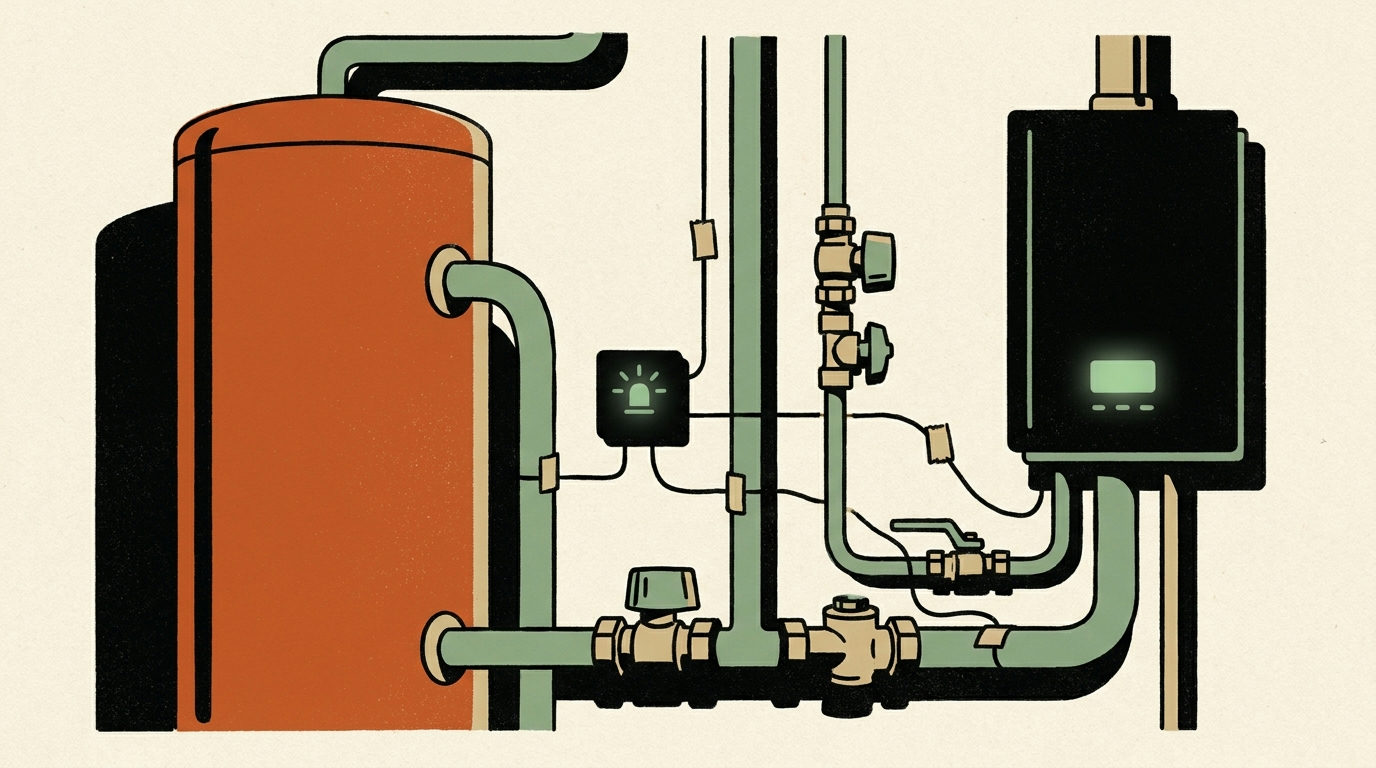
According to a detailed post published on Reddit, a United Kingdom homeowner who hosts Airbnb guests constructed a hybrid hot-water system centered around a secondhand Gledhill Stainless Pro 300L Direct cylinder purchased on eBay for £300, or roughly $400. The cylinder, which features a stated capacity of 76 gallons (287 liters), operates alongside the home’s existing Worcester Bosch Highflow 550CDi gas combi boiler. Rather than relying solely on gas heating or daytime electricity, the owner connected both systems using under £100 (about $150) in sensors, smart relays, and motorized valves.
The system relies on Home Assistant software to execute automated energy arbitrage. The storage cylinder incorporates two 3-kilowatt immersion heating elements that can be controlled and metered separately. Home Assistant runs the bottom immersion element during cheap overnight tariff hours between 11:30 p.m. and 05:30 a.m., filling the 76-gallon vessel with low-cost heat. To accommodate sudden surges in hot water demand, the post notes a one-hour boost for the top immersion element along with a two-stage boost script options when needed. Three temperature probes attached to pipes with foil tape monitor the cylinder upper section, the cold-water inlet, and the hot-water outlet.
When stored thermal energy depletes and the upper tank temperature drops to approximately 104 degrees Fahrenheit (40 degrees Celsius), Home Assistant sends a signal to a WRAS-approved 24-volt three-way L-port motorized ball valve controlled by a Shelly 1 Gen4 relay. The valve instantly switches the property’s hot-water supply back to the Worcester Bosch gas combi boiler. As the host wrote in the online post, “We host Airbnb guests in the house, so 'the cheap hot water has run out' isn't a particularly attractive feature.” Combined with existing solar panels and battery storage on the property, the owner estimated the total system could save about £350 (around $500) per year.
The system dashboard displays real-time operational data for all three temperature probes, live power draw from each 3-kilowatt immersion element, daily energy consumption, estimated electricity costs, and a rough gas-cost comparison. The host confirmed that existing safety equipment was kept in place throughout the installation. Commenters on the post praised the execution, with one user writing, “Sounds like an awesome project. I do something similar but we only have a cylinder! Three way valve is a cool addition.”
The physics of guest showers and utility bleeding
Short-term rental operators understand that guest water usage follows an entirely different dynamic than owner-occupied residential living. When property owners pay their own electricity and gas bills, shower durations are reasonable, eco-mode settings are selected on appliances, and heating schedules match physical presence. When vacationers arrive at a short-term rental, behavioral incentives shift dramatically. Multi-guest bookings routinely lead to consecutive thirty-minute showers, full baths filled twice daily, and sinks left running while unstacking luggage.
In properties designed for families or group trips, four consecutive morning showers can drain a conventional residential hot water tank within forty-five minutes. Once the stored hot water empties, subsequent guests are forced to wait hours for the cylinder to reheat or endure lukewarm water during peak prep times before checkout. In online review sections, a single instance of cold water often triggers one-star ratings for cleanliness, comfort, and communication, because frustrated guests perceive poor hot water delivery as a fundamental failure of property management.
In the United Kingdom and across many European markets, gas combi boilers became standard because they heat water instantly on demand without requiring bulky storage tanks in small floor plans. However, combi boilers present clear capacity bottlenecks for short-term rentals. When two guests run showers simultaneously in different bathrooms, water pressure drops sharply and delivered water temperature fluctuates unpredictably. Replacing a combi boiler with a high-capacity commercial system requires extensive plumbing alterations and thousands of dollars in capital expenditure, making traditional upgrades difficult for individual hosts to justify.
Electric immersion heating offers a functional alternative, but running 3-kilowatt immersion rods on standard daytime electricity rates is economically unsustainable for host profit margins. European electricity tariffs per kilowatt-hour remain high relative to natural gas. The only mechanism that makes electric water heating financially viable is off-peak storage tariffs, where grid power drops significantly overnight. However, off-peak systems without secondary backup run out of energy when guest demand exceeds stored volume. The UK host identified this exact operational friction and engineered a hybrid system to solve it.
Inside the 400-dollar Frankenstein system
The cleverness of this £400 installation lies in its automated transition logic. Standard multi-fuel heating configurations typically require manual lever adjustments or specialized commercial control panels that cost thousands of dollars. By integrating a WRAS-approved 24-volt three-way L-port motorized ball valve driven by a Shelly 1 Gen4 Wi-Fi relay, the host unified two distinct heating technologies into a self-monitoring hybrid grid. The Gledhill 300L Direct cylinder acts as the primary heat source during normal operating conditions, drawing low-cost overnight power from the grid or off-peak battery reserves.
When heavy guest demand pulls substantial volumes of cold water into the cylinder inlet, the upper probe registers the thermal drop. The moment top-tank temperature drops to 104 degrees Fahrenheit (40 degrees Celsius), the Shelly relay rotates the three-way ball valve within seconds. Cold incoming mains water bypasses the depleted cylinder entirely and flows directly into the Worcester Bosch Highflow combi boiler, which ignites instantly to produce continuous gas-heated hot water. The guest taking a shower notices no interruption in flow or temperature stability.
The monitoring layer built into Home Assistant turns utility tracking into a real-time operational tool. Rather than guessing monthly bill impacts, the host monitors exact power draw across both 3-kilowatt immersion elements, overall kilowatt-hour consumption, calculated daily power expenditure, and comparative natural gas costs. If overnight electricity rates fluctuate or battery storage levels drop, the host can adjust the Home Assistant automation rules remotely to optimize monetary savings. The setup effectively converts an off-peak storage cylinder into a dynamic thermal battery with zero risk of running empty during guest stays.
This automated dual-fuel mechanism resolves a historical host dilemma. Relying strictly on an electric cylinder leaves properties vulnerable to hot water shortages during back-to-back guest turnovers or large group bookings. Relying strictly on gas combi boilers exposes hosts to high daytime gas tariffs and potential pressure drops during peak shower hours. Combining off-peak electric thermal storage with automated gas backup allows small operators to harvest off-peak grid arbitrage while guaranteeing uninterrupted hospitality performance.
The automation trap and liability in short-term rentals
While DIY enthusiasts on online forums applaud creative engineering, experienced property managers view home-brewed control systems through a lens of risk management. Short-term rentals function as commercial lodging businesses operating inside residential structures. When custom micro-controllers, open-source software, and foil-taped sensors manage critical building services, technical failure risks transfer directly onto paying guests. A home automation server rebooting, a Wi-Fi relay disconnecting, or a software script failing at 2:00 a.m. could freeze a motorized valve in position, leaving guests without hot water or delivering unmanaged temperature surges.
Building codes and statutory compliance represent serious hurdles for custom host retrofits. In the United Kingdom, unvented hot water storage cylinders are governed by strict Building Regulations under Approved Document G3. These codes mandate certified expansion vessels, temperature-and-pressure relief valves, and annual maintenance checks by qualified technicians to prevent catastrophic vessel rupture or severe scalding accidents. While the Reddit host correctly retained existing physical safety equipment and selected a WRAS-approved valve, modifying domestic plumbing lines with custom smart relays introduces potential compliance complications during building inspections or property sales.
Property insurance coverage poses an even greater long-term financial exposure. Commercial host policies and landlord insurance packages require heating and plumbing infrastructure to be installed and maintained in accordance with manufacturer specifications and local building regulations. If a self-installed motorized valve fails, causing pipe ruptures, room flooding, or structural damage, loss adjusters investigating the claim will inspect the installation. Discovering self-wired relays, custom Home Assistant automation scripts, and foil-taped temperature sensors could give insurance carriers grounds to deny claims entirely. A host saving £350 annually on utility bills could face dozens of thousands of dollars in uninsured flood restoration expenses if custom hardware fails.
Furthermore, guest safety concerns must be accounted for in custom thermal installations. Unvented hot water cylinders stored at low temperatures can become breeding grounds for Legionella bacteria if water temperatures remain between 68 and 113 degrees Fahrenheit (20 and 45 degrees Celsius) for extended periods. Professional hot water systems run automated pasteurization cycles, raising tank temperatures above 140 degrees Fahrenheit (60 degrees Celsius) regularly to sterilize the supply. While Home Assistant scripts can be written to trigger high-temperature cycles, relying on consumer home automation software to manage biological safety compliance carries inherent risks that commercial operators typically avoid.
Grid arbitrage and the future of host margins
The UK host’s eBay cylinder project reflects a wider structural transformation taking place across the global short-term rental industry. With night rates flatlining across major urban and leisure markets due to increased property supply, hosts can no longer rely on frequent price hikes to preserve profit margins. Reducing fixed overhead costs—specifically electricity, heating, and water utility expenses—has emerged as a primary lever for protecting net rental yields.
In sunbelt regions across North America, Australia, and Southern Europe, short-term rental owners are pairing rooftop solar arrays with battery storage systems to shield daytime cooling costs from peak utility pricing. In cooler northern regions, water heating and space conditioning represent the largest variable line items on host expense sheets. As utility providers roll out dynamic time-of-use tariffs that price electricity based on hourly wholesale market conditions, smart load shifting has shifted from an eco-friendly hobby into a core operational discipline for professional hosts.
Grid operators and energy technology companies are noticing this shift. Projects like Hawaiʻi’s Shifted Energy program demonstrate how residential water heaters can be converted into aggregate virtual power plants, balancing local grid demand while reducing household energy bills. For short-term rental operators, incorporating intelligent energy management transforms static property equipment into flexible thermal batteries, insulating hosting income from energy price volatility.
Scale versus tinkering: can property managers replicate this?
For an individual owner-operator managing a primary residence or a single annex on site, investing weekend hours into wiring Shelly relays, mounting Gledhill tanks, and adjusting Home Assistant dashboards offers tangible satisfaction and direct bill savings. The personal labor spent configuring scripts and monitoring dashboards carries zero direct cash cost to the owner. However, professional property management companies overseeing portfolios of 10, 50, or 200 short-term rentals cannot duplicate bespoke home-automation solutions across multiple units.
Bespoke software stacks require continuous maintenance, firmware updates, and immediate physical access when hardware failures occur. When a multi-unit property manager dispatches a third-party plumbing contractor to handle an emergency service call at a rental property, that contractor expects standardized commercial equipment. Finding a utility room filled with open-source controllers, custom relay boards, and custom piping setups increases diagnostic confusion and billable repair hours, quickly erasing any operational savings achieved over prior months.
Commercial operators require standardized, factory-supported hardware with off-the-shelf warranties, remote cloud dashboards, and straightforward technician support. Manufacturers are responding with packaged smart thermal solutions. Smart heat pump water heaters, such as those manufactured by Cala, provide integrated time-of-use scheduling, thermal load shifting, and leak detection out of the box without requiring custom coding or secondary valve relays. While factory smart systems require higher upfront investment than a £300 eBay tank, they provide portfolio managers with scalable, compliant, and insurable energy management across commercial inventories.
A home automation server rebooting, a Wi-Fi relay disconnecting, or a software script failing at 2:00 a.m. could freeze a motorized valve in position, leaving guests without hot water or delivering unmanaged temperature surges.
What hosts should do now
If high energy bills are eating into your short-term rental margins, take deliberate steps to upgrade your water heating management without compromising guest safety or insurance protection.
- Review your local energy provider tariff structures to identify off-peak overnight rates, solar feed-in opportunities, or dynamic time-of-use pricing plans.
- Inspect your property's existing water heating equipment to assess whether adding secondary storage, smart load controls, or heat pump technology is technically feasible.
- Select factory-built, certified smart controls or commercial smart heat pumps over self-coded DIY software scripts to protect property insurance eligibility.
- Consult a licensed plumber and your insurance representative before altering domestic plumbing lines to confirm compliance with local building regulations.
- Configure hardcoded fail-safe back-up temperatures so guests never suffer cold showers during unexpected peak usage or system service disruptions.
Rising energy prices will continue to squeeze short-term rental profit margins, but smart off-peak management allows proactive hosts to defend net income while keeping guest reviews outstanding.
Checked by the standards desk (Eleanor Quist): 50 specifics checked, 40 traced to the source material and the sources added below, 6 general background, none removed.
Sources
- The Cool Down - reported October 19, 2026.
- Yahoo News UK - In the UK, homeowner uses a $400 eBay cylinder to store cheap overnight hot water - Yahoo News UK.
- legionellacontrolsystems.com - What Does Legionella Need to Survive? - Legionella Control Systems.
Read and analysed by the Stay Gazette desk.
Report an error in this story · Corrections policy and log


Read the desk every morning.
The day's crackdowns and platform moves, the money, the design and the stays going viral, plus the desk's verdict, in one short email every morning.
Comments