Airbnb Review System Leaves Hosts and Guests Trapped in Dispute Nightmare
When non-visiting guests leave bad ratings and Airbnb refuses to act, short-term rental hosts face severe financial losses. Here is why the trust system is failing.
A single tap on a smartphone screen can strip thousands of dollars out of a short-term rental operator’s bank account before breakfast. In the short-term rental market, online reviews are not merely feedback; they are the financial bedrock of the entire enterprise. When a guest leaves a one-star review, search algorithms instantly deprioritize the listing, occupancy rates drop, and monthly cash flow evaporates. For operators who depend on consistent bookings to pay mortgages, cleaning crews, and debt obligations, an unfair bad review is a direct blow to business viability.
Yet the system built to judge property quality has devolved into a bitter battleground where both hosts and guests feel betrayed. Property managers report that major platforms refuse to remove blatantly retaliatory or inaccurate reviews, leaving operators defenseless against bad-faith ratings. At the same time, guest advocates argue that platforms wipe away legitimate complaints whenever persistent hosts know how to manipulate platform policy rules. The result is a broken trust engine that leaves participants on both sides convinced that platform moderation is rigged against them.
This conflict is not simply a matter of online commentary or hurt feelings; it is about the structural mechanics of platform power. When rules are enforced by offshore support teams bound by rigid decision trees, independent operators carry the financial risk. Understanding how review moderation functions, where it fails, and how to protect a property portfolio against arbitrary ratings has become a core requirement for modern short-term rental management.
What happened
The friction at the center of short-term rental review moderation was highlighted in a report published by travel industry news outlet Skift on October 29, 2026. Skift global tourism reporter Bailey Schulz documented the case of Yelena Choin, a longtime Superhost who operates a listing near Yosemite National Park. Choin had established a successful operating track record backed by consistent five-star ratings, but her business ran directly into Airbnb’s rigid moderation guidelines following a booking dispute with an unhappy guest.
According to Choin, a guest reserved her Yosemite-area property but later attempted to cancel the stay. After learning that he was ineligible for a full refund under the listing’s established cancellation terms, the guest elected to retain the reservation rather than forfeit the payment. However, Choin stated that the guest never arrived at the home or stepped foot on the property at any point during the reservation window.
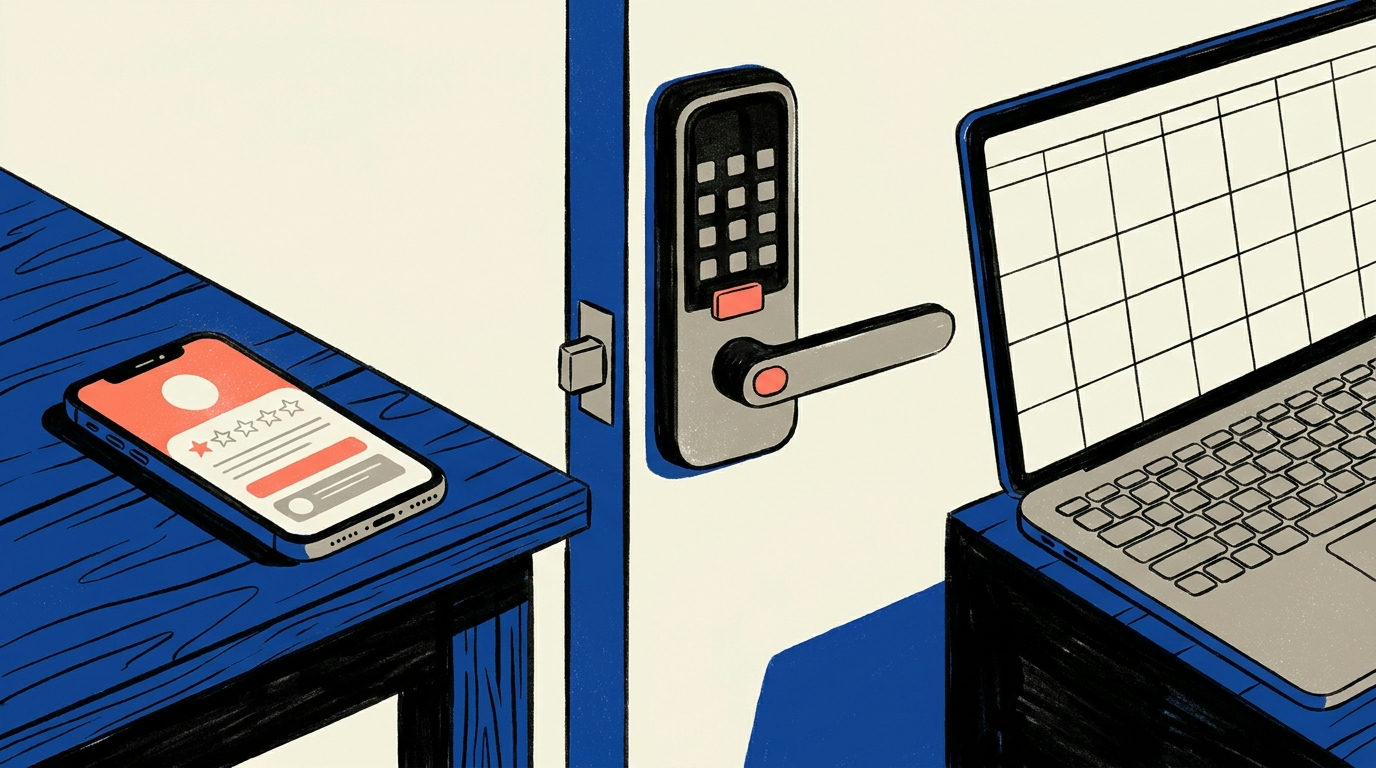
Despite never occupying the property, the guest submitted a one-star review claiming the home suffered from a foul smell. To protect her listing’s reputation, Choin assembled verifiable digital evidence to disprove the claim. She provided electronic door lock access logs and timestamped security camera video proving that no guest had entered the home during the booked dates. Furthermore, Choin presented a glowing five-star cleanliness review submitted by the next guest who checked into the property immediately following the dispute.
Airbnb denied Choin’s review removal request twice. According to Choin, an Airbnb case manager informed her that support staff had their hands tied by platform guidelines. The representative noted in writing that the negative review remained considered relevant by Airbnb “even if guest did not show up or never checked in [sic].” The ruling demonstrated a terrifying reality for property owners: even objective, verifiable digital proof may not convince platform support agents to remove a demonstrably false review.
The math of a single star
To understand why property managers react so strongly to negative reviews, one must look at the financial math driving platform algorithms. As Skift noted, a single bad review can cost a host hundreds of dollars in lost booking revenue every month. Search ranking algorithms on platforms like Airbnb, Vrbo, and Booking.com prioritize listings with high aggregate star ratings and recent positive feedback. When a property’s overall score drops from 4.9 stars to 4.7 stars, its position on search result pages drops dramatically.
Lower placement on search results leads directly to reduced impression volume and lower booking conversions. Travelers browsing competitive vacation markets rarely look past the top listings on the first page unless peak seasonal demand consumes available inventory. In saturated destination markets, dropping off the first page of search results can reduce listing views by half overnight, turning a previously profitable property into an underperforming asset.
Losing Superhost status deprives an operator of search placement advantages, featured filtering badges, and heightened guest confidence. When an arbitrary one-star review pulls a listing’s trailing average below 4.8 stars, the operator faces an immediate penalty during the next quarterly evaluation cycle.
To offset declining organic search position and rebuild booking momentum, operators are frequently forced to discount nightly rates by 10 to 20 percent. This rate compression hits gross margins directly. While variable costs like cleaning fees can be passed along to guests, fixed costs such as property taxes, insurance, debt service, and utility bills remain constant. For property managers operating on tight profit margins, a single unfair review can eliminate quarterly profits across an entire listing.
The ghost guest problem
Choin’s case exposes a glaring loophole in online review enforcement: the ghost guest rating. In standard commercial practice, a customer review evaluates a delivered product or experienced service. When a guest fails to check in, they have zero direct observation of cleanliness, physical condition, operational amenities, or indoor odors. Yet under current Airbnb guidelines, a paid reservation grants a non-visiting buyer full authority to post a public review.
This rule creates an asymmetrical conflict between hosts and guests. When a traveler requests a late cancellation outside the agreed contractual window, property managers face an untenable choice. If the manager enforces their written cancellation policy to cover holding costs and lost calendar availability, the guest can retaliate by leaving a damaging one-star review. The platform effectively equips non-visiting buyers with a financial weapon against operators who enforce standard contracts.
Even when operators present objective digital proof—such as smart lock audit trails, cellular gate entry logs, or continuous security camera footage—platform support teams frequently reject the evidence. Support specialists, operating out of global call centers under rigid resolution targets, strictly adhere to procedural templates. If the official policy states that any confirmed reservation generates a valid review window, agents decline to exercise discretion, prioritizing protocol over factual reality.
This policy approach produces absurd outcomes where a consumer sitting hundreds of miles away can publish a detailed evaluation of an interior space they never entered, while the platform defends the commentary as authentic user feedback. For property managers, this reality transforms basic operational policies into high-risk gambles where holding firm on cancellation terms can destroy years of accumulated search equity.
Why algorithms hate host appeals
Why do global booking platforms maintain policies that yield such obviously flawed decisions? The explanation lies in corporate scaling economics and support automation. Managing millions of listings across dozens of international markets requires immense operational scale. Conducting detailed human investigations for every disputed review would require vast armies of trained support staff, blowing up platform operating expenses.
From an engineering standpoint, host disputes represent costly operational overhead. Establishing human appeal boards to review digital video timestamps, inspect lock logs, and cross-reference guest messaging runs counter to platform efforts to automate customer support. To protect operating margins, platforms restrict review removals to narrowly defined categories, such as explicit extortion recorded within the platform’s official messaging chat or clear safety violations.
When a host dispute falls outside those explicit exceptions, front-line case managers are instructed to deny the claim quickly. Automated ticketing systems track case resolution times, incentivizing agents to close tickets rapidly rather than spend time evaluating complex evidence. This structural focus on resolution speed shifts administrative frustration and financial losses onto independent hosts, while preserving low operating costs for the platform operator.

Additionally, platform leadership fears damaging consumer trust in their rating systems. If guests believe that platforms routinely delete negative reviews at the request of property owners, overall consumer confidence in platform ratings dissolves. In attempting to avoid accusations of protecting property hosts, platforms have enforced a rigid posture where host evidence is ignored to maintain an appearance of strict neutrality.
The guest side of the mirror
While property hosts voice deep frustration over unremovable bad reviews, travelers express equal anger regarding platform review practices. As Skift highlighted in its report, guests frequently argue that Airbnb removes legitimate negative feedback when persistent property managers exploit platform rules. Travelers who experience dirty quarters, broken heating systems, or inaccurate listing descriptions report seeing their honest warnings deleted after hosts file formal complaints.
Experienced hosts and large property management firms have learned how to analyze platform removal policies to identify wording loopholes. If a host can persuade a support agent that a guest’s review touched on factors outside the host’s direct control—such as neighborhood noise, municipal water service interruptions, or regional weather—the platform often deletes the critique entirely under relevance guidelines.
This practice leaves travelers feeling misled when booking properties that maintain artificially pristine 4.9-star ratings despite underlying quality defects. When guests discover that earlier complaints were removed by platform support teams, consumer confidence in platform badges collapses. The outcome is a widespread trust crisis where hosts believe moderation favors guests, while guests believe moderation protects high-revenue property managers.
This mutual dissatisfaction demonstrates a key structural flaw in platform dispute management. By attempting to police millions of complex human interactions through automated templates and standardized guidelines, booking platforms manage to alienate both sides of their marketplace. Rather than delivering marketplace clarity, the system penalizes reasonable users while rewarding sophisticated operators who manipulate administrative rules.
The asymmetry of platform trust
The underlying tension facing short-term rental operators centers on a fundamental asymmetry of platform power. Independent hosts invest capital, assume physical property liabilities, manage local staffing, and maintain regulatory compliance. Meanwhile, global booking platforms maintain exclusive authority over search algorithms, calendar visibility, payout processing, and reputation control.
When moderation systems fail, the platform faces no direct financial loss. Airbnb continues collecting booking fees regardless of whether a property owner loses thousands of dollars due to a retaliatory rating or whether a guest stays in a mismanaged property. The entire financial downside lands on the property manager, who must cover fixed debt obligations and operational payroll while watching booking volume decline.
This structural reality exposes the danger of relying on a single third-party channel for guest acquisition. Property operators who depend entirely on one booking platform build their commercial model on a volatile foundation. A single incorrect ruling by an offshore support agent can instantly impair an operator’s monthly revenue without offering a meaningful judicial avenue for resolution.
For professional management companies, mitigating review risk has become a primary operational focus. Diversifying booking channels, establishing direct-booking websites, and enforcing screening protocols are no longer secondary options. They represent essential risk management strategies necessary to protect asset valuations in an unpredictable platform environment.
Rebuilding a bulletproof reputation
Faced with unpredictable platform moderation rules, proactive property managers must construct operational safeguards to buffer their listings against negative reviews. Relying on host support appeals after a bad review is published is a high-risk strategy; winning an appeal is rare, and the revenue loss while a listing is impacted is permanent.
“even if guest did not show up or never checked in [sic].”
Preventing review disputes begins well before a guest arrives. Professional operators implement clear pre-arrival messaging, transparent cancellation policies, and automated check-in procedures that set precise expectations. When a guest requests a cancellation outside established policy limits, operators should document every interaction strictly through official platform messaging channels, ensuring a clear text trail in the event of an extortion attempt.
Furthermore, maintaining high review volume acts as a natural statistical shield against occasional negative ratings. A listing with hundreds of genuine five-star reviews can absorb a single retaliatory one-star rating without dropping below key algorithmic thresholds like the 4.8-star Superhost line. Focusing on delivering exceptional guest experiences and securing consistent review submittals creates a cushion that protects revenue when arbitrary ratings occur.
Finally, professional operators must treat direct-booking channels as a primary strategic goal. Building an independent brand, maintaining a client mailing list, and offering direct-booking features reduces total reliance on third-party algorithms. When direct bookings account for a major share of occupancy, an arbitrary platform review loses its power to disrupt an operator’s overall business.
When rules are enforced by offshore support teams bound by rigid decision trees, independent operators carry the financial risk.
What hosts should do now
Operators cannot afford to wait for booking platforms to overhaul their moderation policies. To protect your listings and revenue against arbitrary bad reviews, take these immediate steps:
- Keep all guest communications inside the platform app: If a guest threatens a bad review unless you issue a refund outside your policy, ensure the threat occurs in the platform chat so support agents can identify clear extortion.
- Install digital access tracking: Maintain smart lock logs and exterior security camera records for every reservation to establish objective proof of check-in status.
- Build a review buffer: Actively encourage every satisfied guest to leave a review to expand your total review count and minimize the statistical impact of an unfair one-star score.
- Respond publicly and professionally: When an unfair review stays online, publish a concise, factual public response explaining the circumstances without getting emotional or argumentative.
- Accelerate direct-booking channels: Reduce single-platform reliance by building a direct-booking website and collecting guest email addresses to protect your revenue pipeline.
Review moderation will remain a structural vulnerability on centralized booking platforms. By taking control of guest communication, documentation, and distribution, professional operators can protect their businesses from the arbitrary decisions of platform algorithms.
Checked by the standards desk (Eleanor Quist): 24 specifics checked, 15 traced to the source material and the sources added below, 7 general background, 2 removed before publication.
Sources
- Skift - reported October 29, 2026.
- hostaway.com - How Airbnb Star Ratings Can Make or Break Your Vacation Rental Business | Hostaway.
Read and analysed by the Stay Gazette desk.
Report an error in this story · Corrections policy and log




Read the desk every morning.
The day's crackdowns and platform moves, the money, the design and the stays going viral, plus the desk's verdict, in one short email every morning.
Comments