A St. Croix Brokerage Runs Home Sales and Villa Management From One Office
Sterling Point Real Estate sells houses and, as SP Vacations, manages 13 rental homes from one office in Christiansted. The pairing suits a small island. The licence register, the tax form and the ferry timetable show why it is harder to carry to a second one.
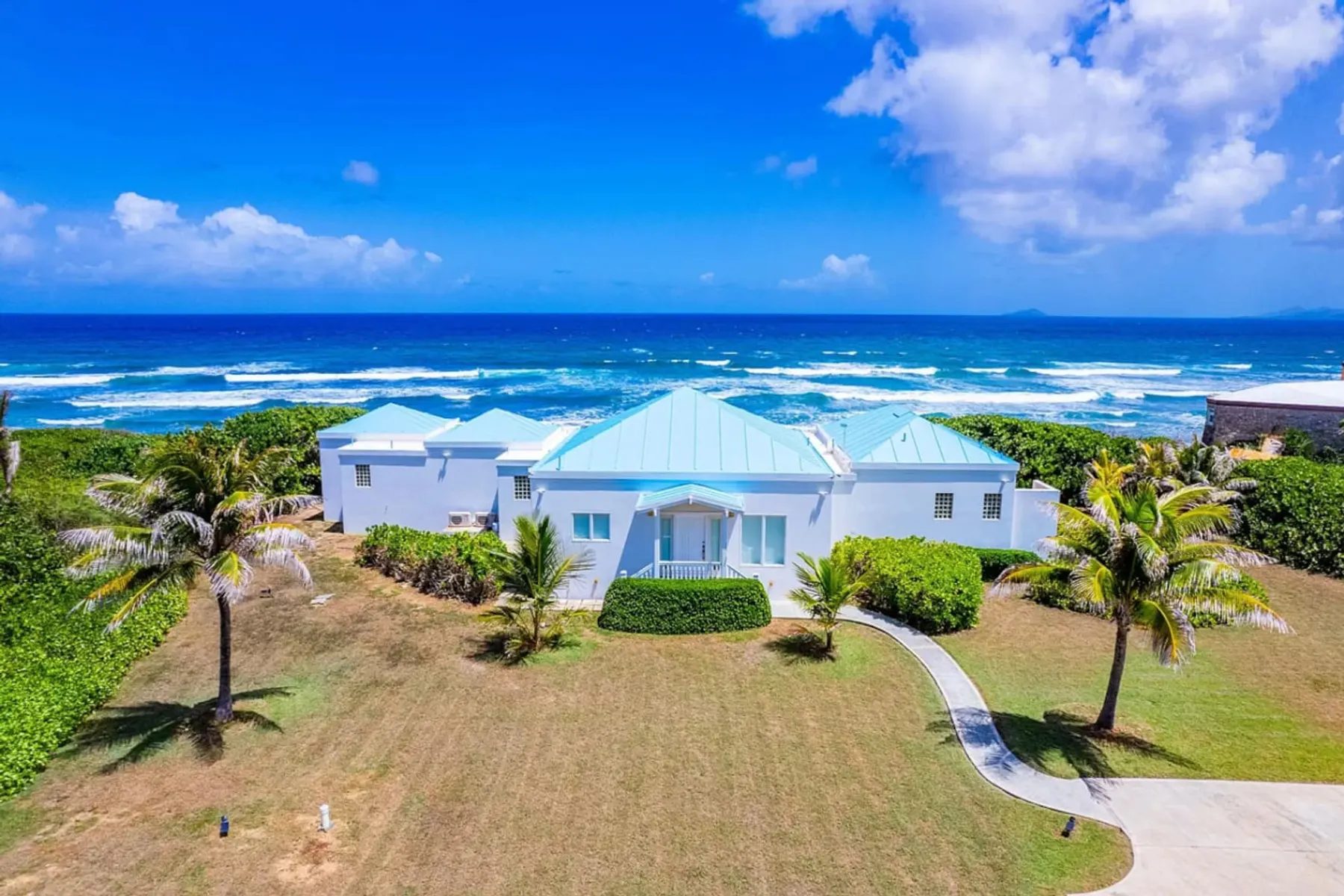
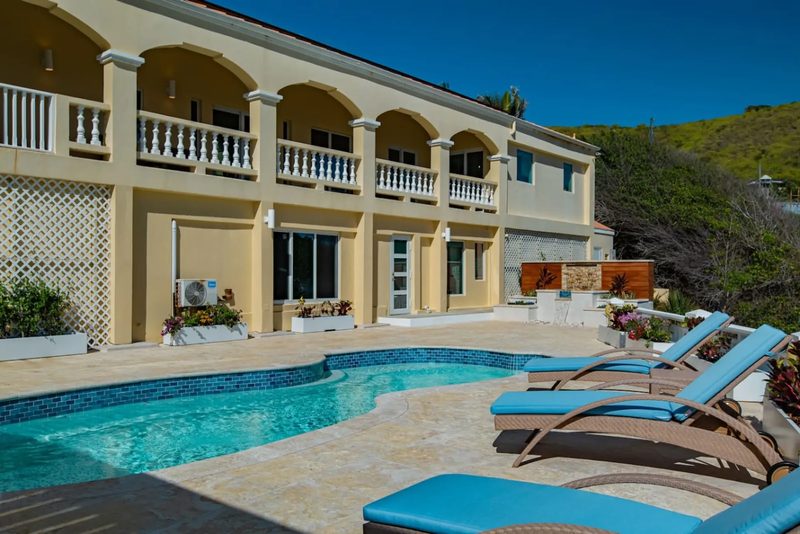
Photograph courtesy of SP Vacations.
The public licence register of the U.S. Virgin Islands lists Sterling Point Real Estate LLC twice. Both records are on St. Croix, both are of the type “Office of Real Estate Agents and Brokers”, and both run to 31 December 2026. One of the two carries a trade name, SP Vacations, and that is the name under which the firm rents villas to vacationers.
SP Vacations describes itself as the vacation-rental side of Sterling Point Real Estate, a brokerage with an office on King Street in Christiansted. On 11 October 2026 its website showed 13 rental homes, every one of them on St. Croix. The brokerage's team page lists four people. Between them they sell houses, manage long-term lets and run a villa business that takes bookings on the firm's own domain.
Two questions follow for anyone who manages rentals for a living. The first is whether putting a brokerage and a rental manager behind one door is a sound way to build a management business. The second is whether such a business can leave its island. Sterling Point is a St. Croix brokerage that already describes itself as serving all three islands of the territory, and a firm whose rental side has, so far, stayed on St. Croix. Neither owner has published a statement on expansion, and none is quoted here. What follows is drawn from the public register, the firm's published pages and the territory's own rules and figures.

One company, two licences, four people
The Lieutenant Governor's corporate register shows that Sterling Point Real Estate LLC and the trade name SP Vacations were both registered on 30 January 2026. The firm is in its first year. Its two business licences sit in the register kept by the Department of Licensing and Consumer Affairs, which anyone can search by name and by island. A search for the firm's name across the whole territory, run on 11 October 2026, returned those two records and no others.
The individual licences show how the firm is put together. The register lists Nadja Boulger-Watrous as a real estate broker at Sterling Point, and the brokerage's own site gives her title as Principal Broker, Owner. She is the principal broker and a co-owner, and hers is the broker's licence the sales side works under. Rich Watrous is a co-owner who runs property management. The team page titles him Director of Property Management, Owner. One broker with the firm's other licensed people working under her is the ordinary shape of a brokerage in the territory. According to the department's licensing requirements, an applicant for a salesperson's licence needs a letter from a sponsoring licensed broker, a broker's licence requires at least two consecutive years as a licensed Virgin Islands salesperson, and licences run from 1 January to 31 December.

Her biography on the brokerage's site says she was born and raised in Germany, came to St. Croix in 2010 to work on a farm and has been in real estate since 2015. His says he oversees finance, compliance, systems and daily execution across sales, long-term rentals and vacation properties. The other two names on the team page are Joliegh Boothe, Operations & Client Experience Lead, and Chayanne Figueroa, Sales Agent.
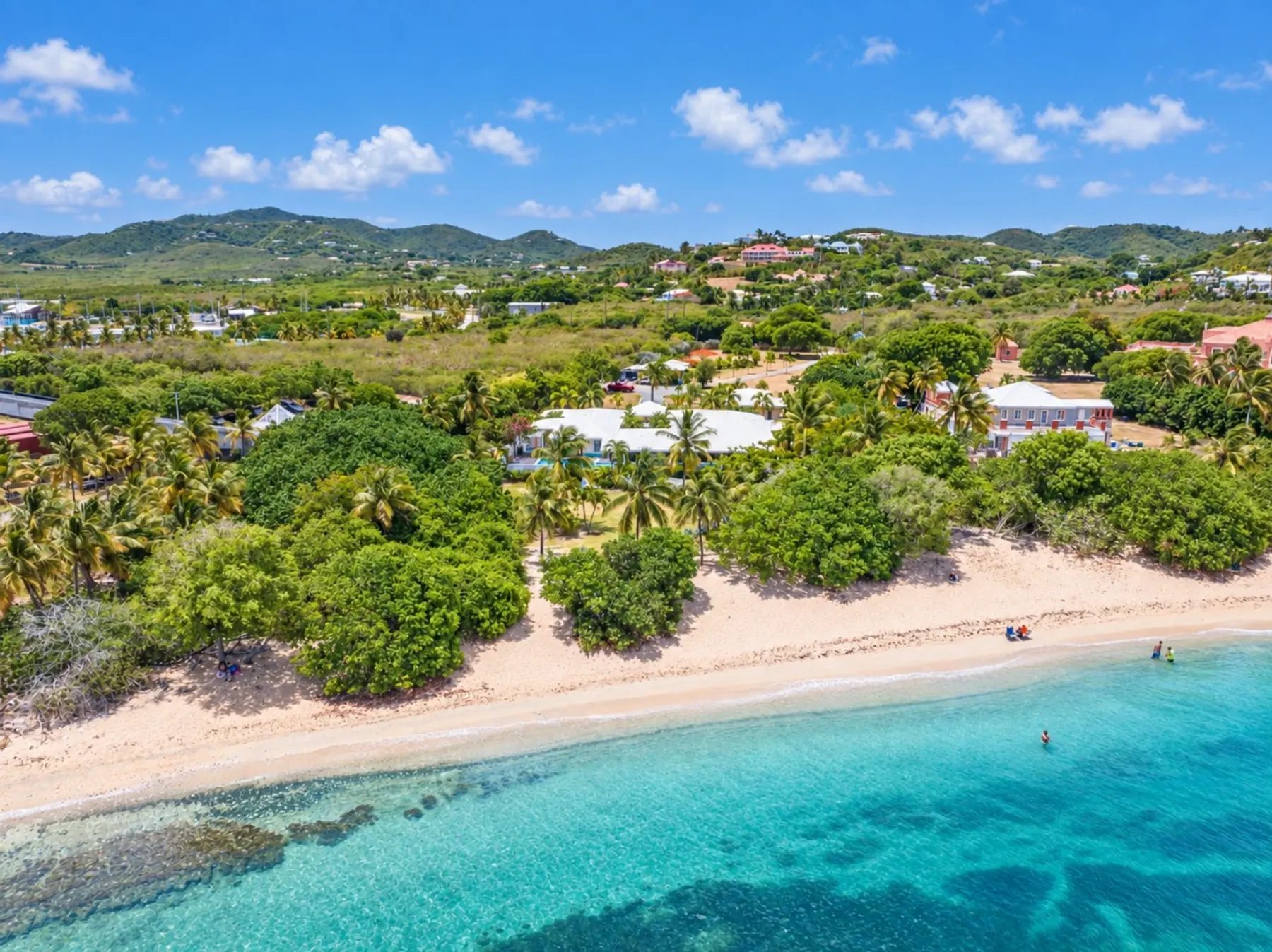
The rental side's live feed on 11 October held 13 homes with 38 bedrooms between them, sleeping 86 guests in all. The company's about page counts five on the beach and eight with a private pool, and the range runs from a one-bedroom condo for two to a six-bedroom beach house for twelve. Most are around Christiansted and the island's East End, with one on the west coast near Frederiksted. The count changes whenever a home is added, so it is a figure for that day only.

Two doors into the same office
Owners reach the rental side by two routes. The first is a sale. The firm's real-estate page says: “Because the sales desk and the rental desk sit in the same office, the brokerage sees both sides of the island market at once”. It adds that the brokerage can value a home for a sale and, “in the same conversation”, say what it might bring as a managed rental. A buyer's guide on the same site describes traffic in the other direction: “A steady share of the people who rent our villas end up asking about buying”.
One published case shows the two halves meeting. A client testimonial on the brokerage's team page, signed with a first name and an initial, says Boulger-Watrous helped the clients buy a beach home and Watrous now manages it. It is a first-party testimonial and it is one case. How many of the 13 managed homes were also bought through the firm, and how many guests have gone on to buy, are figures the company does not publish.
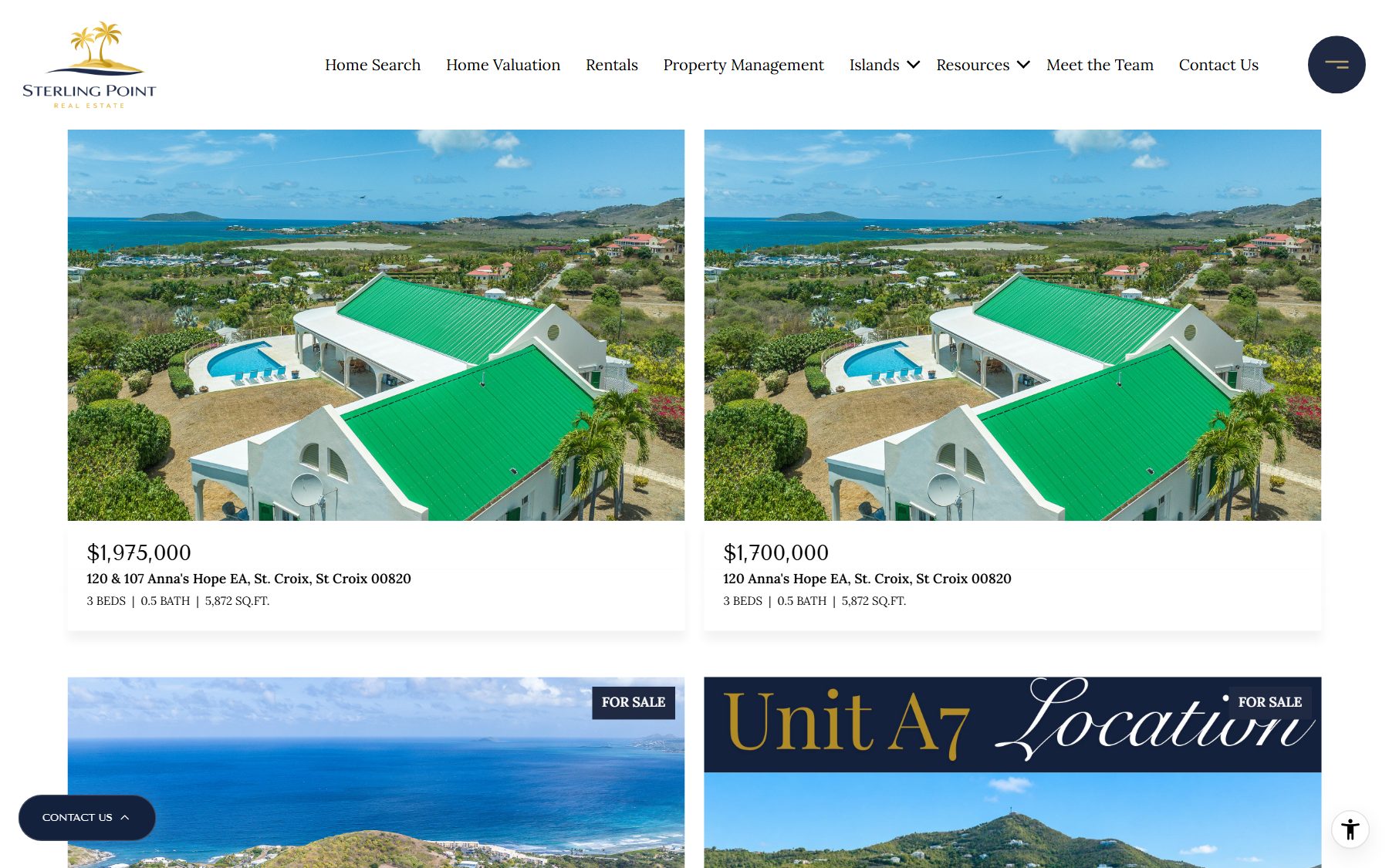
There is a market reason for selling and renting to meet at one address. St. Croix is a small market in which homes take time to sell: Coldwell Banker St. Croix Realty's report for the second quarter of 2026 put the median time on the market at 192 days, against 168 a year earlier, on 125 sales of all types. A house that waits half a year for a buyer can earn rent in the meantime, and a firm that holds both the listing and the calendar can arrange that without a second company. That reading is this paper's. The company does not make the claim.
The second door has nothing to do with a sale. The owners page answers the question directly: “the vacation-rental side manages homes for owners we've never sold and never will.” An owner on St. Croix can hire the management side and never deal with the sales desk.
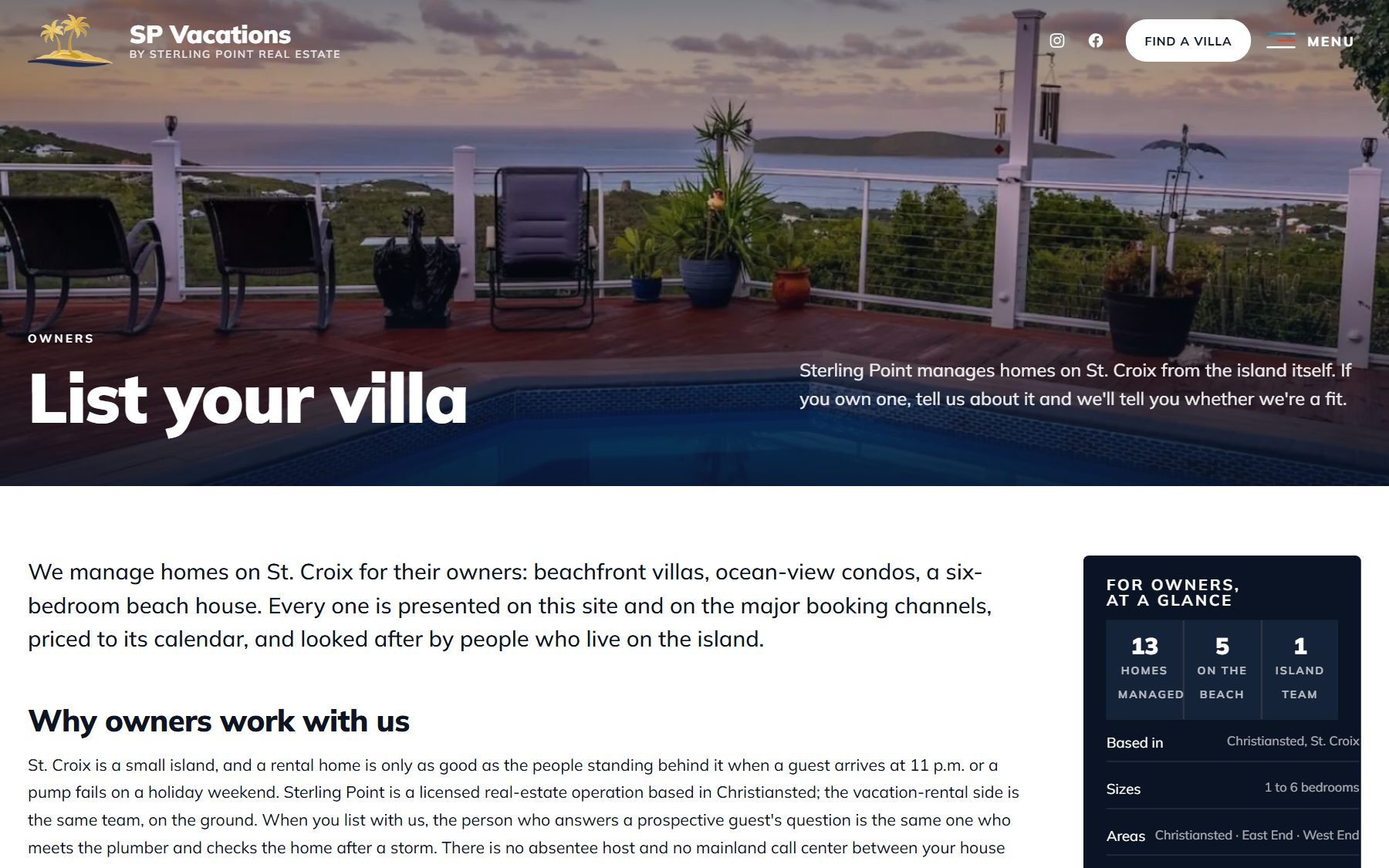
The same page sets out what the firm will not do at the start. The first step is a conversation and a walkthrough, and “no home is quoted from a photo”, which means no revenue estimate before someone has seen the house. The page lists the work that follows as photography, listing and pricing, then guests, turnovers, maintenance and reporting. The brokerage's property-management page adds distribution on Airbnb, Vrbo and direct booking, pricing that moves with demand, all guest communication and monthly owner statements. This article gives no management fee for the firm. An owner comparing managers should have each one's fees in writing.
The arrangement carries a tension that applies to any firm of this kind. A company that earns a commission when a house sells and a fee while it is rented is advising the owner on a choice in which it is paid either way, and the two payments differ in size and timing. The remedy is disclosure: what each route pays the firm, and what happens to forward bookings if the house sells.
What the territory asks of a rental manager
A manager in the U.S. Virgin Islands works under three sets of rules: a business licence for the rental, a tax on every short stay, and the real estate licences described above.
The licence comes first. The company's guide for owners says the Department of Licensing and Consumer Affairs has required a licence specifically for short-term rentals since 1 July 2021, covering stays of less than 90 days in private homes, condominiums and villas. Each rental home needs its own. The guide describes two size categories, one for homes that sleep five or more and one for homes that sleep up to four, gives the annual fees as $260 and $195, and tells owners to confirm the current schedule with the department. The Bureau of Economic Research's report on 2024 describes the same two licences, “Short Term Rental A” at $260 a year and “Short Term Rental B” at $195, and counts 464 licensed short-term rentals in the territory in 2023. A 2024 report by VI Consortium refers to categories A, B and C, so the current schedule is one to confirm with the department.
The tax is the larger job. The hotel room tax is 12.5% of the gross room rate, and the Bureau of Internal Revenue's Form 722 V.I. applies it to anyone who “rents or leases an apartment, condominium, timeshare, villa, or residence” for “less than 90 days”. The gross rate includes extras such as an energy surcharge or a maintenance fee and excludes food, drink and tips. The return is monthly, due by the 30th of the following month, and it has boxes for hotel, villa, condo, timeshare and other. Paying late costs a 15% penalty for the first month and 25% after that, plus interest of 1% a month.
Who files depends on where the booking came from. Airbnb collects and remits the tax for its hosts under an agreement that Governor Mapp announced on 19 May 2017. At the time Airbnb counted about 2,000 active listings in the territory and said a typical host earned $7,700 a year. A booking that arrives any other way, through another channel or directly, leaves the filing with the owner or the manager. A firm that promotes direct booking is therefore taking on a monthly return and the penalties that go with a missed one.
The rate itself is under political pressure. In March 2025 Governor Albert Bryan Jr. proposed a 20% tax on Airbnb-type rentals and 25% on other shared-economy services, VI Consortium reported. “We have 4,000 Airbnb rooms. We need to decrease that number so our teachers, our nurses, our working people, have some place to stay,” he said. He drew a line between those listings and villas, which he said serve a different clientele and should not carry the higher rate. No bill, vote or enactment of the proposal was found in searches up to 11 October 2026. The rate in force is 12.5%.
Hotels and condominium resorts are the other party to that argument. The Bureau of Economic Research's accommodations report for 2024, published in August 2025, recorded condominium occupancy falling to 37.2% from 56.3%, and attributed the fall to “ongoing competition from Airbnb and other short-term rental services”. The bureau's figures are subject to revision.
| Obligation | What it requires | Who carries it | Source |
|---|---|---|---|
| Short-term rental licence | A business licence for a home let for less than 90 days, required since 1 July 2021 and issued in size categories | The owner or the business that lets the home | Bureau of Economic Research, 2024 report; SP Vacations owner guide; VI Consortium, 21 May 2024 |
| Hotel room tax | 12.5% of the gross room rate, including extras such as an energy surcharge or maintenance fee | Whoever lets the home; Airbnb remits for bookings on its own platform | Bureau of Internal Revenue, Form 722 V.I.; Airbnb, 24 May 2017 |
| Monthly return | Form 722 V.I., due by the 30th of the following month | The owner or manager, for direct and other-channel bookings | Bureau of Internal Revenue, Form 722 V.I. |
| Late payment | 15% penalty for the first month, 25% after, plus 1% interest a month | The filer | Bureau of Internal Revenue, Form 722 V.I. |
| Real estate licence | A salesperson's licence needs a sponsoring licensed V.I. broker; licences run 1 January to 31 December | Brokerages and their agents | Department of Licensing and Consumer Affairs |
| Property-manager licence | None. Bill 35-0193 was vetoed in July 2024 | No one | Government House release, 11 July 2024 |
The 20% rate proposed in March 2025 has not been enacted. Licence fees and categories should be confirmed with the department.
Source: V.I. Bureau of Internal Revenue; V.I. Department of Licensing and Consumer Affairs; USVI Bureau of Economic Research; Government House; Airbnb; VI Consortium; SP Vacations
The property-manager licence that was vetoed
What the territory does not have is a licence for property managers. It came close in 2024. Bill 35-0193, an overhaul of the real estate statutes, would have required property managers to hold a property-management licence under the Real Estate Commission. VI Consortium's report of the hearing in May 2024 quoted the commission's chair, Laurent Alfred, a drafter of the bill, saying property managers had “operated for decades without effective regulatory oversight, thereby causing confusion among the public and within the real estate industry.” The report put the cost of developing the new exam at about $92,000.
The one substantial objection at that hearing came from an executive of a St. Croix villa-management company. He did not want his trade grouped with real estate agents, and he feared the new licence would jeopardise his firm's ability to collect and turn over the 12.5% hotel tax each month. Alfred's answer was that “if hotel occupancy tax has to be collected, it must be collected whether or not this industry is regulated under the real estate commission.”
The Legislature passed the bill at its session of 24 June 2024, and Governor Bryan vetoed it. A Government House release of 11 July said he wrote to the Senate President that the measure “creates an unnecessary barrier to entry for persons interested in pursuing a career as a property manager”. In place of a professional licence, the release said, he had directed the department to create a business-licence category for property managers and to adopt best-practice standards for the trade. Whether that category now exists could not be confirmed for this article.
The result is an uneven field. A manager that is also a brokerage already answers to the Real Estate Commission for its licensed people. A manager with no brokerage holds its business and rental licences and nothing particular to the trade. For an owner, that makes the public register more useful than any marketing page. It shows in a minute what a firm is licensed to do, and on which island.
The tools a visitor can check
Most of what a management firm says about its technology cannot be tested from outside. Some of this firm's can. The rental site's public villa feed names Hostaway as its source, and the checkout sits on a subdomain of the company's own address. Hostaway describes itself as “an All-in-One vacation rental software solution for growing property managers”. In practice that is a property-management system holding the calendar, the rates and the channel connections in one account.
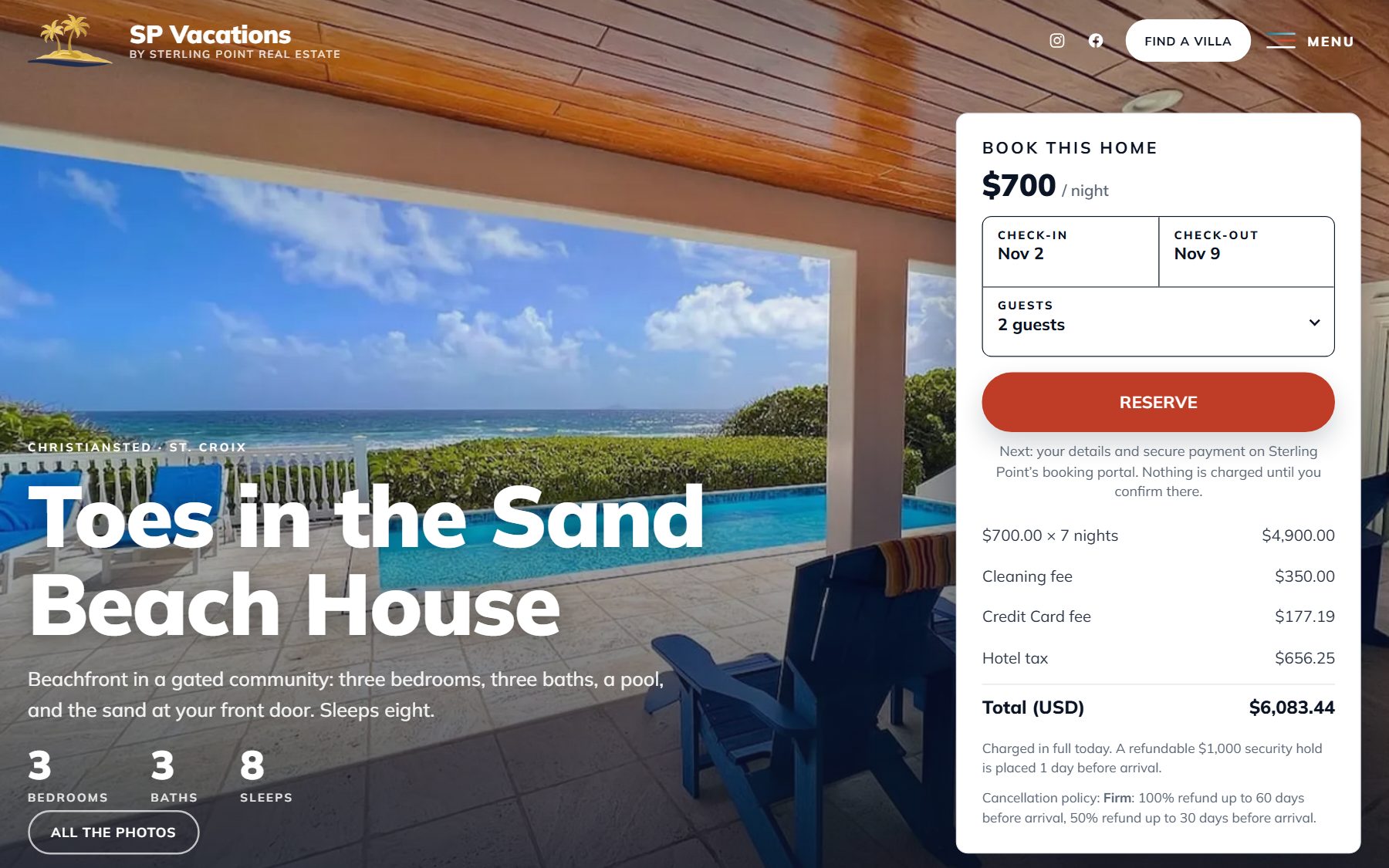
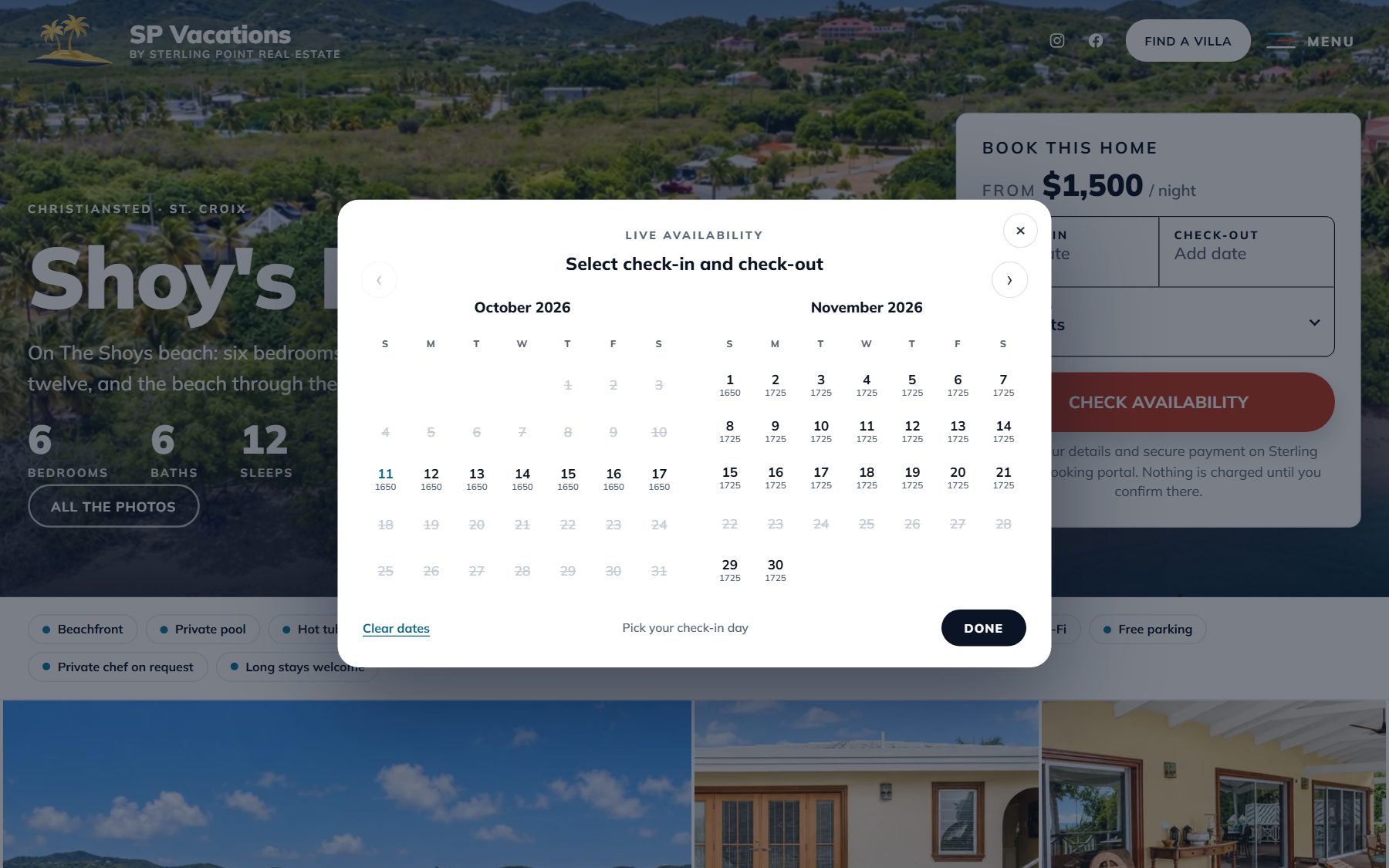
Three things are visible to any visitor. Each villa page opens a calendar that shows which nights are open and which are taken. Choosing dates produces a priced total for that home. And the reserve button passes the guest to a checkout on the company's subdomain, so a direct booking does not pass through a marketplace. A search across all 13 homes for six sample weeks, run on 11 October, returned availability and a total for every one.
The site is equally specific about its content. The about page says every villa page carries the home's own listing description and amenity list unedited, with selected guest reviews, “critical notes included”. The reviews come from Airbnb, Vrbo and guests who reserved directly, and each is labelled with its source. The same page says the company does not write its own reviews. Its claim for direct booking is limited. The page says it does not mean a “secret rate” and that it does mean “fewer layers”.
Why a manager bothers is clearer from trade data than from any one site. Lodgify's report on 2025, drawn from more than 1.6 million bookings and a survey of 270 U.S. hosts and managers, found that direct bookings in the United States brought stays 45.2% longer and booking windows 51.3% longer than marketplace bookings, at slightly higher daily rates. The same report shows how thin the year was: daily rates rose 1.6% against inflation of 2.7%, and 32.6% of hosts reported revenue growth. Those are one software vendor's figures and should be read as such.
Christiansted already has the booking pattern that suits a manager's own site. AirROI, a data firm that estimates from listing calendars, put the average booking lead time there at 74 days and the average stay at about seven nights for the 12 months to July 2026, with a minimum stay of four to six nights the most common setting. Guests who plan ten weeks ahead for a week's stay have time to find a manager's own site, which is the case for building one. The cost is everything a marketplace would otherwise do: the payment processing, the tax return and the marketing.
Running homes on an island
The work that fills a manager's week on St. Croix is physical. The firm's real-estate page gives the checklist it runs for buyers, and it doubles as a manager's list. Many houses run on a cistern that collects rainwater off the roof instead of a municipal line, so the roof's size and condition matter. Power comes from the territory's utility, and a fair number of homes add solar panels, batteries or a generator for the times it fails. Roofs are built and rated for hurricane season.
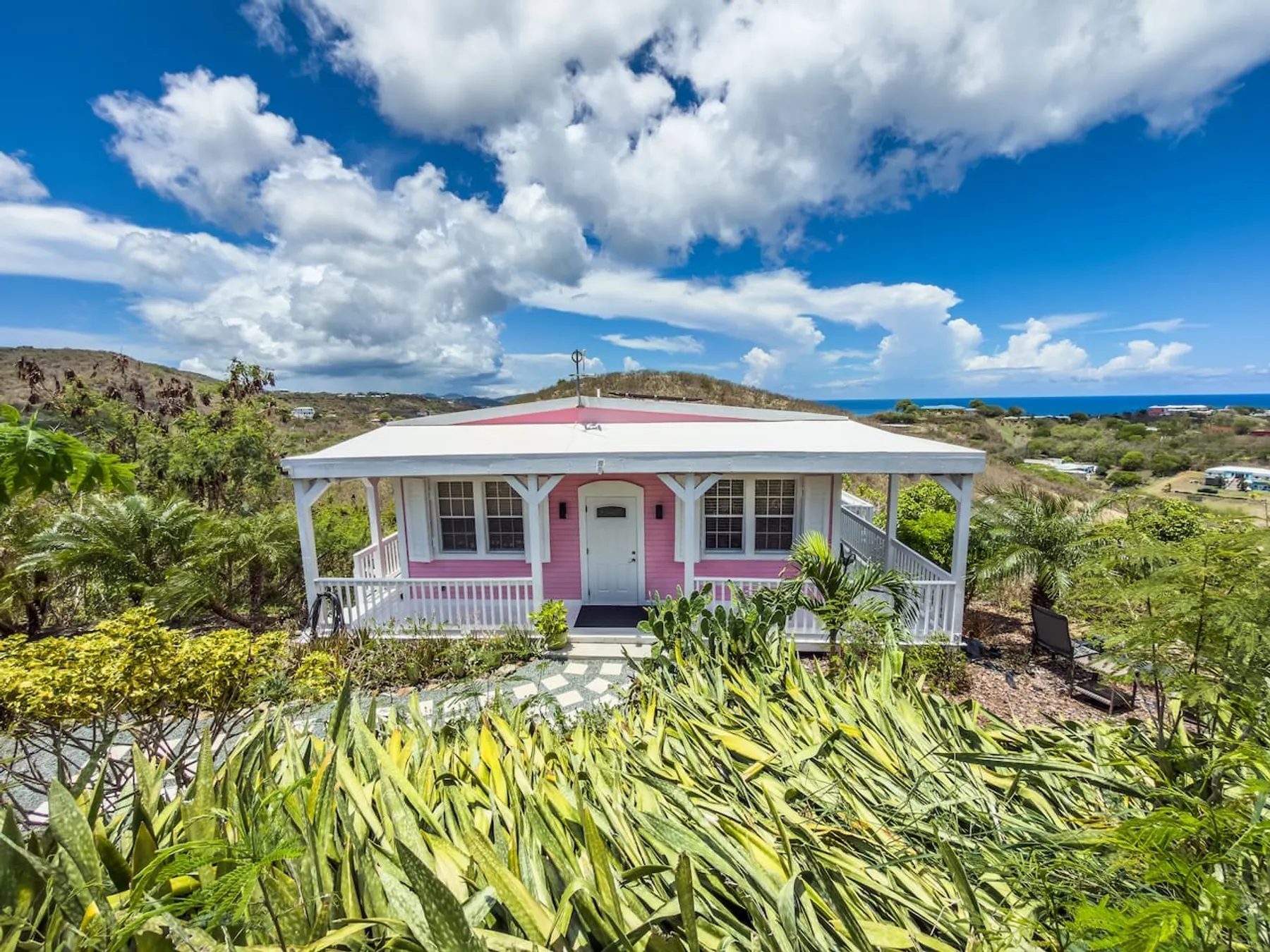
The listings show the range. One of the 13, a one-bedroom cottage in the hills near Christiansted, is described in its listing as fully off-grid, and the listing says it is not suitable for guests who need continuous cold air conditioning or guaranteed uninterrupted power. Two other homes are listed as running on solar power with battery backup. The page for a five-bedroom house on the East End says the roads up to it are narrow, winding and steep. A guest who reserved a three-bedroom beach house directly in April 2026 put the water question in one line of a review: “The house is on cistern water like many in St. Croix.”
The owners page compresses the service into a sentence: “the person who answers a prospective guest's question is the same one who meets the plumber and checks the home after a storm.” The brokerage's property-management page lists routine inspections, preventative maintenance, emergency response, hurricane preparation and a network of licensed vendors that it places “across St. Croix”.
Storms set the calendar. The National Hurricane Center dates the Atlantic season from 1 June to 30 November, with its peak on 10 September. The Bureau of Economic Research's air-arrivals table A26-JAN, dated 9 March 2026, shows what that does to demand: St. Croix received 5,868 air visitors in September 2025, against 22,464 in January of the same year. A manager's fixed costs do not fall with arrivals, and the quiet months are the obvious window for heavy maintenance.
Insurance is the cost that is hardest to pin down. No premium figures for the territory for 2025 or 2026 were found for this article. The most recent official statement located is from July 2023, when the Lieutenant Governor, who is also the insurance commissioner, said windstorm cover remained available. The same statement said that some reinsurers and insurers had left the territory, that those remaining were limited in what they could write, and that wood or mixed-frame homes could be refused, VI Consortium reported. An owner taking on a rental here should get a current insurance quote before a revenue estimate.
The second-island problem
On its home page the brokerage says it serves buyers, sellers and property owners “throughout the U.S. Virgin Islands”, and its site has property search pages for St. Thomas and St. John as well as St. Croix. The rental side has, so far, stayed on St. Croix. The owners page gives the management area as Christiansted, the East End and The Shoys, and the west end near Frederiksted, and all 13 rental homes are on the island.
The company has published nothing further on the subject, and this article reads nothing into that. The useful question for the trade is what it would take any St. Croix manager to add a second island, and the public facts answer most of it.

St. Croix is not next door to the other two. According to the island guide GoToStCroix, the QE IV passenger ferry leaves Gallows Bay in Christiansted at 8:00am and reaches the Blyden Terminal on St. Thomas at 10:10am. It returns at 3:00pm and arrives at 5:10pm. It sails on six days of the week, with none on Tuesday, at a listed fare of $85 one way or $150 return. A same-day trip therefore gives under five hours ashore. Air links between the two islands exist as well, but their current timetables could not be confirmed for this article.
St. John is a further step. It has no airport. The Department of Tourism describes the passenger ferry from Red Hook on St. Thomas to Cruz Bay as a crossing of about 20 minutes, hourly from 5:30am to 11:30pm, at $8.15 one way, with car barges taking about 30 minutes. No direct scheduled service between St. Croix and St. John was found, so a St. Croix manager reaches St. John through St. Thomas.
That geography decides the staffing. A turnover needs cleaners, a pool technician and someone who can meet a plumber the same afternoon. None of them can commute on a ferry that sails once a day. Sterling Point's description of its own service rests on one on-island team and a vendor network on St. Croix, and its team page lists four people. A second island at the same standard means a second crew and a second list of trades, hired and supervised there. That is this paper's reasoning from the company's account of its service, and it holds for any manager of this size.

The paperwork is lighter than the logistics. Business licences are issued by location and the register can be searched by island, so a new office would be visible there. Real estate licences come from one territorial commission. Whether a broker's licence held on St. Croix covers a sale on another island without a second office could not be settled from public pages, and is a question for the commission. Each rental home needs its own short-term rental licence, and its stays fall under the same monthly room-tax return, wherever it stands.
The software is the part that crosses the water at no extra cost. A cloud property-management system holds listings on any island in one account and one calendar. A site that reads its homes from that system shows a new one once it is added, and a checkout on the firm's own domain works the same from any address. The market on the other side is different. On AirROI's estimates from listing data, St. Thomas and St. John command higher nightly rates and higher occupancy than St. Croix, and the same Bureau of Economic Research table counts 723,563 air arrivals to St. Thomas and St. John in 2025 against 185,349 to St. Croix. A manager crossing over enters a bigger and dearer market with tools that scale and a service that has to be rebuilt from nothing.
| What a manager needs | On St. Croix | On a second island | Source |
|---|---|---|---|
| Getting there | Homes within a drive of the office | Ferry leaves 8:00am, arrives St. Thomas 10:10am; returns 3:00pm, arrives 5:10pm; no Tuesday sailing; $85 one way, $150 return | GoToStCroix |
| Reaching St. John | No direct scheduled service found | Red Hook to Cruz Bay ferry, about 20 minutes, hourly 5:30am to 11:30pm, $8.15 one way | V.I. Department of Tourism |
| Crews and trades | One on-island team and a licensed vendor network across St. Croix | A separate crew and vendor list on each island | Sterling Point pages; Stay Gazette reasoning |
| Business licence | Two office records, both St. Croix, valid to 31 December 2026 | Issued by location; a new office would appear on the register | Department of Licensing and Consumer Affairs register |
| Rental licence and tax | A licence for each home; 12.5% room tax filed monthly | The same on any island | Bureau of Internal Revenue, Form 722 V.I.; SP Vacations owner guide |
| Software | One Hostaway account and calendar; checkout on the firm's own domain | The same account; no change | SP Vacations site; Hostaway |
Ferry times and fares are as listed in October 2026 and should be checked with the operators. The firm's rental side has, so far, stayed on St. Croix.
Source: GoToStCroix; U.S. Virgin Islands Department of Tourism; V.I. Department of Licensing and Consumer Affairs; V.I. Bureau of Internal Revenue; company pages
The big managers are breaking up
The national trade is moving toward firms of this size. Casago completed its purchase of Vacasa on 1 May 2025, creating a group that managed more than 40,000 homes. By 21 August 2026, Short Term Rentalz reported, Casago had sold every former Vacasa market to local franchise owners, destination businesses or regional managers, with the last handovers due in September.
“We set out with a clear vision: to bring vacation rental management back to local ownership, local accountability and local hospitality.”Joe Riley, president of Casago, quoted by Short Term Rentalz, 21 August 2026
The industry's largest roll-up has, in other words, been taken apart and handed to operators who live where the homes are. Evolve picked up another piece in November 2025, when it bought Vacasa's Guestworks business and its roughly 1,000 homeowners, the same publication reported.
On St. Croix the professional share is small. AirROI's estimate for Christiansted, for the 12 months to July 2026, is 438 active listings, 17.1% more than a year earlier, of which 11.0% are professionally managed by its definition. Average annual revenue per listing was $26,135 on the same estimate, down 2.1%. More homes sharing slightly less money each is the condition in which owners start to look for a manager, and in which managers compete on cost. No reliable national figure for the professionally managed share was found to set beside it.
A rebuilt resort will test the island's rental owners from the other side. VICI Properties and Club Med announced on 15 June 2026 that VICI had bought the Carambola Beach Resort at Davis Bay and leased it to Club Med, with 150 keys and a reopening targeted for the fourth quarter of 2027. Sterling Point's own blog took a cautious view of what that means for owners nearby, writing that an all-inclusive “can cut demand as easily as it adds it”.
The Gazette Verdict
Housing a villa manager inside a brokerage is a sound way to build a management business on a small island, and it is a weak reason to expect that business to travel. On St. Croix the pairing gives one firm the listing and the calendar in a market where a house can wait 192 days for a buyer, and it puts the manager under a licensing body in a territory that vetoed a licence for managers in 2024. Across the water none of that helps with a turnover. The ferry gives a St. Croix crew under five hours on St. Thomas, the vendor list is local, and the team is four people. The software would carry a second island tomorrow. The service would have to be hired there.
The other side
A brokerage that manages rentals is paid when a house sells and paid while it is rented, and an owner asking which to do is asking an adviser with a stake in both answers. That holds for every combined firm, and it is why both prices belong in writing. The villa manager who opposed the 2024 bill had a point as well: letting a house by the week is hospitality work, and he did not want it regulated as real estate. Direct booking moves the monthly tax return and its penalties onto the manager. And with 11.0% of Christiansted listings professionally managed on one estimate, most owners there are evidently running their rentals without either kind of firm.
What hosts should do now
Five practices from this case apply to owners and managers well beyond St. Croix.
- Read the register before the brochure. Where a public licence search exists, use it. It shows which licences a firm and its people hold, on which island and until when.
- Settle who files the room tax. A marketplace may remit for its own bookings. Direct and other-channel bookings leave the 12.5% and the monthly Form 722 V.I. with the owner or the manager, and the management agreement should say which.
- Ask a combined firm for both prices. If one company can sell the house or rent it, get the commission and the management fee in writing before taking its advice on which to do, and ask what happens to forward bookings at a sale.
- Count crews before islands. Software will list a home anywhere. Before taking one on across water, count the cleaners, trades and inspectors who can reach it the same day, and price them as a separate operation.
- Show guests what can be checked. A live calendar, an itemised total with the tax on its own line and reviews labelled by source are claims a visitor can test.
Three things are worth watching in the territory. The first is the 20% proposal, which would need a bill and a vote before it changed the rate. The second is the business-licence category for property managers that the governor directed in 2024. The third is the register itself, where an office on a second island would appear for any firm that opened one.
The company's pages on management, direct booking and the brokerage are published in full at spvacationsvi.com. The register, the tax form and the reports used here are listed below.
Common questions
Does a property manager need a licence in the U.S. Virgin Islands?
There is no licence specific to property managers. The Legislature passed one in June 2024 as part of Bill 35-0193 and Governor Bryan vetoed it, directing the Department of Licensing and Consumer Affairs to create a business-licence category instead. A short-term rental itself needs a business licence, and anyone selling real estate needs a real estate licence.
What tax applies to a short-term rental in the U.S. Virgin Islands?
The hotel room tax is 12.5% of the gross room rate on stays of less than 90 days, according to the Bureau of Internal Revenue's Form 722 V.I. The return is monthly and due by the 30th of the following month. A 20% rate was proposed by the governor in March 2025 and has not been enacted.
Who remits the room tax on a direct booking?
The owner or the manager. Airbnb collects and remits the tax for bookings on its own platform under a 2017 agreement with the territory. Bookings that come through other channels or directly leave the monthly filing with whoever lets the home.
Does Sterling Point manage rentals on St. Thomas or St. John?
Its rental side has, so far, stayed on St. Croix: on 11 October 2026 all 13 homes on its rental site were on that island. The brokerage describes itself as serving all three islands, and the company has published nothing further on the subject.
How long is the ferry from St. Croix to St. Thomas?
The QE IV passenger ferry is listed as leaving Gallows Bay at 8:00am and arriving at 10:10am, returning at 3:00pm, six days a week with no Tuesday sailing. Check times and fares with the operator before relying on them.
Sources
- V.I. Department of Licensing and Consumer Affairs, Public licence search (business and real estate licence records for Sterling Point Real Estate LLC, all islands) (Read 11 October 2026).
- Office of the Lieutenant Governor, Division of Corporations and Trademarks, Corporate and trade name register (Sterling Point Real Estate LLC; SP Vacations) (Read 5 October 2026).
- V.I. Department of Licensing and Consumer Affairs, Requirements for Real Estate Commission Licensure and Examination (Read 11 October 2026).
- V.I. Bureau of Internal Revenue, Form 722 V.I., Hotel Room Tax return and instructions (Revised May 2017).
- Airbnb Newsroom, U.S. Virgin Islands kick off Airbnb's first tax collection agreement in the Caribbean (24 May 2017).
- VI Consortium, Bryan proposes 20 percent Airbnb tax to tackle USVI housing shortage and boost hotel occupancy (23 March 2025).
- USVI Bureau of Economic Research, USVI 2024 Tourism Report and 2024 USVI Accommodations Report (condominium occupancy, page 3; short-term rental licences, page 5) (August 2025).
- USVI Bureau of Economic Research, Air visitor arrivals, table A26-JAN (2025 by island and by month) (9 March 2026).
- Government House, U.S. Virgin Islands, Governor Bryan acts on bills passed in 35th Legislature's June session (veto of Bill 35-0193) (11 July 2024).
- VI Consortium, Property managers face new licensing rules in Virgin Islands real estate overhaul (21 May 2024).
- Hostaway, About Hostaway (Read 11 October 2026).
- Lodgify, 2026 U.S. State of the Industry Report, press release (January 2026).
- AirROI, Christiansted short-term rental market data, with the St. Croix, St. Thomas and St. John island pages (estimates, August 2025 to July 2026) (Updated 12 September 2026).
- Coldwell Banker St. Croix Realty, St. Croix Q2 2026 quarterly report (13 July 2026).
- VI Consortium, Windstorm insurance remains available in USVI despite global insurance market pressures, Lt. Governor assures (12 July 2023).
- National Hurricane Center, Tropical cyclone climatology (season dates and peak) (Read October 2026).
- GoToStCroix, QE IV Ferry: schedule and fares between St. Croix and St. Thomas (Read 11 October 2026).
- U.S. Virgin Islands Department of Tourism, Getting to St. John via St. Thomas (Read 11 October 2026).
- Short Term Rentalz, Casago completes sales of former Vacasa markets (21 August 2026).
- Short Term Rentalz, Evolve acquires Guestworks from Vacasa (27 November 2025).
- Hotel Online, VICI Properties and Club Med announce acquisition and redevelopment of Carambola Beach Resort in St. Croix (15 June 2026).
- Sterling Point Real Estate, How Club Med St. Croix Could Affect Davis Bay Property (company blog) (20 August 2026).
- Sterling Point Real Estate, Home page, team page, agent biographies, portfolio and property-management page (Read 11 October 2026).
- SP Vacations, About, owners, real-estate and book-direct pages, owner and buyer guides, villa pages, reviews and the public villa feed (Read 11 October 2026).
A note on this story: Stay Gazette's publisher works with SP Vacations on its marketing. The facts here come from the company's published pages and the public sources listed above. Sources were read on or before 11 October 2026. To report an error, write to the desk; see the corrections policy.

More features
 Case study · DesignBuilding a Vacation Rental Around a Single AmenityBy Wren Calloway · 19 min read
 Case study · WorldHow a Rio Brokerage Sells and Lets the Same ApartmentsBy Tomás Ferreira · 20 min read
 Case study · PlatformsHow One St. Croix Villa Built Its Own Booking ChannelBy Jesse Kohl · 20 min read