New Orleans Limits Short-Term Rentals to One Per Square Block
The City Council capped residential short-term rentals at one per square block, required an operator who lived on site and left the choice between neighbors to a lottery. The same day it let owners apply for a special exception, with no more than two in effect on a block.
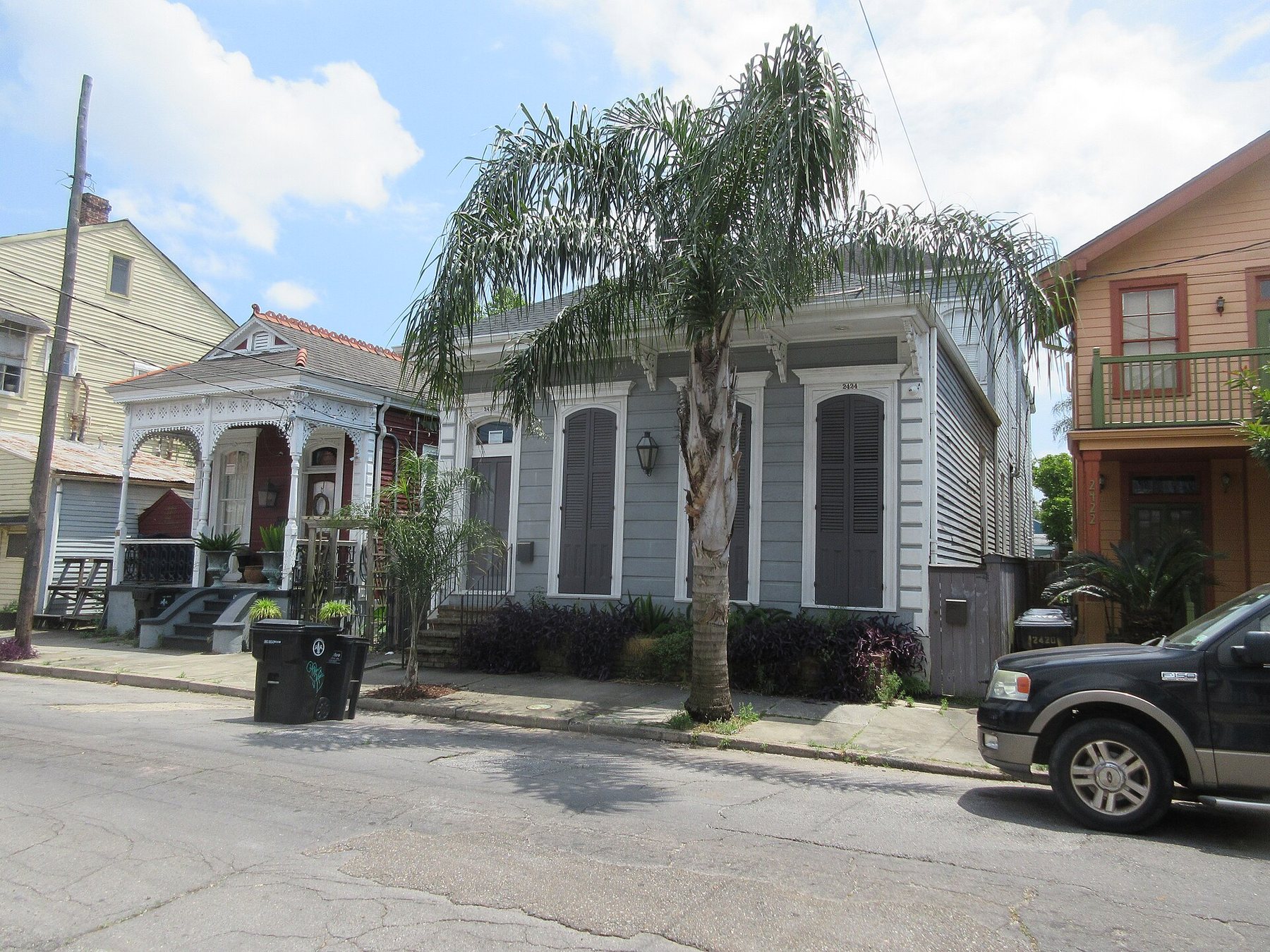
Houses on Dauphine Street in the Faubourg Marigny, New Orleans, photographed on 29 April 2019. A street view of the neighborhood, which WWNO reported would likely feel the square-block limit most; the houses are not identified as rentals. Photo: Dauphine Street, Faubourg Marigny, New Orleans, 29th April 2019 04 by Infrogmation of New Orleans, CC BY-SA 4.0, via Wikimedia Commons (resized).
From the record. This is a look back at March 2023. The desk wrote it on 11 October 2026 from sources published at the time; Stay Gazette opened in July 2026 and did not report this as it happened.
On 23 March 2023, the New Orleans City Council adopted a pair of ordinances that limited short-term rentals in residential areas to one per square block and required the person operating each one to live on site. The council was working against a deadline at the end of the month, set after a federal appeals court found a key part of the city's earlier rules unconstitutional.
The council loosened its own cap the same day. By five votes to two it approved an amendment that let owners apply for a special exception, with no more than two in effect on any block at one time. The council's minutes record that the zoning ordinance carrying the cap, Calendar No. 34,083, was then adopted seven to nothing, and the companion ordinance on permits and penalties, Calendar No. 34,082, six to one. The rules were due to take effect on July 1, and the city still had to create the lottery that would decide who kept a permit.
“There’s no solution we’re going to come up with today that’s not going to hurt people, because it’s unavoidable,” council president JP Morrell said, as WWNO reported.
Why the city had to start over
Under the city's 2019 law, an owner in a residentially zoned area had to prove that the home being rented out was a primary residence, by showing a homestead exemption for it. In August 2022 the U.S. Fifth Circuit Court of Appeals found that provision unconstitutional. WWNO summarized the ruling: the requirement discriminated against out-of-state owners.
That left the city needing a law that did not turn on owner occupancy, and it chose density. In January 2023 the City Planning Commission recommended one short-term rental per blockface, meaning one side of a block. Airbnb owners called that too restrictive. Housing advocates and neighborhood leaders called it far too permissive.
At a special meeting on 2 March the council went further than its planners and advanced a limit of one per square block. The vote was four to three. Council members Joe Giarrusso, Eugene Green, Oliver Thomas and Lesli Harris voted for it. Freddie King, Helena Moreno and Morrell voted against.
At a committee hearing on 14 March, Fox 8 reported, dozens of short-term rental operators said the law needed more enforcement, not more regulation, and a lottery for permits was strongly opposed.
What the council passed
- The cap. One short-term rental per square block in residentially zoned areas, a tighter limit than the planners' one per blockface. The ordinance counted every lot on a city block, including interior lots with no street frontage.
- A resident operator. For a new permit, the operator had to prove they lived on site. The operator could be the owner or a tenant, and had to be available to resolve problems such as noise or trash complaints within an hour.
- People, not companies. An owner or operator had to be at least 18 and a natural person, which ruled out an LLC or any other business entity, and each could hold only one permit. The new permits were classed as non-commercial and the old residential category was eliminated.
- Penalties. Three quality-of-life violations, such as excessive noise, could cost a rental its permit. An owner or operator whose permit was revoked could be kept from applying again for as long as five years, and the property itself could be shut out of short-term renting for the same period. Neighbors could now bring claims of their own against owners who broke the city's short-term rental laws.
- Data. Platforms such as Airbnb were required to provide more data to the city.
- Training. Fox 8 reported that owners and operators would have to take a training course.
Council vice president Helena Moreno welcomed the data rule. “And now we’ve actually seen that other cities have been able to have the platforms turn over the data to them,” she said.
The lottery and the exception
A cap of one per square block needed a way to choose when more than one owner applied. The answer was a lottery, with the procedures left to the Department of Safety and Permits.
Council member Freddie King introduced his amendment a day before the meeting. As adopted, it let a property owner ask for a special exception to the block limit, with no more than two exceptions in effect on a block at one time. Neighbors within 100 feet of the property would be notified, City Planning Commission staff would review each request and make a recommendation, and the council would decide.
WWNO reported that owners who said short-term rental income helped them meet rising housing costs thanked King for it. Critics said the exception weakened a limit that housing advocates already regarded as a compromise on an outright ban, and some warned that the process invited political preference.
The numbers behind the fight
The figures in WWNO's reporting came from an analysis by Jane Place Neighborhood Sustainability Initiative, which WWNO described as a housing justice group. It counted 127 active short-term rental permits in the Marigny's residential zones as of December, and found that 79 would be allowed under the square-block limit.
Jane Place also said that in the neighborhoods where vacation rentals were popular there were three to four times as many Airbnb listings as permitted short-term rentals. In Tremé/Lafitte it counted 410 Airbnb listings as of December, of which only 89 had city permits.
Airbnb made its case the day before the vote. In a newsroom post on 22 March it published a poll by Dr. Silas Lee and Associates, prepared for Airbnb and Pelican State Partners, which by the company's account found 75% of New Orleans residents in favor of short-term rentals so long as the regulations were balanced. The company said it had collected and remitted approximately $23 million in tourism taxes in New Orleans in 2022, and that it included a mandatory permit field on all listings there. Of the cap and the lottery it wrote: “While these measures aim to address community concerns, they pose significant challenges for local residents who rely on home sharing.”
Commercial rentals were left for later
On 9 March the council placed a year-long moratorium on new commercial permits in Historic Neighborhood Mixed Use zones. WWNO reported that the purpose was to keep investors from buying up properties while the residential rules were rewritten. On 23 March it extended a temporary ban on new non-commercial permits and directed the City Planning Commission to study commercial short-term rentals.
Morrell described the new laws as the council's last and best attempt to bring the industry under control. If problems with the platforms continued, he said, there would be no short-term rentals in New Orleans.
The Gazette Verdict, looking back
The council wrote a hard cap and kept the power to bend it, which left a New Orleans permit depending on chance and on politics. The court had removed the homestead test, so density was the tool left. A cap needs a tiebreaker, and the city chose a lottery it had not yet created, plus an exception that only the council could grant. Jane Place's count shows the stakes: 127 permits in the Marigny's residential zones against 79 places. Airbnb pointed to approximately $23 million in tourism taxes remitted in 2022, and hosts said the income covered their housing costs. The part with the longest reach was quieter: platforms had to hand over more data where, on Jane Place's count, popular neighborhoods had three to four times as many Airbnb listings as permitted rentals. The lesson for a host was to live on site, hold one permit in a person's name, and never build a budget on a lottery.
The other side
The council's defenders had the better legal argument. The Fifth Circuit had struck down the residency test, so a density limit was what remained, and any density limit has to choose between neighbors. A lottery is a neutral way to do it. The exception came with safeguards: notice to neighbors within 100 feet, a review by planning staff and a final decision by the council. Owners who relied on the income thanked King for it. Housing advocates argued from the opposite side that one per square block was the least the council could do, and pointed to the listings operating without permits. Morrell said no solution would avoid hurting people.
What it meant for hosts
For a New Orleans host in a residential zone, the vote of 23 March 2023 set out what to get in order before July 1.
- Residency. The operator, whether the owner or a tenant, had to live on site, prove it, and be available to resolve complaints within an hour.
- One permit, one person. Owners and operators were limited to one permit each and had to be natural persons, so an LLC could not hold one.
- Three violations. Three quality-of-life violations could end a permit and keep both the person and the property out for up to five years.
- The lottery. Where more than one owner applied on a square block, a lottery would decide. The Department of Safety and Permits still had to set the procedures.
- The exception. An owner could apply for one, with no more than two in effect on a block, neighbors within 100 feet notified and the council deciding.
- No new permits in the meantime. The council extended its temporary ban on new non-commercial permits.
Unpermitted listings carried more risk than before. The platforms had to give the city more data, and the council president had said in public what would follow if the new rules failed.
Sources
- WWNO New Orleans Public Radio, New Orleans short-term rentals limited to 1 per square block, but council also passes exceptions (23 March 2023).
- Airbnb Newsroom, New polling data highlights New Orleanians’ support for short-term rentals (22 March 2023).
- WWNO New Orleans Public Radio, Rule to limit New Orleans short-term rentals to 1 per square block advances; see next steps (2 March 2023).
- WWNO New Orleans Public Radio, New Orleans council puts pause on new short-term rentals in mixed-use areas (9 March 2023).
- Fox 8 WVUE, Clock is ticking for New Orleans council to decide on short-term rental regulation (14 March 2023).
- Fox 8 WVUE, City council votes to change requirement for short term rental owners and operations (23 March 2023).
- New Orleans City Council, Minutes, Regular City Council Meeting, Thursday, March 23, 2023 (23 March 2023).
- New Orleans City Council, Ordinance No. 29382 M.C.S., Calendar No. 34,083 (as amended), adopted March 23, 2023 (23 March 2023).
Part of the Stay Gazette record for March 2023. Filed on 11 October 2026; every specific was checked against the sources above, which were read on or before that day. To report an error, write to the desk; see the corrections policy.

Also filed on March 2023
- WorldAirbnb Removes Quebec Listings Without Permits After Old Montreal FireEight days after a fire killed seven people in an Old Montreal building that held prohibited short-term rentals, Airbnb agreed to remove Quebec listings that had no provincial permit. Within days, hosts were entering 123456 in the new field.
- The recordMarch 2023, the whole month
- The recordEvery month on the record