AirDNA Reports Falling Occupancy as US Rental Listings Reach 1.37 Million
AirDNA's review of June 2022, published on 21 July 2022, showed demand up 16.3% and occupancy down 9.2% as listings grew 25.4%. Hosts were warned that competition could force rates down.
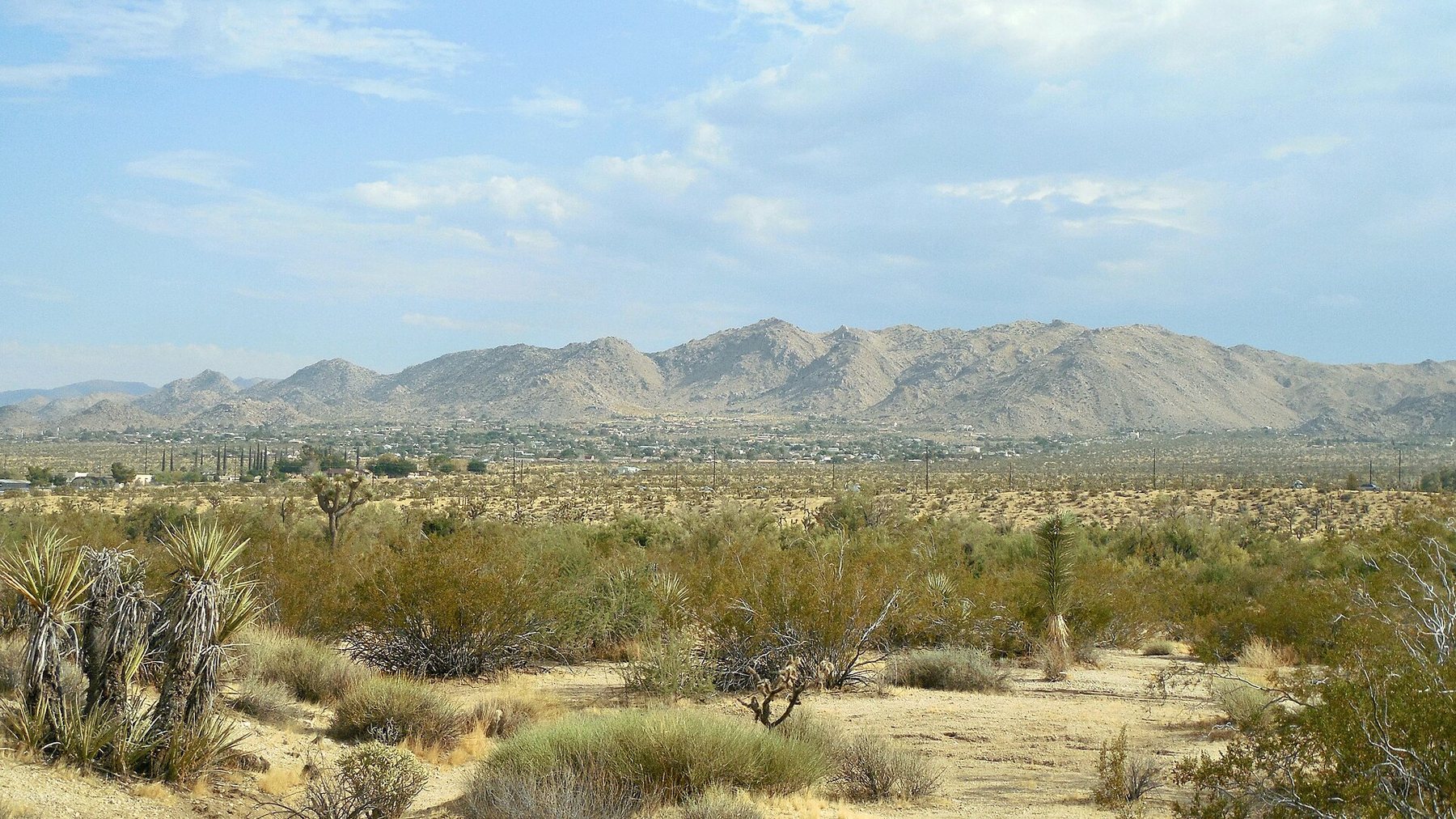
A southerly view of the town center of Joshua Tree, California, with the mountains of Joshua Tree National Park behind it, photographed in September 2017. AirDNA's July 2022 outlook named Joshua Tree as the coastal or mountain market where occupancy had declined most. Photo: Joshua Tree CA 20170907 by Niranjan Arminius, CC BY-SA 4.0, via Wikimedia Commons (resized).
From the record. This is a look back at July 2022. The desk wrote it on 11 October 2026 from sources published at the time; Stay Gazette opened in July 2026 and did not report this as it happened.
On 21 July 2022, AirDNA reported that the United States had 1.37 million short-term rental listings available in June, 25.4% more than a year earlier, and that occupancy had fallen 9.2% to 63.6%. Guests had not gone away. Demand was up 16.3% on June 2021 and stood 23.8% above 2019. There were far more places to stay, and the data company said in its monthly review that the growth in listings was what drove occupancy down.
The review arrived ten days after AirDNA's mid-year outlook, published on 11 July 2022, which had told owners where the year was heading. The outlook raised the forecast for 2022 demand growth to 20.3%, from 14.1%, expected available listings to increase by 21%, and lowered the forecast for average occupancy to 58.2%, from the 59.8% it had predicted the previous October.
What the June figures showed
Average daily rates rose 4.5% from a year earlier to $291, which was 29.5% above 2019. AirDNA noted that the increase was close to May's 4.7% and well short of the double-digit rises of the first months of 2022. Revenue across the market was 21.5% higher than in June 2021.
The slide in occupancy was broad. Of the 50 largest markets, 40 recorded a year-over-year decline. Fort Lauderdale, Big Bear in California, and Miami each fell by more than 20%. Washington, D.C. had the largest gain, 15.6%, and was still 6.7% below its 2019 level.
Rates split by type of market. They grew by more than 9% in urban and coastal markets. In mountain locations, where AirDNA said the occupancy declines were greatest, they rose 0.6%. Eleven of the 50 largest markets charged less than a year earlier: Big Bear was down 24%, New Orleans 7.5% and Miami 7.2%. Chicago was up 37.4%.
Where the new listings hurt
AirDNA sorted markets by how fast their listing counts had grown. Where listings grew less than 20% over the year, occupancy fell 5.6%. Where supply grew more than 30%, it fell by more than 11%. Rates rose more than twice as fast in the low-growth group as in the high-growth markets. Revenue per available rental rose 1.7% in the low-growth group and fell 8.7% in what AirDNA called the high listing growth markets.
The review drew the conclusion for owners in one line, writing that “the growth of new supply has significantly reduced the occupancy of existing properties and reduced the ability of hosts to continue to raise prices”.
The outlook gave an example. Among coastal and mountain markets, Joshua Tree, California, had the steepest fall in occupancy: its supply had risen more than 40% over the year against a 10% increase in demand.
The outlook also explained why the comparison looked so harsh. It called 2021 an anomaly, a year of record demand in which supply shrank as many owners kept their rentals for their own use, let them long term or sold up. For the first half of 2022, it said, occupancy was 7.5% higher than in 2019 and 1.2% below 2021.
There were early signs that the rush was easing. The June review counted 80,000 new listings in the month, down from 83,000 in May, and said monthly additions appeared to have peaked. The outlook, ten days earlier, had put May's additions at 88,000 and said they took available listings to a new high. Growth in new listings slowed in large cities and in destination and resort markets, the review said, and kept climbing in rural areas and in small and midsize cities.
Why buying another rental got harder
Both documents tied the expected slowdown to the cost of money. The outlook said home prices were up more than 20% in a year and that the average 30-year fixed mortgage rate had gone from 2.8% to 5.8% as of the end of June 2022. It estimated that the average 30-year fixed mortgage payment for a higher-end home had risen 58% in a year. The review gave the same 58% for the average 30-year fixed payment and said most of the rise had come within a couple of months.
AirDNA tracked what it called the revenue premium: the expected monthly revenue of a short-term rental measured against the average monthly mortgage cost. That premium fell from more than 80% at its peak in summer 2021 to 30% as of May 2022, the lowest in four years. By AirDNA's account, 30% was only just enough to pay the average property management fee.
Inman, reporting on the outlook on 11 July 2022, drew the lesson for buyers: with so much new supply weighing on occupancy, investors might soon need to be more selective about where they put their money. The outlook expected the average listing to earn 2.1% more revenue in 2022 than in 2021. For 2023 it forecast listings averaging almost 1.4 million, an 8.6% increase.
The warning on rates
With inflation above 9%, the June review said, hosts were under pressure to keep raising rates to cover operating costs. The outlook said average rates were up 10.4% year over year in 2022 to that point and forecast a 6.3% rise for the full year, against 12.1% in 2021, then 3.4% in 2023. It added a caution: “competition to attract guests may push hosts to start lowering rates in order to maintain their share of booking activity”.
Jamie Lane, AirDNA's VP of research, summed up the year in comments carried by Short Term Rentalz on 12 July 2022: “2022 will be a record year for STRs, with more nights stayed in a rental than at any other point in history. A huge influx of new supply has even outpaced demand growth, pushing occupancy down.”
Forward bookings supported the first half of that statement. As of the end of June, more nights had been booked for June to August 2022 than for any earlier summer, 12.3% more than at the same point in 2021. In the June review, third-quarter demand was pacing 11% above 2021 and third-quarter rates were 7% higher than at the same point a year earlier. For 2023, the outlook expected demand to grow 5.7%, about a quarter of the 2022 rate, and occupancy to average 57.4%.
The Gazette Verdict, looking back
July 2022 was the month the numbers told hosts that their occupancy was being set by the listing next door, and the hosts who kept pricing for 2021 were the ones exposed. Demand rose 16.3% and occupancy still fell 9.2%. In what AirDNA called the high listing growth markets, revenue per rental dropped 8.7%. Where listings grew less than 20%, it rose 1.7%. The money went to guests, who had more homes to choose from, and to the booking platforms, in a year AirDNA expected to set a record for nights stayed. It came from existing owners, whose forecast gain for the year was 2.1% while inflation ran above 9%, and from late buyers, who faced a mortgage payment 58% higher for a 30% premium. The lesson for a host: count the new listings in your market before you set next season's rates.
The other side
AirDNA's own reading was calmer, and it has force. Occupancy of 63.6% was still 8.6% above 2019. The year it was being compared with, 2021, was an anomaly in which demand hit records while supply shrank. The markets that added the most listings also had the most demand growth, which AirDNA took as a sign they had been short of places to stay. Booking pace showed no sign of demand turning negative, rates were still rising, and monthly additions looked to have peaked in May. On that view, July 2022 showed a market returning to normal, and a host who measured against 2021 was measuring against the wrong year.
What it meant for hosts
For an owner running rentals in July 2022, the two reports pointed to three pieces of work.
- Check local supply. The gap between a market where listings grew less than 20% and one of the fast-growing markets was the gap between revenue per rental rising 1.7% and falling 8.7%. A host needed the listing count for the home market, and the national average could not supply it.
- Reset the rate plan. Rates in mountain markets rose 0.6% in June, and 11 of the 50 largest markets charged less than a year earlier. AirDNA's advice to hosts and managers was to use pricing strategy to keep ahead of rival listings, and it warned that competition could push rates down.
- Budget for a flat year. The outlook expected the average listing to earn 2.1% more in 2022 than in 2021, with inflation above 9% raising the cost of running a rental.
For anyone weighing a purchase, the arithmetic had changed within a couple of months. A mortgage rate of 5.8%, a payment up 58% and a revenue premium of 30% meant the margin over the mortgage was only just enough to cover an average management fee. AirDNA's advice to investors was to be patient in picking a property and to judge where a market was heading over the next few years before buying. It said vacation rental managers would have to be very selective to find the properties that paid best.
Sources
- AirDNA, U.S. Market Review: Demand Stays Strong as Occupancy Softens (21 July 2022).
- AirDNA, AirDNA 2022 Mid-Year Outlook Update: Economic Adversity Can’t Stop STR Growth (11 July 2022).
- Short Term Rentalz, AirDNA: 2022 “record year” for US STRs (12 July 2022).
- Inman, Short-term rental market balancing out after rush of supply (11 July 2022).
Part of the Stay Gazette record for July 2022. Filed on 11 October 2026; every specific was checked against the sources above, which were read on or before that day. To report an error, write to the desk; see the corrections policy.

Also filed on July 2022
- CrackdownArizona Lets Cities License Short-Term Rentals Under a Three-Strike LawGovernor Doug Ducey signed Senate Bill 1168 on 6 July 2022. It let Arizona cities require a permit costing up to $250 for a short-term rental and suspend it for up to a year after three violations, and it limited the reasons a city could refuse one.
- The recordJuly 2022, the whole month
- The recordEvery month on the record