Atlanta Starts Requiring a License for Short-Term Rentals
Atlanta's license rule for short-term rentals took effect on 1 March 2022: $150 a year, two properties at most, one of them the operator's own home. Fines were due to start on 1 April 2022.
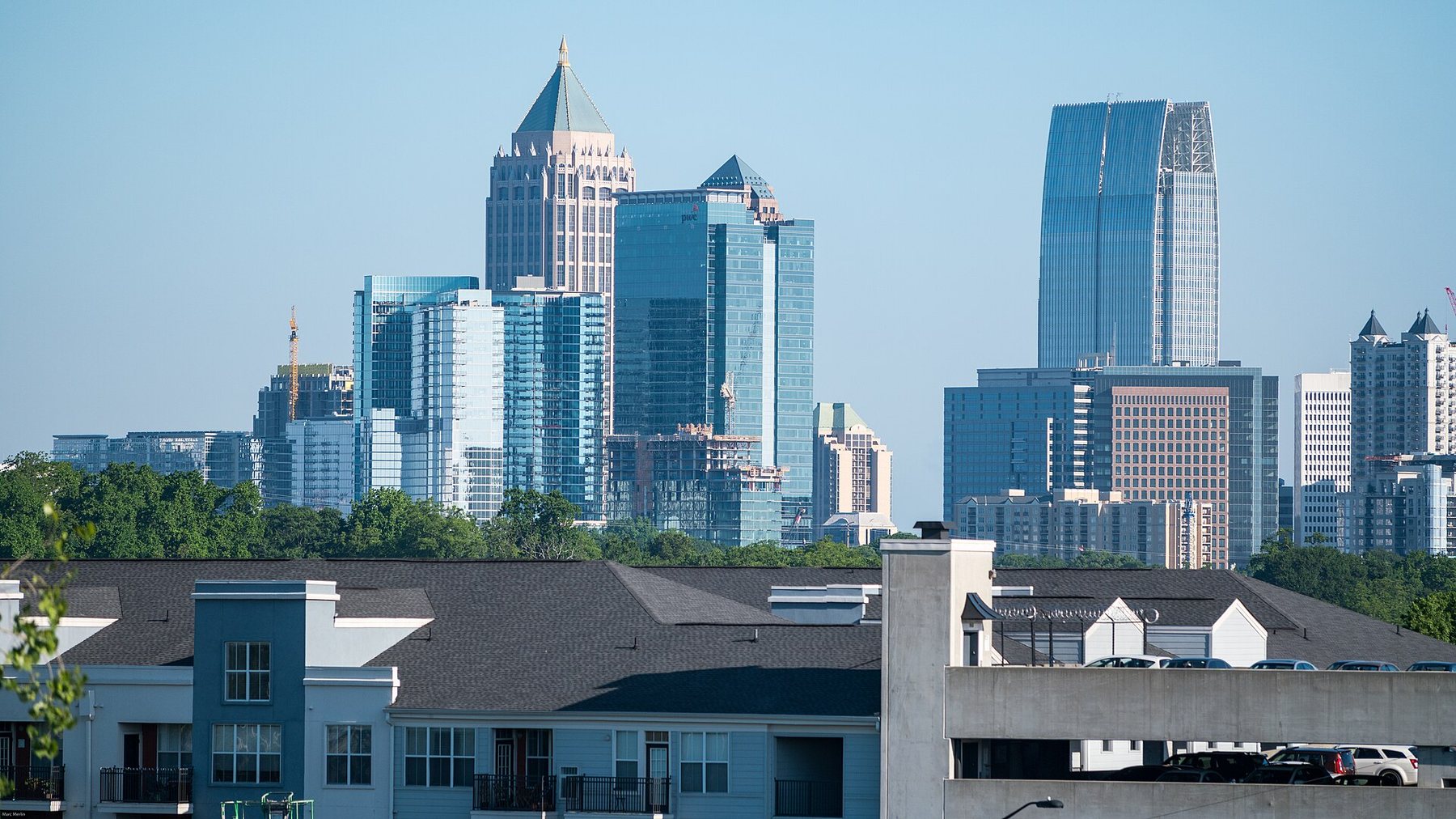
The Midtown Atlanta skyline seen from Freedom Parkway above the Eastside BeltLine Trail, photographed on 22 May 2016. Photo: View of the midtown Atlanta skyline from Freedom Parkway above the Eastside Trail by Marc Merlin, CC BY-SA 4.0, via Wikimedia Commons (resized).
From the record. This is a look back at March 2022. The desk wrote it on 11 October 2026 from sources published at the time; Stay Gazette opened in July 2026 and did not report this as it happened.
On 1 March 2022, Atlanta's license requirement for short-term rentals took effect. From that day, anyone renting out an Atlanta home for 30 consecutive days or less needed a city license, and inspectors were due to start enforcement on 1 April 2022.
The rule had been a year in the making. The City Council approved it in March 2021, after complaints about short-term rentals from around the city. It was first due to start on 1 September 2021. The council moved that to 1 March 2022, six months later than planned, because the planning department needed more time to put the rules in place.
The terms were short. A license cost $150 a year. One person could hold licenses for up to two properties, and one of the two had to be that person's primary residence.
What the license required
SaportaReport set out the rules on 3 March 2022. The license was open to an owner or a long-term tenant and covered no more than two properties, one of them that person's primary residence. It ran for 12 months. The city said an application could take up to 10 business days to process, so operators were told to apply quickly.
The license came with conditions:
- Occupancy was capped at two adults per bedroom.
- The owners of adjacent properties had to be given formal notice that the home was a short-term rental.
- The city's 8 percent hotel-motel tax was the responsibility of the owner or long-term tenant in charge.
- A licensed host had to post the license on all advertisements, according to a note for clients published on 14 March 2022 by the law firm Brian M. Douglas & Associates.
Applications went through the city's online permitting portal, the same note said.
Fines and enforcement
The ordinance provided for a $500 fine for a code violation at a short-term rental, such as excessive noise, SaportaReport reported. A property with three or more code violations inside 12 months would lose its license, and the city would take no new application for a further 12 months. Renting with no license at all brought fines too.
Two city bodies shared the work. The Atlanta Police Department's Code Enforcement division was to handle licensed properties. Zoning inspectors from the Department of City Planning were to handle unlicensed ones. The law firm's note warned owners that renting without a license from 1 April 2022 onward would break the ordinance and could bring a fine.
The city's tools were not all ready on the first day. SaportaReport reported that the interactive map for checking whether a property was licensed was not working yet, and that the city expected it in mid-April. Until then, licenses were to be reported in the city's online permitting database. Avalara, the tax software company, had reported in August 2021 that the law also called for email and phone hotlines for complaints about short-term rentals.
Why Atlanta did it
Party houses drove the debate. The Atlanta Journal-Constitution reported on 16 March 2021 that the council had voted to regulate the industry after complaints from around the city, and that rentals would face $500 fines for loud parties or other violations. FOX 5 Atlanta reported on 7 December 2021 that the March 2021 legislation was meant to curb parties at Atlanta mansions rented online, and that Buckhead residents had complained that Saturday about noise at one party house. SaportaReport gave a second reason: the council acted after controversies over what short-term rentals did to quality of life and to the housing market.
The license was the middle course. Councilman Howard Shook had first proposed a ban on short-term rentals, the Journal-Constitution reported, and his ban was still pending in a council committee when the licensing ordinance passed. At that meeting he offered a dozen changes to the ordinance. Five of them failed to win a majority.
Where rentals were allowed
The council settled a second question before the license began. In December 2021 it voted 14-1 for a companion zoning ordinance, Z-21-85. According to Airbnb, the ordinance updated a zoning rule dating from 1982 and made clear that short-term rentals were allowed in every residential zone.
Airbnb welcomed that vote in a statement on its newsroom on 8 December 2021. “The vote empowers entrepreneurs across the city as they use the ownership economy to create income, jobs, and build generational wealth,” said Tom Martinelli, the company's Southeast public policy director. Airbnb said it was staying close to city leaders while Atlanta got ready to bring in the licensing rules.
So on 1 March 2022 an Atlanta host stood on two rules. Zoning allowed a short-term rental in any residential zone. The licensing ordinance, numbered 20-O-1656, decided who could run one and how many.
Since then
The 1 April 2022 enforcement date did not hold: on 4 April 2022 the Atlanta Journal-Constitution reported, from its analysis of city permitting data, that permits had been sought for only about 10% of the listings available in the city and that less than 3% had received one; the City Council approved on 18 April a suspension of the $500 fine until 1 June, SaportaReport reported; and on 23 May Rough Draft Atlanta reported that the planning department had pushed the deadline to 6 September, saying: “It has been determined that the implementation of this ordinance may require further consideration.” In July 2022 SaportaReport reported that an industry group, the Atlanta Metro Short Term Rental Alliance, objected that owners who already ran several properties were not grandfathered in.
The Gazette Verdict, looking back
Atlanta switched its license on before it was ready to run it, and hosts and neighbors both paid for that. The money was the small part: $150 a year, and an 8 percent tax the operator had to handle. The expensive term was the limit of two properties, one of them the operator's own home, which no fee could buy a way around. Yet the city opened with a status map that did not work, up to 10 business days to process an application and one month before fines. By 4 April less than 3% of listings held a permit, and by 23 May the deadline had moved to September. Neighbors who had complained about party houses got no enforcement. Hosts got no certainty. A host should read a delayed deadline as a rule that still exists: apply early, and plan the business around the two-property limit.
The other side
Hosts had a year between the council's vote and the start of the license, and a further month before fines. A $150 license, a hotel-motel tax and a three-violation rule were light terms next to the ban one councilman had proposed. Holding back fines when few had applied was the fair call, because it gave operators time to comply. Operators with many properties had the most to lose, and their industry group objected that existing ones were not grandfathered. But a rule written over worries about party houses and the housing market could not sensibly exempt the operators with the most houses.
What it meant for hosts
An Atlanta operator in March 2022 had a short list of jobs. Apply through the city's online permitting portal and allow up to 10 business days. Pay the $150 annual fee. Notify the adjacent property owners. Keep to two adults per bedroom. Put the license on every advertisement.
The tax needed its own check. Avalara had reported in August 2021 that Vrbo and Airbnb collected sales tax for Georgia hosts but did not collect Atlanta's hotel-motel tax. That left the host to register with the city, collect the tax from guests and pay it monthly.
The bigger decision was the portfolio. A license covered two properties at most, and one had to be the holder's primary residence. An operator with more rentals than that in the city had to choose which to license. The rule as it stood on 1 March 2022 offered nothing for the rest.
And a host had one month. Enforcement was due to start on 1 April 2022, with fines of $500 for a code violation. Three violations within 12 months meant losing the license and waiting another 12 months to apply again.
Sources
- SaportaReport, Atlanta short-term rental licensing begins; enforcement starts April 1 (3 March 2022).
- Brian M. Douglas & Associates, City of Atlanta’s New Short-Term Rental Licensing – Enforcement Begins April 1st! (14 March 2022).
- The Atlanta Journal-Constitution, Atlanta City Council passes short-term rental regulations (16 March 2021).
- Avalara MyLodgeTax, Atlanta short-term rental law start date delayed to March (5 August 2021).
- FOX 5 Atlanta, Atlanta seeks to limit short-term party house rentals (7 December 2021).
- Airbnb Newsroom, An update on short-term rentals in Atlanta (8 December 2021).
- The Atlanta Journal-Constitution, Short-term vacation rentals in Atlanta now need a permit to operate. Fewer than 3% have one. (4 April 2022).
- SaportaReport, Atlanta suspends short-term rental licensing penalties until June 1 (19 April 2022).
- Rough Draft Atlanta, Atlanta again delays enforcement of short-term rental regulations (23 May 2022).
- SaportaReport, A snapshot of Atlanta’s Airbnb listings raises questions about regulation and affordability (11 July 2022).
Part of the Stay Gazette record for March 2022. Filed on 11 October 2026; every specific was checked against the sources above, which were read on or before that day. To report an error, write to the desk; see the corrections policy.

Also filed on March 2022
- PlatformsAirbnb Waives Its Fees in Ukraine as Guests Book Stays They Will Not UseBy 12 March 2022 guests had booked 434,000 nights in Ukraine to send money to hosts. Airbnb waived its fees, then canceled some of the bookings and stopped new hosts from listing.
- The recordMarch 2022, the whole month
- The recordEvery month on the record