Airbnb Waives Its Fees in Ukraine as Guests Book Stays They Will Not Use
By 12 March 2022 guests had booked 434,000 nights in Ukraine to send money to hosts. Airbnb waived its fees, then canceled some of the bookings and stopped new hosts from listing.
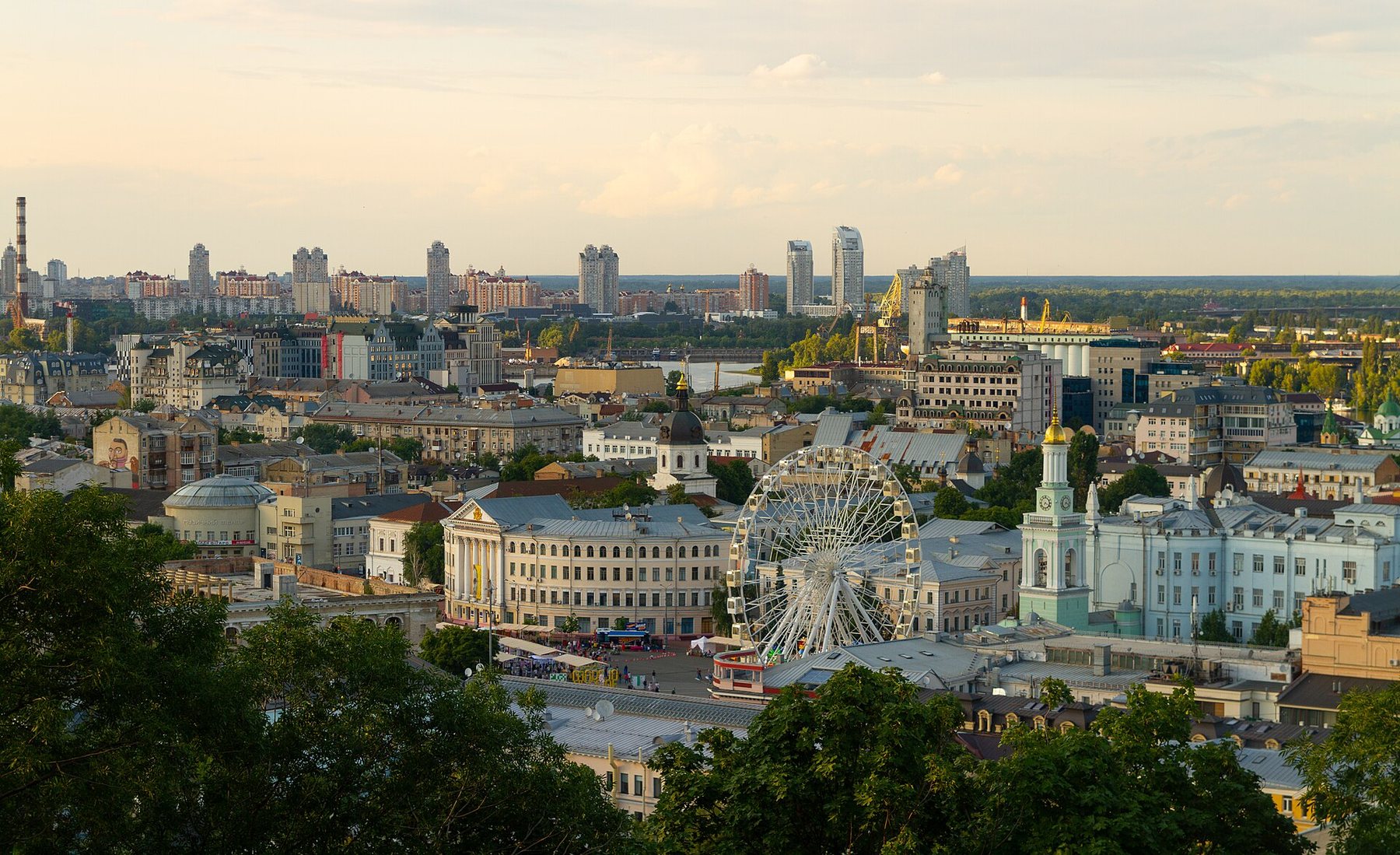
Kontraktova Square in Kyiv, Ukraine, photographed on 13 July 2019. The picture was taken before Russia's 2022 invasion. Photo: Kontractova square, Kyiv, Ukraine by Maksym Kozlenko, CC BY-SA 4.0, via Wikimedia Commons (resized).
From the record. This is a look back at March 2022. The desk wrote it on 11 October 2026 from sources published at the time; Stay Gazette opened in July 2026 and did not report this as it happened.
On 4 March 2022, Airbnb said it was temporarily waiving its guest and host fees on new bookings in Ukraine. The company had noticed its booking system being used as a way to give. After Russia invaded the country on 24 February, people abroad were booking Ukrainian apartments they had no plan to visit, so that the money would reach the host.
Airbnb put a number on it the same day. On 2 March and 3 March, it said, more than 61,000 nights were booked in Ukraine, more than 34,000 of them by guests in the United States. Brian Chesky, the chief executive, gave his own count on Twitter that Friday: “In 48 hours, 61,406 nights have been booked in Ukraine. That's $1.9M going to Hosts in need”.
The count did not stop there. By 12 March, Chesky had put it at 434,000 nights and $15M. By 21 March, Wired reported, Airbnb was canceling some of those bookings and had stopped new hosts from listing in Ukraine at all.
What Airbnb changed
The fee waiver was one line in a longer statement on Airbnb's newsroom. It covered new bookings, and the company called it temporary. Airbnb also said it had applied its Extenuating Circumstances policy in Ukraine, so that hosts and guests could cancel qualifying reservations without a penalty.
The same statement carried the news for the other side of the border. Chesky had announced the night before that Airbnb was suspending its operations in Russia and Belarus. In practice, the company said, hosts' calendars in both countries were closed to new bookings until further notice, and users there could not book new stays as guests. Listings in the Donbas region were being removed to comply with sanctions.
The statement also pointed to the offer Airbnb.org had made earlier that week: free short-term housing for up to 100,000 refugees fleeing Ukraine.
How a booking became a donation
The idea did not come from Airbnb. In its statement the company called it a grassroots movement that it had noticed over the previous 48 hours. NPR traced one starting point to a Facebook group for Airbnb hosts, where a host in Salt Lake City booked a stay in Kyiv and then two more in smaller cities. She and her husband owned three properties listed on the platform, NPR reported, and her business operated another 28.
The mechanics were ones every host knew. Airbnb paid a host 24 hours after the guest checked in. So people abroad booked stays and told the host they would not be coming. CNN reported that the campaign's organizers urged people to book as close to the check-in date as possible, so the payout arrived quickly, and to make sure a rental was run by an individual and not by a company.
On the receiving end, NPR spoke to a host in Kyiv who, with her husband, operated 30 apartments in the center of the city for owners who lived abroad. She said the owners did not ask for a share of the money. It let her pay her staff of six maintenance workers and cleaners, most of whom had fled to western Ukraine, and help elderly neighbors with food and transportation. “These days we do not have any income. We do not have any right to ask our country to help us, because all the country's resources are for the war and for the victory,” she told NPR.
The numbers
Airbnb told NPR that the bookings on those two days grossed nearly $2 million. Chesky's tweet had put the figure at $1.9M.
The money came mostly from three countries. An Airbnb spokesperson told CNN that more than half of the nights were booked by Americans, and the company told CBC News that nearly 3,000 of the bookings were made by Canadians. In an email to Fortune, Airbnb said nearly three-quarters of all reservations came from users in the United States, the United Kingdom and Canada.
Fortune, citing data from the research firm AirDNA, reported that Ukraine had more than 17,000 short-term rentals.
The bookings kept coming. On 12 March, Interfax-Ukraine reported a new tweet from Chesky: one week later, 434,000 nights had been booked and $15M was going to hosts in Ukraine. On 21 March Wired, citing Airbnb, put the totals at more than 434,000 nights and more than $15 million, and added what the waiver was worth: Airbnb, it wrote, normally took about 20 percent of each booking.
The listings freeze
The warnings started within days. CNN reported on 5 March that some people feared fake Airbnb accounts would be set up in Ukraine to collect from donors. On 10 March, Afar reported that fake listings appeared to be turning up. Haven Thorn, an Airbnb communications manager, told the magazine the company was evaluating listing activity in Ukraine, and suggested booking with a host whose reviews dated back to before 2022. Afar noted how little Airbnb's site showed about a host before booking, and the cost of that advice: legitimate hosts with no reviews yet could be passed over.
By 21 March the company had gone further. Wired reported that Airbnb had canceled and refunded donation bookings with little or no explanation, and that guests were told only that the host could no longer receive money. Some hosts, Wired wrote, had created listings for apartments in Ukraine that did not exist, which broke Airbnb's policy on fake listings even when the aim was to raise money. “We identified a handful of hosts who did not support this effort in the spirit intended,” Ben Breit, Airbnb's global trust communications lead, told Wired.
In mid-March, Wired reported, Airbnb barred new hosts from creating listings in Ukraine. The step was meant to limit fraud, Wired wrote, and it also stopped Ukrainians who were not already hosts from receiving money through the platform. The cancellations reached established hosts too. One guest told Wired that two of her bookings were canceled although the hosts had joined Airbnb in 2013 and 2019 and the apartments had 125 and 33 reviews.
Some of the money that did arrive went to companies, or to hosts abroad. Wired found donations that reached property management companies with rentals in Ukraine, or hosts not living in the country. A host in western Ukraine told CBC News, through a translator, that he was grateful, and that helmets and body armor for people on the front lines would be more useful.
The Gazette Verdict, looking back
Airbnb got the first decision right and the second one half right. Waiving its fees meant a booking in Ukraine paid the host in full, and by Chesky's count $15M was going to hosts by 12 March. Wired put Airbnb's usual take at about 20 percent of each booking, so the company gave up real revenue to let the money through. Policing the listings was also necessary once listings appeared for apartments that did not exist. But Airbnb canceled and refunded with almost no explanation, and its freeze on new hosts decided who could be helped: people who already had a listing, among them a manager with 30 apartments and hosts who did not live in Ukraine, and nobody new. The lesson for a host is that the platform owns the payout. An existing listing could still be booked, though some long-standing hosts saw bookings canceled too. A new one could not even open.
The other side
Airbnb was moving millions of dollars into a country at war through a system built for vacations, with little on a booking page to show who was behind a listing. Every dollar belonged to a guest who had trusted the platform with it. Canceling a doubtful booking and refunding it protected that guest, and a freeze on new hosts was the fastest tool the company had once fake listings appeared. A full explanation to every donor would have shown anyone abusing the campaign how they were caught. And donors who wanted no such risk had another route, which Airbnb itself pointed to: Airbnb.org and its housing for up to 100,000 refugees.
What it meant for hosts
For a host in Ukraine in March 2022, the practical facts were these. New bookings carried no Airbnb host fee and no guest fee. The payout still came 24 hours after check-in. Qualifying reservations could be canceled without a penalty under the Extenuating Circumstances policy. From mid-March a listing had to exist already, because new hosts could not create one. And a listing for a home that did not exist broke Airbnb's policy, whatever the aim: the bookings were canceled and refunded.
For hosts in Russia and Belarus, the business stopped. Their calendars were blocked from new bookings until further notice.
For hosts everywhere else, the month showed how fast the terms of the platform could change. In one statement Airbnb switched off its own fees in one country and its whole business in two others. By 21 March it had also decided which Ukrainian listings could take a booking.
Sources
- Airbnb Newsroom, Airbnb’s actions in response to the Ukraine crisis (4 March 2022).
- NPR, People are booking Airbnbs in Ukraine — not to stay, but to lend their support (5 March 2022).
- CNN (via KVIA), People around the world are booking Airbnbs in Ukraine. They don’t plan to check in (5 March 2022).
- CBC News, To support hosts in war-torn Ukraine, thousands are booking Airbnbs with no intention of staying (4 March 2022).
- Fortune, ‘I will be happy to hug you in peacetime’: Airbnb users book $2 million in Ukrainian rooms in bid to offer aid (5 March 2022).
- Afar, Does Booking Ukraine Airbnbs Actually Help People on the Ground? (10 March 2022).
- Interfax-Ukraine, Airbnb users book accommodation in Ukraine for 434,000 nights (12 March 2022).
- Wired, Airbnb Cracked Down on Ukraine Listings. Some Donors Wish It Hadn’t (21 March 2022).
Part of the Stay Gazette record for March 2022. Filed on 11 October 2026; every specific was checked against the sources above, which were read on or before that day. To report an error, write to the desk; see the corrections policy.

Also filed on March 2022
- CrackdownAtlanta Starts Requiring a License for Short-Term RentalsAtlanta's license rule for short-term rentals took effect on 1 March 2022: $150 a year, two properties at most, one of them the operator's own home. Fines were due to start on 1 April 2022.
- The recordMarch 2022, the whole month
- The recordEvery month on the record