Airbnb Asks the UK Government for a National Register of Short-Term Lets
Airbnb proposed that every host need a registration number to list a home on any platform, and that homes let for more than 140 nights a year, outside areas with their own limits such as London, count as commercial. A week later the UK government said it would consult on a registration scheme for England.
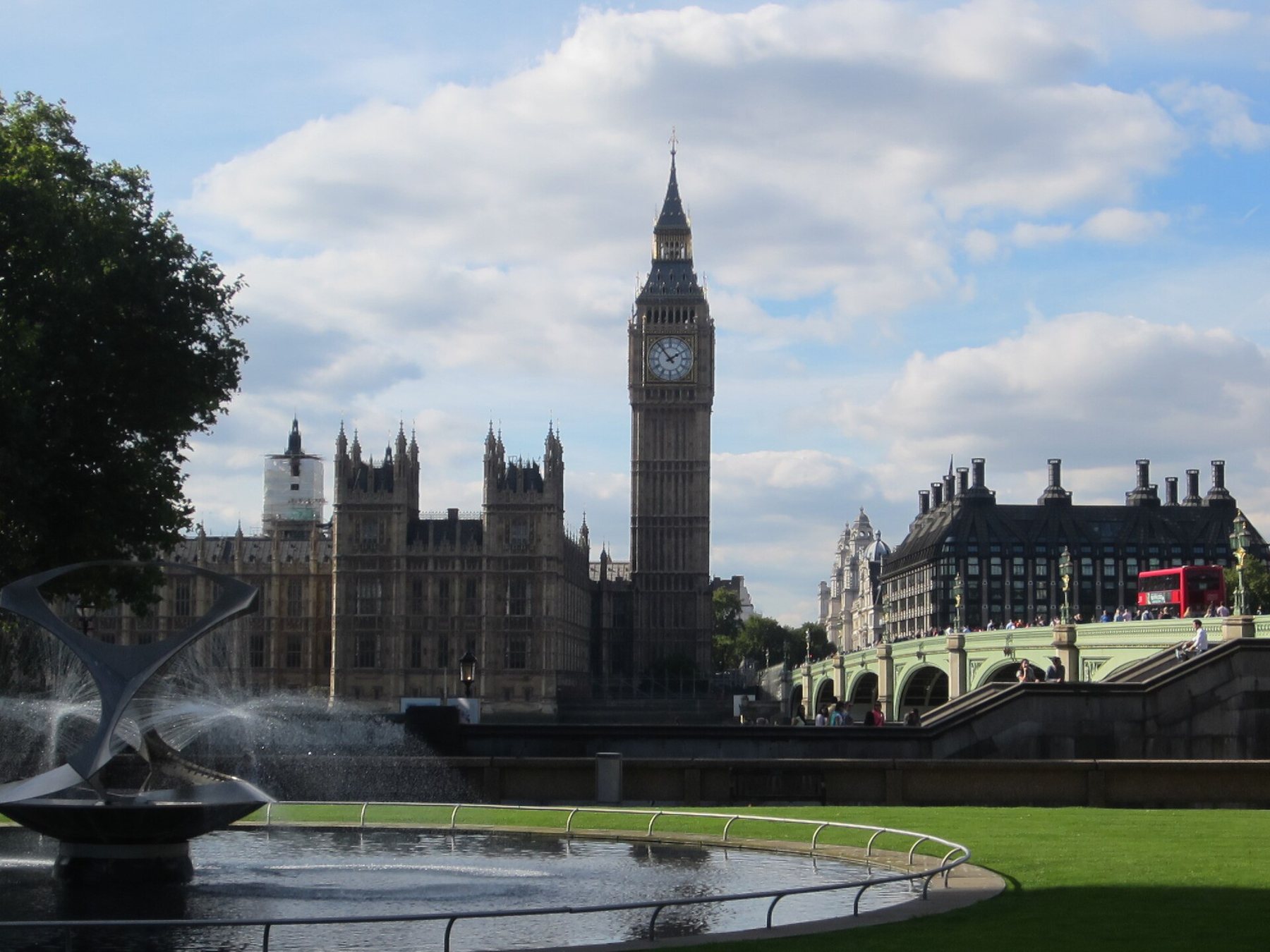
The Elizabeth Tower and the Palace of Westminster in London, with Westminster Bridge at right, photographed on 6 October 2013. Photo: Big Ben Wide Shot 2013 by Erik B. Anderson, CC BY-SA 4.0, via Wikimedia Commons (resized).
From the record. This is a look back at June 2021. The desk wrote it on 11 October 2026 from sources published at the time; Stay Gazette opened in July 2026 and did not report this as it happened.
On 4 June 2021, Airbnb asked the UK government to create a national register of short-term let operators. Under its plan, an operator would need a registration number from the government or a devolved authority before listing a home on a short-term letting platform such as Airbnb, or offering it offline.
On 11 June 2021, the government said it would consult on a registration scheme for England. Its press release on a new Tourism Recovery Plan said: “The government will also launch a consultation on the introduction of a Tourist Accommodation Registration Scheme in England.” The release gave no date for the consultation.
Airbnb set out its case in a white paper published with the 4 June announcement. The company said its call followed a nationwide consultation run with the consultants BritainThinks and Professor Marina Novelli of the University of Brighton, in which about 70 people from local authorities, tourism organizations and local communities were consulted.
What Airbnb proposed
The white paper described a register that was national, online and instant. Its main points:
- Registration would be mandatory for every host, whether the home was advertised through an online platform or not.
- A host would enter personal information online and receive a registration number instantly, with no supporting documents to upload.
- Registration would be free for non-commercial hosts. Commercial hosts would pay a fee set by reference to the actual cost of administration.
- Hosts would attest that they understood the health and safety standards already in force, among them requirements on health and safety certificates, insurance, gas safety and cleaning.
- Local authorities and the emergency services would have access to the register. The paper said that, on privacy grounds, nothing justified publishing a public database of registered hosts or listings.
- Local authorities could notify platforms about problems with listings, and platforms would act on the notices, up to suspending a listing or removing it permanently.
A second proposal dealt with housing. Airbnb asked for planning guidance that separated commercial letting from non-commercial or amateur letting, with planning requirements applying only to the commercial kind. Outside areas that had already introduced local restrictions, such as London, the paper proposed that a home occupied for short-term lets for more than 140 nights a year should count as commercial, a line it tied to the existing threshold for Business Rates. That was a proposal for guidance and was not law.
The paper recommended that the government create the register under the Legislative and Regulatory Reform Act 2006. It argued against licensing, saying licensing systems often placed a disproportionate burden on regulators and licensees when a registration system could achieve a similar outcome.
Why Airbnb asked
Nathan Blecharczyk, Airbnb's co-founder, said in the announcement: “City leaders, the tourism industry and Airbnb agree that in order to deliver more sustainable travel, protect housing, prevent bad actors, and support tourism innovation, the Government must introduce a national register for short-term lets operators.”
The white paper set out rules that differed by nation. Hosts in Greater London could not let for more than 90 nights in a calendar year without planning permission. Hosts in Northern Ireland had to register with the local tourism authority under a law passed in 1992. The Scottish Government had proposed licensing and planning requirements.
The consultation ran throughout 2020. The paper recorded that the people consulted were concerned that the growth of short-term lets was eroding communities, and that they said the government should intervene. Respondents from councils in London raised the 90-night rule. Airbnb's voluntary measures to limit host activity on its own platform were welcomed, the paper said, but they did not solve the problem of hosts who relisted on other platforms that had no such system.
A section of the paper prepared by the UK Short Term Accommodation Association, a membership body for short-term lets, gave 322,000 active listings on Airbnb across the UK as of 1 January 2020 and said a typical UK listing on Airbnb was booked for 49 nights of the year, citing Airbnb data for both. It also said no evidence had been published in the UK that demonstrated a concrete link between short-term letting and housing supply.
What the government promised
The government's commitment was one paragraph in a press release on its Tourism Recovery Plan, published on 11 June 2021 by the Department for Digital, Culture, Media and Sport. The release led with a new rail pass and a £10 million voucher scheme.
It said the consultation would look at the benefits of the growth in short-term vacation rentals, which it described as drawing tourists and adding to the English tourism economy, and at their impact on local economies and communities. The commitment was to consult, and it covered England. Airbnb had asked for a register across the UK.
The release did not mention Airbnb's white paper. It carried a statement from Amanda Cupples, Airbnb's general manager for Northern Europe, who said the company had worked on proposals for a tourism accommodation register with communities across the UK and was delighted to see the government take the work forward.
In a post the same day, Airbnb said its call for a UK registration system had taken a major step forward, days after it put its proposals forward. The post also quoted the tourism minister, Nigel Huddleston, as saying he looked forward to working with Airbnb. That sentence was not in the government's release.
How the trade responded
The UK Short Term Accommodation Association welcomed Airbnb joining the debate, ShortTermRentalz reported on 8 June 2021. Its chair, Merilee Karr, said what the trade wanted from any register. If the home nations explored registration further, she said, best practice in other European countries pointed to “an industry-wide online system that is simple to use, easy to access and low cost to both administer and register.”
The University of Brighton said on 7 June 2021 that Novelli's research underpinned the white paper. In Airbnb's announcement, Novelli said a consensus for registration had clearly emerged.
None of the sources cited here quotes a housing group or a council responding to the white paper after it was published. The objections on record in them were the ones the paper reported from its own consultation: pressure on housing, the changing makeup of communities, and a London rule that the paper said had proved extremely difficult for councils to enforce.
The Gazette Verdict, looking back
Airbnb asked for registration, a lighter rule than licensing, and for most hosts that was a fair trade. Its own paper showed the pressure. Scotland had proposed licensing. London's 90-night limit was hard to enforce, and the paper said hosts got around it by relisting on platforms with no night-limit system. A register that every platform had to honor would bind those platforms as well as Airbnb. The cost was aimed at commercial operators: a fee tied to the cost of administration, and a proposed 140-night line above which planning requirements would apply. Non-commercial hosts would pay nothing. The government gave only a promise to consult, for England, with no date. A host should have read June 2021 as notice to keep a count of nights let.
The other side
This was a rulebook drafted by the company it would regulate. Part 1 of the white paper was prepared by the industry's own membership body, and it said no published UK evidence linked short-term letting to housing supply, while the same paper recorded that the people consulted had concerns about community erosion and wanted the government to intervene. The register was instant and self-declared, with no documents to upload, and closed to the public. The 140-night line was looser than London's 90. On that reading, registration was Airbnb's alternative to licensing of the kind Scotland had proposed, and a promise to consult changed nothing for residents.
What it meant for hosts
For hosts, neither announcement changed the law. The government had committed only to consult on a registration scheme for England. By the white paper's account of the rules, a host in Greater London remained under the 90-night limit, a host in Northern Ireland had to register with the tourism authority, and a host in Scotland faced a separate licensing proposal.
What the month gave hosts was an account of the rules Airbnb wanted. Under its design, a host would need a registration number to offer a home online or off, and would have to attest to understanding the safety standards that already applied. Registration would cost a non-commercial host nothing.
The figure to watch was 140 nights. The paper put a typical UK listing on Airbnb at 49 nights of the year, well under that line. Under the proposal, a home let for more than 140 nights would count as commercial, its host would pay a registration fee, and planning requirements would apply.
The practical step in June 2021 was small: keep an accurate count of nights let across every platform, and keep safety documents on hand.
Sources
- Airbnb Newsroom (United Kingdom edition), Airbnb calls for UK short-term lets operator register (4 June 2021).
- Airbnb, Short-term Lets Registration White Paper (foreword by Professor Marina Novelli, University of Brighton) (June 2021).
- UK Government (Department for Digital, Culture, Media & Sport), New plan to drive rapid recovery of tourism sector (11 June 2021).
- Airbnb Newsroom (United Kingdom edition), Welcoming progress on plans for a UK registration system (11 June 2021).
- University of Brighton, Brighton professor helps hone Airbnb proposal for UK short lets regulation system (7 June 2021).
- ShortTermRentalz, Airbnb adds support for host registers (8 June 2021).
Part of the Stay Gazette record for June 2021. Filed on 11 October 2026; every specific was checked against the sources above, which were read on or before that day. To report an error, write to the desk; see the corrections policy.

Also filed on June 2021
- CrackdownNevada Orders Clark County and Three Cities to License Short-Term RentalsAssembly Bill 363 told Clark County, Henderson, Las Vegas and North Las Vegas to license short-term rentals under state limits: a two-night minimum for homes that were not owner-occupied, distance rules, occupancy of no more than 16 persons per home and room tax collected by platforms. Most of it was set to take effect on 1 July 2022.
- The recordJune 2021, the whole month
- The recordEvery month on the record