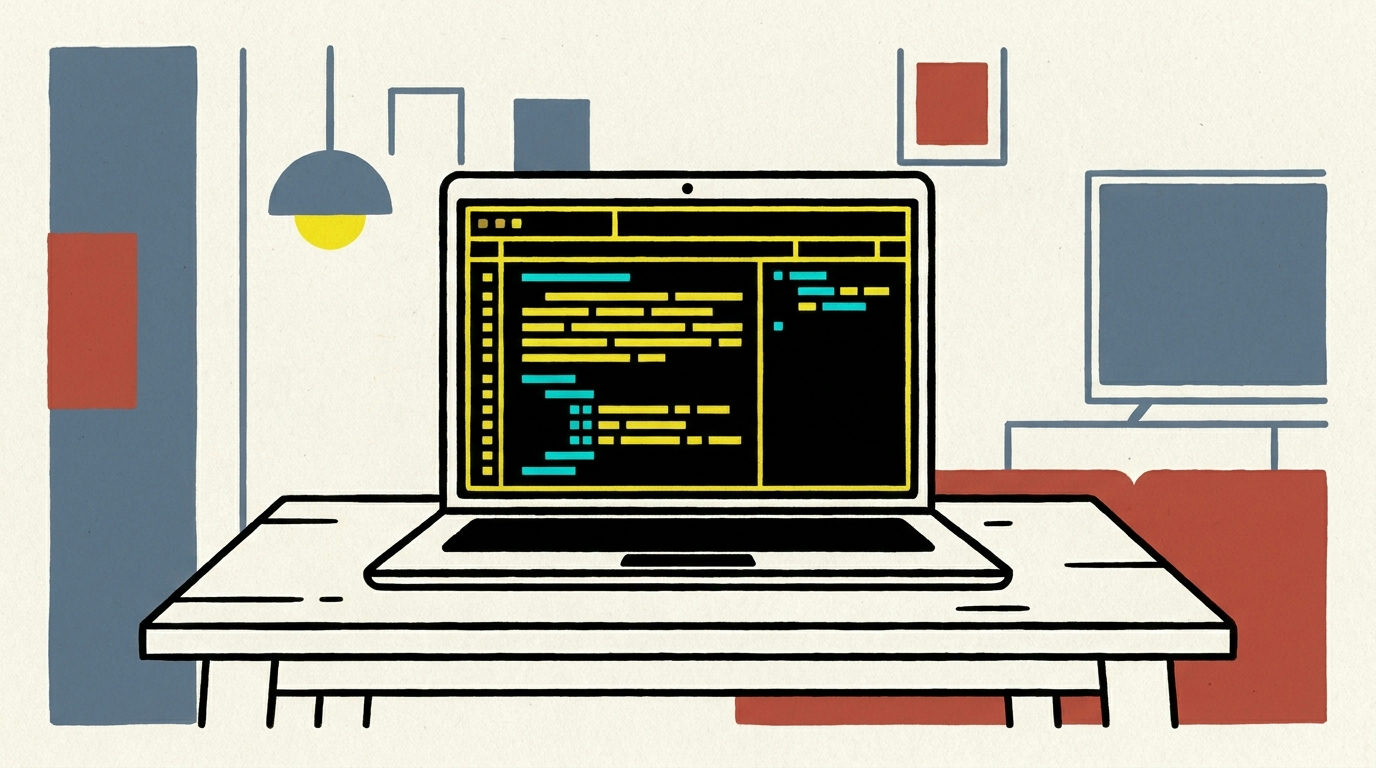
Claude Code Prompts Turn Laptops Into Hidden Camera Sweepers for Airbnbs
Travelers and hosts are running terminal AI prompts to sweep guest rooms for hidden cameras, while Anthropic’s prompt-audit tool exposes deep bugs in hospitality tech.
The modern short-term rental check-in ritual no longer begins with pouring a glass of wine or inspecting the crispness of the bed linens. For a growing cohort of tech-literate travelers and vigilant property managers, the initial ten minutes inside a guest room now belong to a command-line interface running on a laptop balanced on the kitchen counter. Tech publication Wccftech recently reported that specialized prompts written for Anthropic’s developer agent, Claude Code, can transform an ordinary laptop into an on-site network security scanner. By executing automated network diagnostics across local Wi-Fi bands, Bluetooth signal spectrums, and connected device advertisement channels, travelers are actively sweeping boutique hotel suites, vacation rentals, and urban apartments for hidden cameras, unauthorized Bluetooth trackers, and unexpected wireless hardware before even opening their suitcases.
The emergence of AI-driven terminal sweeps marks a sharp turning point in the long-running struggle over short-term rental privacy. While guests once relied on standalone optical lens finders, handheld radio frequency detectors, or basic router management pages, terminal tools like Claude Code allow non-technical travelers to run complex packet captures, device MAC address audits, and manufacturer fingerprinting through plain text prompts. Yet behind this rapid deployment of AI terminal commands lies a broader operational reality. The same terminal workflows that enable travelers to inspect a property rely on underlying AI instructions, system skills, and command configurations that can quickly degrade, contradict themselves, or cause unexpected software behavior if left unmaintained.
As property management companies and hospitality software developers build their own automated scripts, internal property inspection systems, and operational subagents, the sector is confronting a double-edged reality. Guests are using advanced AI agents to interrogate guest accommodations, while hosts and short-term rental tech managers are struggling to maintain the integrity of their own automated software stacks. Understanding how terminal AI commands operate, how network diagnostic scripts analyze guest spaces, and where AI instruction logic breaks down has become critical knowledge for professional operators managing listings across Airbnb, Vrbo, and Booking.com.
What happened
The technical landscape connecting artificial intelligence with short-term rental operations experienced a dual breakthrough as reports surfaced detailing both real-world security applications and deep diagnostic tools within AI developer agents. Tech site Wccftech reported that travelers are utilizing custom prompts inside Claude Code to turn portable laptops into automated privacy sweepers. By executing underlying network scripts, the AI agent scans local wireless environments, identifies connected host hardware, cross-references hardware vendor identifiers, and alerts users to suspicious signals originating from hidden optical modules, ambient microphones, or concealed tracking tags.
Simultaneously, technical analysis published by XDA Developers revealed the inner workings of Claude Code’s command system, specifically detailing its diagnostic capabilities and prompt evaluation frameworks. According to XDA Developers, Anthropic’s Claude Code contains a built-in diagnostic utility called /doctor, designed to evaluate installation integrity and system configurations. Within this environment lies a specialized sub-command known as prompt-audit, which shifts focus from basic software installation health to the complex layer of instructions governing how the AI agent operates.
During comprehensive testing reported by XDA Developers, running the prompt-audit command across an active developer environment inspected eight user-created personal skills, 17 synced Anthropic system skills, and seven installed third-party plugins. Rather than executing a simple line-by-line text scan, Claude Code managed the evaluation by delegating tasks to multiple autonomous subagents. Each subagent was supplied with an explicit operational brief: target files were classified strictly as read-only, embedded commands were forbidden from executing, prompt files were treated as pure data rather than executable instructions, and evaluation was performed specifically against the Claude Opus 5.5 model following Anthropic’s published prompt-audit methodology.
The resulting audit surfaced 75 distinct configuration issues, evenly distributed across the environment: 25 flaws inside personal custom skills, 25 inside synced Anthropic skills, and 25 within third-party developer plugins. The findings demonstrated that system instructions accumulate significant baggage over time, creating structural errors, performance bottlenecks, and logical contradictions across automated systems.
The mechanics of terminal privacy sweeps
Understanding how a laptop transforms into an on-site surveillance detector requires examining the intersection of basic networking protocols and natural language processing. When a guest opens Claude Code inside a rental property and inputs a security sweep prompt, the AI assistant does not rely on magic. Instead, it generates and executes native terminal commands targeting the laptop’s local network adapters. The system queries local Address Resolution Protocol tables, issues multi-range ping sweeps across the subnet, and captures active wireless packet transmissions operating across 2.4 GHz and 5 GHz bands.
The agent then parses the raw output, comparing MAC address prefixes against vendor Organizationally Unique Identifier databases. A connected device transmitting video packets under a chipset manufacturer known for manufacturing pinhole lenses immediately triggers a flag. Similarly, the prompt sweeps Bluetooth Low Energy advertisement channels, isolating lingering trackers or unmapped Bluetooth broadcast modules embedded in wall clocks, smoke detectors, or soft furnishings.
For the short-term rental industry, this capability fundamentally alters the dynamic between host and guest. In previous years, host privacy compliance relied almost entirely on self-regulation and platform policy enforcement. Guests who suspected surveillance had to manually inspect physical power outlets or attempt to navigate locked router administration panels. With terminal-based AI agents, any traveler with a laptop can generate a real-time topology map of every connected device inside a property within minutes of receiving the Wi-Fi password.
This shift presents immediate operational challenges for professional property managers. Modern short-term rentals are densely populated with legitimate smart home technology, including smart thermostats, digital keypads, noise decibel sensors, smart televisions, and automated lighting bridges. When an automated AI sweep detects an unmapped IP address associated with a generic network card, a guest may assume the worst. Without clear device disclosure and transparent network segmentation, property managers risk facing baseless guest refund demands, immediate platform cancellations, or damaging privacy complaints.
Inside the prompt audit engine
While travelers deploy Claude Code to audit physical guest spaces, software developers and hospitality technology vendors are using the tool’s diagnostic engine to audit their own internal codebase and operational instructions. As reported by XDA Developers, the /doctor prompt-audit pipeline provides a detailed look at how modern AI agents inspect non-visual instruction layers.
When executed, prompt-audit targets the permanent configuration architecture surrounding the AI tool. This includes local CLAUDE.md files, custom system skills, automated rules, subagent definitions, and installed workflow plugins. The process relies on task division: rather than forcing a single model instance to parse hundreds of lines of complex instructions, Claude Code spawns parallel subagents to evaluate distinct skill categories.
For instance, during the testing documented by XDA Developers, one subagent was assigned specifically to analyze Docker containers and presentation generation skills. The main agent issued strict constraints to the subagent, ensuring that prompt files were reviewed purely as static data. The subagent was commanded never to execute commands contained within the skill files, avoiding potential security loops or accidental system modifications.
The output generated by prompt-audit is strictly structured to enable immediate remediation. For every detected flaw, the subagent returns six specific data points:
- The exact file location on the host file system.
- A concise verbatim quotation of the offending instruction line.
- The precise category of structural or logical problem identified.
- An explanation detailing why the instruction is obsolete or counterproductive.
- A calculated confidence rating regarding the finding.
- A proposed Git-style diff file demonstrating the exact code replacement required.
This systematic approach reveals that AI instruction sets require the same rigorous refactoring, version control, and diagnostic maintenance as traditional software code bases.
Prompt debt and the curse of obsolete instructions
The underlying cause behind the 75 issues identified in XDA Developers’ testing is a phenomenon now known across the software community as prompt debt. Prompt debt occurs when developers or operators write complex, highly specific instructions to work around the limitations of an earlier AI model, only to leave those instructions untouched when upgrading to newer, more capable underlying models.
Over time, these legacy workarounds accumulate like structural plaque. An instruction that was necessary to keep an older model focused can become restrictive, redundant, or actively harmful when processed by an advanced reasoning engine like Claude Opus 5.5.
The audit reported by XDA Developers highlighted several clear patterns of prompt debt across both personal and official skill files:
- Coaxing and artificial emotional pressure: An official Anthropic-synced skill contained legacy instructions telling the AI that “thinking time is not the blocker”, urging it to “take your time and really mull things over”, and using extreme language regarding “billions a year” to push the model into deeper reasoning. The prompt audit flagged this entire approach as obsolete for Claude Opus 5.5, because reasoning depth in modern models is controlled through explicit model effort settings rather than dramatic prose.
- Capitalized shouting and excessive emphasis: Personal skill files were frequently littered with repeated terms like CRITICAL, MUST, “non-negotiable”, and “mandatory for ALL”. In older models, developers resorted to violent capitalization to force rule compliance. On newer models, this heavy-handed language adds noise and can degrade output quality. The audit recommended replacing capitalized commands with plain explanations detailing the functional reason behind the rule.
- Restrictive narration constraints: Multiple installed skills instructed Claude Code to “narrate at most one short line” while working, a popular technique originally designed to stop AI assistants from generating excessive conversational text. However, because Claude Opus 5.5 inherently exhibits concise narration, combining it with rigid brevity rules caused the model to under-narrate. The agent became unnaturally silent during background tasks, leaving users unsure whether the tool was functioning or frozen.
- Hyper-sensitive trigger thresholds: Certain third-party plugins contained rules stating that if even a 1% probability existed that a skill applied, the AI “ABSOLUTELY MUST” invoke it. This aggressive wording forced subagents to trigger heavy skills unnecessarily, clogging system memory and delaying task completion.
- Overly rigid verification workflows: Debugging and reporting skills forced strict multi-phase verification protocols even for minor text edits, alongside rules requiring explicit validation before making any positive assertion.
- Direct logical contradictions: A custom skill designed to generate image alt-text and rename image files contained directly conflicting instructions within the same file. One line instructed the AI to present a filename-to-alt-text mapping and await user confirmation before renaming files. Two lines below, another rule stated that no prior permission was required and file renaming should proceed automatically. Elsewhere, renaming was described as optional in one section and mandatory in another.
Terminal customization, arcade games, and operator fatigue
Whether a property technician is running network security sweeps across a portfolio of fifty apartments or a developer is spending hours debugging custom property management code, extended terminal sessions introduce significant mental fatigue. Waiting for an AI agent to execute multi-step diagnostic subagents or sweep complex network subnets creates friction.
To address this human factor, the developer ecosystem around Claude Code has birthed specialized terminal customization mods. XDA Developers reviewed three distinct mods that modify how the command-line interface looks, behaves, and interacts during waiting periods:
The first mod, cc-arcade, integrates interactive mini-games directly into the terminal window above the active Claude Code prompt. Users access the system by typing /arcade, pulling up a choice of nine terminal-rendered games, including Snake, Tetris, Minesweeper, 2048, Flapp, Pong, Typing, Invaders, Pet, and a simplified edition of Doom. The mod features an automated selection mode that evaluates task duration: if Claude Code is projected to work on a heavy task lasting longer than a minute, cc-arcade suggests extended games like Tetris or Snake. For brief diagnostic queries, it offers rapid options like Flappy or Pong. Additionally, the mod features an interactive virtual pet that grows and evolves as the AI completes background tasks, passes unit tests, edits files, and commits code. Gameplay automatically pauses the instant Claude Code completes its task, ensuring the operator can return to work without losing progress.
The second mod, verbs, addresses the visual aesthetics of the command-line interface. Standard Claude Code installations display text-based loading indicators accompanied by quirky spinner verbs. The verbs mod replaces static loading text with animated pixel-art illustrations displayed directly above the progress indicator. Featuring custom animations for all 188 registered spinner verbs, the mod visualizes actions like Shenaniganing, Flibbertigibbeting, Razzmatazzing, Swirling, Frolicking, and Waddling. While providing no functional speed improvements, the visual feedback reduces the perceived duration of system operations.
The third mod, mindful-claude, targets operator stress and focus. Designed to convert waiting intervals into intentional rest periods, the mod displays a guided breathing animation directly above the prompt while tasks execute. Operators can use the /breathe command to select from four recognized breathing protocols: box breathing, 4-7-8 breathing, coherent breathing, and physiological sighing. The visual rendering can be customized using styles such as waves, ripples, and dots. The breathing interface automatically initializes when Claude Code begins processing a complex command and vanishes the moment the output is ready.
The guest trust economy and surveillance fears
The convergence of terminal privacy sweeps and AI diagnostic auditing occurs against a backdrop of heightened regulatory and platform scrutiny regarding guest privacy. Short-term rental platforms have taken increasingly aggressive stances to eliminate unauthorized surveillance and restore guest confidence.
In early 2024, Airbnb implemented a historic global ban on all interior security cameras within listed properties, regardless of whether the cameras were operational or disclosed in listing descriptions. Vrbo and Booking.com maintain similarly strict policies requiring complete disclosure of all exterior monitoring devices, such as doorbell cameras and driveway floodlight monitors, while strictly prohibiting any interior recording equipment.
Despite these clear contractual bans, guest anxiety regarding hidden cameras remains a persistent driver of negative reviews and viral social media scandals. The proliferation of affordable pinhole cameras, hidden lens modules built into everyday objects, and cheap wireless bugs has created a lingering sense of paranoia among travelers.
When guests deploy terminal scripts via Claude Code to scan rental properties, they are attempting to replace verbal host assurances with technical proof. However, this algorithmic approach brings fresh operational risks to the hospitality sector. A guest running an automated network sweep who discovers an unidentified IP address transmitting data may immediately report a privacy violation to Airbnb support, even if the device in question is merely an automated smart lock bridge, a Sonos soundbar, or a smart water leak sensor.
For property managers, avoiding false surveillance allegations requires maintaining detailed network transparency. Establishing isolated guest Wi-Fi networks that separate traveler devices from internal smart home infrastructure is no longer merely a cybersecurity best practice; it is a fundamental operational necessity to prevent AI network scanners from misinterpreting administrative hardware as hidden surveillance tools.
Property management tech stacks and automation conflicts
Beyond guest privacy scans, the revelations surrounding prompt debt and instruction contradictions carry profound implications for how professional short-term rental businesses operate behind the scenes. Modern property management companies rely heavily on AI frameworks to automate guest communications, adjust dynamic pricing algorithms, coordinate cleaning crews, and parse incoming reviews.
Many PMS integrations and guest-messaging bots are built on top of prompt layers that were authored years ago. Just as XDA Developers identified conflicting instructions inside image-processing skills, property management systems are frequently bloated with contradictory operational rules.
For example, a property manager’s automated messaging skill might contain a legacy instruction commanding the AI to always require manual host approval before sending check-in instructions, while a newer rule added six months later orders the system to automatically dispatch digital key codes four hours prior to arrival. When processed by an advanced reasoning model like Claude Opus 5.5, these opposing instructions produce erratic behavior, such as missing check-in messages, duplicated key codes, or system stalls.
Furthermore, property managers who attempt to control AI behavior by adding capitalized shouting—such as instructing bots that checking guest ID is MANDATORY and CRITICAL—may actually be degrading the reliability of their automated workflows. As demonstrated by Anthropic’s diagnostic audit, modern reasoning engines operate far more effectively when provided with clear, contextual explanations rather than aggressive imperative formatting.
As short-term rental operators expand their reliance on autonomous subagents to handle multi-listing operations, conducting routine audits of internal prompt libraries is becoming as essential as auditing financial books or performing physical property inspections.
With terminal-based AI agents, any traveler with a laptop can generate a real-time topology map of every connected device inside a property within minutes of receiving the Wi-Fi password.
What hosts should do now
To protect rental operations from false surveillance flags and optimize internal AI automation, professional short-term rental operators should take immediate concrete measures across their properties and software systems.
- Isolate guest Wi-Fi networks by creating a dedicated guest Virtual Local Area Network (VLAN) that strictly separates traveler devices from interior smart home hardware, smart locks, and bridge routers.
- Compile an internal hardware inventory detailing the MAC addresses, IP assignments, and vendor manufacturer names for every connected smart device operating on the property.
- Update platform disclosures on Airbnb, Vrbo, and Booking.com to clearly state the presence and location of all legitimate exterior security equipment, decibel monitors, and smart home bridges.
- Run diagnostic prompt audits across internal property management software and automated messaging tools to identify obsolete instructions, capitalized formatting baggage, and logic contradictions.
- Refactor AI operational prompts to align with modern reasoning models, replacing shouting directives with clear, contextual explanations and explicit model effort settings.
- Provide guests with a clear printed hardware welcome card explaining connected amenities, reducing anxiety and preventing false-positive network camera alerts.
By taking proactive control over network visibility and maintaining clean AI operational instructions, property operators can ensure guest trust while maximizing software reliability across their portfolio.
Checked by the standards desk (Eleanor Quist): 37 specifics checked, 33 traced to the source material, 4 general background, none removed.
Sources
- Wccftech - reported October 26, 2026.
- XDA Developers - I tried 3 Claude Code mods, and now waiting for it to finish is actually fun.
- XDA Developers - I ran this hidden Claude Code command on my setup, and apparently I've been giving it terrible instructions.
Read and analysed by the Stay Gazette desk.
Report an error in this story · Corrections policy and log


Read the desk every morning.
The day's crackdowns and platform moves, the money, the design and the stays going viral, plus the desk's verdict, in one short email every morning.
Comments