FTC Proposes Junk Fee Rule Covering Airbnb and Vrbo Listings
The Federal Trade Commission proposed that any advertised price show the total, mandatory fees included, ahead of every other figure. Its notice said neither Airbnb nor Vrbo met that standard, and it estimated the hours a host would spend repricing.
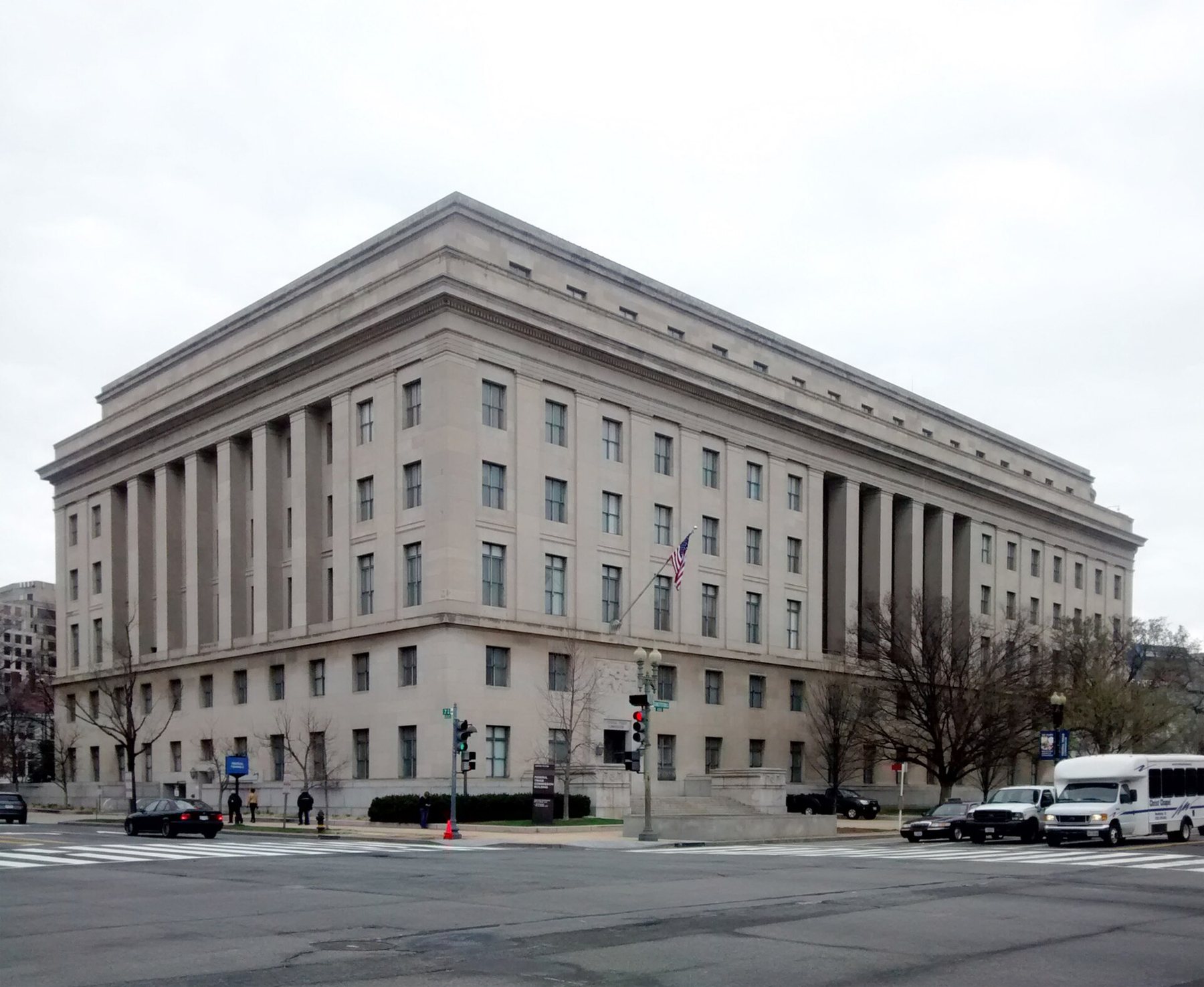
The Federal Trade Commission Building in Washington, D.C., photographed on 4 April 2014. Photo: 2014-04-04-Federal-Trade-Commission-Building-Washington-DC by Gunnar Klack, CC BY-SA 4.0, via Wikimedia Commons (resized).
From the record. This is a look back at October 2023. The desk wrote it on 11 October 2026 from sources published at the time; Stay Gazette opened in July 2026 and did not report this as it happened.
On 11 October 2023, the Federal Trade Commission announced a proposed rule to prohibit what it called junk fees: hidden and bogus charges added to an advertised price. The Commission voted 3-0 to publish the notice of proposed rulemaking.
The proposal covered the whole economy, but short-term lodging was one of the industries the agency studied in detail, and the notice, released with the announcement, named Airbnb and Vrbo. Any business that shows a price would have to show the total price, mandatory fees included, more prominently than any other figure. The notice counted the cleaning fee among those mandatory fees.
It was a proposal, and nothing took effect in October 2023. The FTC said the public would have 60 days to comment once the notice was published in the Federal Register.
FTC Chair Lina M. Khan gave the reasoning in the agency's release: “By hiding the total price, these junk fees make it harder for consumers to shop for the best product or service and punish businesses who are honest upfront.”
What the proposed rule said
- Total price. The proposed rule defined it as the most a consumer would have to pay for a good or service, every mandatory fee, charge and add-on counted. Government charges, meaning fees a federal, state or local government body imposes on consumers, and shipping charges could be left out.
- Most prominent. Wherever a business shows an amount a consumer may pay, the total would have to stand out above every other price in the offer or advertisement.
- True labels. A business could not misrepresent what a fee is for or whether it is refundable. Any amount left out of the total price would have to be explained clearly, before the consumer agrees to pay.
- Whoever shows the price. The ban on hidden fees would apply to the business that advertises the price even when another party provides the service. The notice's example was an online travel agent, which would have to include a hotel's mandatory fees in the total it displays.
- Penalties. The FTC said the rule would let it secure refunds for consumers and seek monetary penalties from companies that do not comply.
Greenberg Traurig, a law firm, said in a client alert dated 16 October 2023 that the proposed rule did not ban any one type of fee outright.
What the notice said about Airbnb and Vrbo
The notice described two ways a mandatory lodging fee reached a guest. In partitioned pricing, the fee sat in the small print from the start, apart from the base price. In drip pricing, it surfaced only at the last step before payment, once the guest was several pages into a listing. On home share sites such as Airbnb and Vrbo, the notice said, those mandatory fees went by the names cleaning fee, service fee or host fee.
A footnote went further. Airbnb, it said, offered a toggle that let a guest see all listing prices up front, but drip pricing was the default and the toggle was not visible if a search began anywhere other than the Airbnb homepage. Vrbo, it said, did print the fee-inclusive total on its first results page, but in type far smaller than the base price above it. The footnote concluded: “Neither Airbnb nor VRBO are currently in compliance with the proposed rule, which would require the total price to be the most prominent default upfront price.”
That was the agency's reading of a proposal not yet in force, not a finding that either company had broken the law.
The notice recorded public comments that vacation rental cleaning fees were left out of advertised nightly rates, which commenters said made a rental look cheaper than its competitors, and comments that some fees were charged as cleaning fees while hosts still required guests to clean.
The White House said the same day that companies in live event ticketing, lodging and rental housing had already changed how they display prices.
The numbers the FTC put on hosts
By the FTC's estimate, in live-ticketing and short-term lodging alone the rule would spare consumers more than 50 million hours per year of hunting for the total price, time it valued at more than $10 billion over the next decade. For short-term lodging by itself, the notice put the present value of net benefits over 10 years, at a 7% discount rate, at between $4,247,948,290 and $6,752,614,872.
Hosts appeared in the cost column. The notice said the rule would reach past hotels to individuals who list their own property for short-term rental on sites such as Airbnb and Vrbo, and it put figures on them:
- 675,603 home share hosts in the U.S., reached by dividing 504,000 Airbnb home share hosts by Airbnb's U.S. market share of .746.
- At the low end, 1 hour to reprice each listing, or 1.18 hours per host at an average of 1.18 listings. In the high-cost case, 3 hours per listing, or 3.5 hours per host.
- No annual cost after the first year.
These were estimates and assumptions, and the FTC asked commenters for data on the number of individual home share hosts.
How hotels, business groups and consumer advocates reacted
Chip Rogers, president and CEO of the American Hotel & Lodging Association, said in a statement quoted by NPR that the group would review the rule and that it “supports creating a single standard for mandatory fee display across the lodging industry – from short-term rental platforms, where fees are most prevalent, to online travel agencies, metasearch sites, and hotels.”
Business groups objected. Neil Bradley, executive vice president of the U.S. Chamber of Commerce, said in a statement quoted by NPR that the administration's campaign against junk fees would harm consumers. Bob Pinnegar, chief executive of the National Apartment Association, suggested the rule could raise the cost of rental housing, the Associated Press reported. Consumer advocates applauded, NPR reported.
The FTC had weighed a narrower rule: the notice said one alternative was to cover only live-event ticketing and short-term lodging, two sectors that drew many of the more than 12,000 comments on its advance notice of November 2022. The Commission proposed an economy-wide rule and asked commenters whether some of its requirements should fall only on businesses in those two industries.
The Gazette Verdict, looking back
The proposal asked little of hosts and a great deal of the platforms' search pages. A guest would pay the same total either way; the rule would change which number came first. By the FTC's own assumption the price of that for a host was one to three hours per listing, once. The loser, had the rule taken effect as proposed, would have been the listing built on a low nightly rate and a large cleaning fee, the pattern commenters complained about. The gain would have gone to hosts who already priced all-in and whose listings looked dearer on the first screen. The hotel association, in the statement NPR quoted, said fees were most prevalent on rental platforms and backed one standard. A host should have taken the hint: price to the total, and keep only fees a guest would accept by name.
The other side
The best case against the proposal is breadth and evidence. The rule would have reached businesses across the economy, yet the notice said its cost and benefit analysis considered three industries: short-term lodging, live-event ticketing and restaurants. The host figures rested on assumptions, and the agency asked the public how many hosts there were. The market was already moving: by the notice's own account Airbnb offered a total-price toggle and Vrbo printed the total on its results page, and the White House said lodging companies had changed their displays.
Since then
On 17 December 2024 the FTC announced a final rule limited to live-event tickets and short-term lodging. The Commission approved it 4-1, and the agency said it would become effective 120 days after publication in the Federal Register.
What it meant for hosts
In October 2023 a host had nothing to change. The rule was a proposal with a comment period ahead of it, and it showed a host where to look.
- Know the total. Under the proposal the most prominent price a guest saw would be the nightly rate plus every mandatory fee. Government charges could be left out of that total, as long as they were explained before the guest agreed to pay.
- Check the label on each fee. The proposal would bar misrepresenting what a fee is for, and commenters had complained of cleaning fees on stays where guests also had to clean.
- Count the time. The FTC's assumption for a host was 1 to 3 hours per listing, one time, to reprice.
- Watch the platforms. By the notice's account neither Airbnb's default search nor Vrbo's results page met the proposed standard, so the pages on which a host's price appeared would have to change if the rule was finalized as proposed.
- Mind state law. Under the proposal, state rules that protect consumers more would stand. Greenberg Traurig pointed clients to California's SB 478, which it said would take effect in July 2024.
The proposed definition of a business included an individual who offers services online, and the duty to show the total would have rested on whoever displayed the price.
Sources
- Federal Trade Commission, FTC Proposes Rule to Ban Junk Fees (11 October 2023).
- Federal Trade Commission (Federal Register), Trade Regulation Rule on Unfair or Deceptive Fees (9 November 2023).
- The White House, Biden-Harris Administration Announces Broad New Actions to Protect Consumers From Billions in Junk Fees (11 October 2023).
- Associated Press (via WSFA), Biden says the FTC’s proposed ban on junk fees will help families and ‘honest’ businesses (11 October 2023).
- NPR, Biden proposes a ban on 'junk fees' — from concert tickets to hotel rooms (11 October 2023).
- Greenberg Traurig, FTC Proposes Rule Targeting ‘Junk Fees’ (16 October 2023).
- Federal Trade Commission, Federal Trade Commission Announces Bipartisan Rule Banning Junk Ticket and Hotel Fees (17 December 2024).
Part of the Stay Gazette record for October 2023. Filed on 11 October 2026; every specific was checked against the sources above, which were read on or before that day. To report an error, write to the desk; see the corrections policy.

Also filed on October 2023
- WorldBritish Columbia Passes Law Limiting Short-Term Rentals to Principal ResidencesThe Short-Term Rental Accommodations Act received Royal Assent ten days after it was introduced. Its main limit, a host's own home plus one suite in communities of 10,000 people or more, was planned for 1 May 2024.
- The recordOctober 2023, the whole month
- The recordEvery month on the record