Airbnb Guests Book One Million Nights in a Day for the First Time Since March
Airbnb said on 14 July 2020 that 8 July was its first day of more than 1 million nights booked since 3 March. The nights were close to home, outside cities and low-priced, and the company said its business had not recovered.
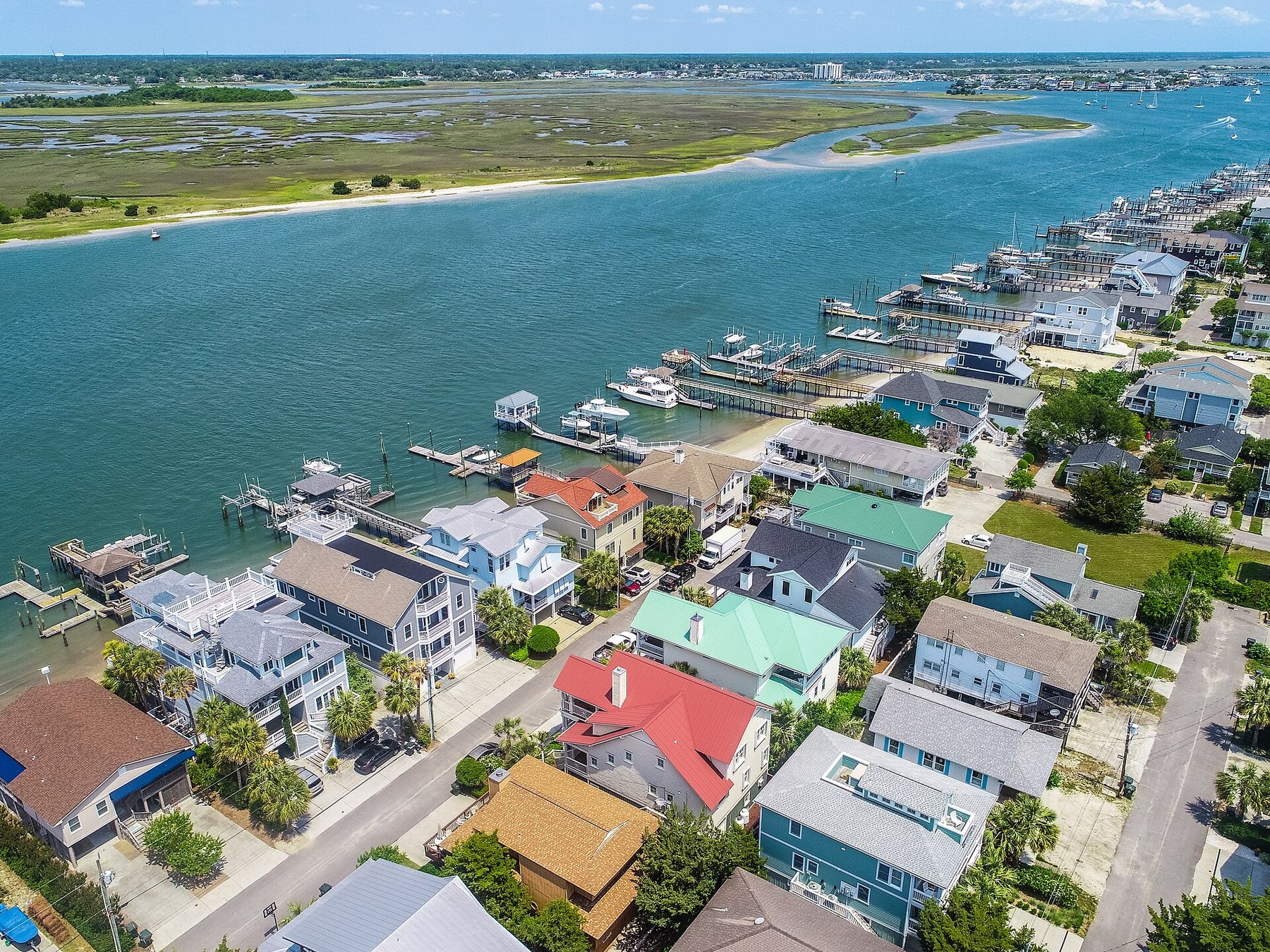
Beach houses and boat docks along a tidal channel in Wrightsville Beach, North Carolina, photographed from the air in May 2018. Photo: Wrightsville Beach Neighborhood by FOCIIS Photography, CC BY-SA 4.0, via Wikimedia Commons (resized).
From the record. This is a look back at July 2020. The desk wrote it on 11 October 2026 from sources published at the time; Stay Gazette opened in July 2026 and did not report this as it happened.
On 14 July 2020, Airbnb said that guests had booked more than 1 million nights of future stays at its listings around the world on a single day, Wednesday 8 July 2020. It was the first day the company had reached that mark since 3 March, more than four months earlier.
The company did not claim to be back to normal. Its newsroom post opened with a caution: “Our business has not recovered, but we are seeing encouraging signs.” What the post gave hosts was a description of the nights: where they were, how far guests were going, what the listings cost and how soon the trips began.
Reuters, reporting the announcement, called the figure an early sign of recovery after a slowdown in reservations during the Covid-19 pandemic.
What Airbnb counted
The number was nights booked on 8 July for stays still to come. It was not nights stayed on that date, and it was not 1 million separate bookings. The Reuters report, as carried on 15 July 2020, was marked as a correction of its 14 July story: the headline and first paragraph had been changed to say that guests booked 1 million nights.
Airbnb's post gave one day's count and nothing to set beside it: no revenue, no total for the month and no comparison with the same day a year earlier. PhocusWire, the travel trade site, pointed out that the announcement did not specify the period of time the bookings covered. The company said only that a significant portion of the nights were for trips beginning within 30 days, meaning on or before 7 August.
Close to home, outside cities, at $100 or less
Guests who booked on 8 July did so in more than 175 countries and regions, Airbnb said, and the nights skewed toward domestic travel. The rest of the breakdown pointed the same way:
- approximately half of the nights were for trips to destinations within 300 miles;
- over two-thirds were for destinations within 500 miles, and Airbnb described both distances as typically manageable by car;
- two-thirds of the nights were at destinations outside cities;
- slightly more than half were at listings costing no more than $100 a night;
- over 60 percent were for people traveling alone or with one other person, while more than 17,000 nights were booked by guests traveling in a group of 10 or more.
The post added one figure on money, for one country and for the month before. In rural areas of the United States, hosts earned over $200 million in June 2020, which Airbnb said was more than 25 percent above what hosts in those areas earned in June 2019. It defined rural areas as those with fewer than 100 inhabitants per square kilometer.
Why Airbnb said guests were booking
Airbnb offered two explanations. The first was timing. Pent-up demand, the post said, might be playing a role, and it made the point next to the share of trips due to begin within 30 days.
The second was the product. Because short-term rentals are typically entire homes, the company said, guests got more space for their money and more control over their surroundings, including private entrances, kitchens and swimming pools. It added the availability of entire homes within driving distance and its Enhanced Clean protocol for clean, sanitized accommodations, and concluded that its short-term rentals were recovering because consumers saw them as a safe, healthy and responsible way to travel.
The backdrop was a hard spring. Reuters reported that Airbnb had been reeling under weak demand as the pandemic led millions of travelers to call off vacations, work trips and visits to family, and that the company had suspended marketing for the year and cut about 25% of its workforce. The Real Deal put the May layoffs at almost 2,000 employees. ShortTermRentalz, a trade site, reported that Airbnb had raised $2 billion in two separate tranches, through debt, equity and a line of credit.
The same week at the company
The bookings figure was not the only news out of Airbnb that week. On 16 July 2020, The Real Deal reported that chief executive Brian Chesky was reviving plans for a public offering in 2020. Citing the Financial Times, it said he had written to staff in an email on Wednesday 15 July. “When the market is ready, we will be ready,” he wrote, according to that report.
The same report said Chesky had told the Financial Times that the company was not committing to going public in 2020 and was not ruling it out, and that he had given no detailed timeline.
Chesky had also announced that Greg Greeley, president of the Homes division, would step down after two years with the company. The Real Deal said Greeley, who had been recruited from Amazon, had not commented on his exit. His role, overseeing the central rental business, was to pass to Catherine Powell, then head of Experiences, and the division was to be renamed Hosting. “If we’re going to get back to our roots, we must get back to great hosting,” The Real Deal quoted Chesky as saying about the company's plan for coming back from the pandemic. ShortTermRentalz reported that Powell had joined Airbnb at the turn of the year to lead Experiences.
The Real Deal also marked the edge of the good news. The company had reported that rural stays were increasing, it wrote, but bookings in urban markets, New York City among them, remained down.
The Gazette Verdict, looking back
The 8 July count was useful to hosts as a map of where demand had gone, and it was no proof that the trade was back. Airbnb said so itself: its business had not recovered. It gave one day, with no revenue and no period for the stays. What the day showed was specific. About half the nights were within 300 miles, two-thirds were outside cities, and slightly more than half were at listings of $100 a night or less. Rural hosts in the United States earned over $200 million in June, more than 25 percent above June 2019, so that is where the money went. City hosts paid: The Real Deal reported urban bookings, New York City included, still down. A host should take the map and leave the milestone, and set prices and calendars for the guest who was booking: a small party, driving, on short notice.
The other side
The milestone deserved more credit than that. One million nights in a day was the level Airbnb had last seen on 3 March, and it was back more than four months later, with guests booking in more than 175 countries and regions. Reuters read it as an early sign of recovery. In rural America hosts were not merely losing less: by Airbnb's figures they earned over 25 percent more in June 2020 than in June 2019. In the same week, The Real Deal reported, the chief executive told staff the company would be ready to go public when the market was. On that reading, the move toward whole homes near home was the recovery, arriving first where it was easiest.
What it meant for hosts
For a host in July 2020, the breakdown was more useful than the headline number. It described the guest who was booking: someone within 300 to 500 miles, distances Airbnb called manageable by car, most often traveling alone or as a pair, looking outside the cities, choosing a listing at $100 a night or less for slightly more than half of the nights, and in many cases leaving within 30 days.
That pointed to a few practical moves. A host outside a city could sell to the region within driving distance instead of waiting for longer trips. The calendar for the following four weeks mattered, because a significant portion of the nights booked on 8 July were for trips starting on or before 7 August. A whole home with its own entrance and a kitchen was the product Airbnb itself was promoting, along with its Enhanced Clean protocol, so a host had reason to follow the protocol and say so in the listing.
Large homes had a smaller opening: more than 17,000 of the nights were booked by groups of 10 or more, out of a day's total of more than 1 million.
A host in a big city got little from the announcement. The Real Deal reported that bookings in urban markets remained down, and Airbnb's own post said the business had not recovered. None of the reports described a change to a rule, a fee or a payout. The Homes division was to become Hosting under a new head, and ShortTermRentalz wrote that little was known about the new division.
Sources
- Airbnb Newsroom, For the First Time Since March, Guests Book One Million Nights in One Day (14 July 2020).
- Reuters (as published by Yahoo Finance), Airbnb says 1 million nights booked in one day (15 July 2020).
- PhocusWire, Airbnb claims 1 million nights booked in one day for first time since March 3 (15 July 2020).
- The Real Deal, Airbnb executive to step down as startup revives IPO plans (16 July 2020).
- ShortTermRentalz, Airbnb ramps up 2020 IPO plans amid management reshuffle (17 July 2020).
Part of the Stay Gazette record for July 2020. Filed on 11 October 2026; every specific was checked against the sources above, which were read on or before that day. To report an error, write to the desk; see the corrections policy.

Also filed on July 2020
- WorldLisbon's Safe Rent Program Draws 45 Short-Term Rentals in Its First CallLisbon offered to lease homes from their owners for five years or more and sublet them at affordable rents. On 6 July 2020 the city council counted 177 completed applications, 45 of them for homes that had been short-term rentals, while the headline on an article by the mayor set off a dispute with the trade.
- The recordJuly 2020, the whole month
- The recordEvery month on the record