Amsterdam Bans Holiday Rentals in Three Central Districts
The city confirmed on 25 June 2020 that homes in three districts of the old center could not be rented to tourists from 1 July. Hosts everywhere else in Amsterdam needed a permit and stayed limited to 30 nights a year.
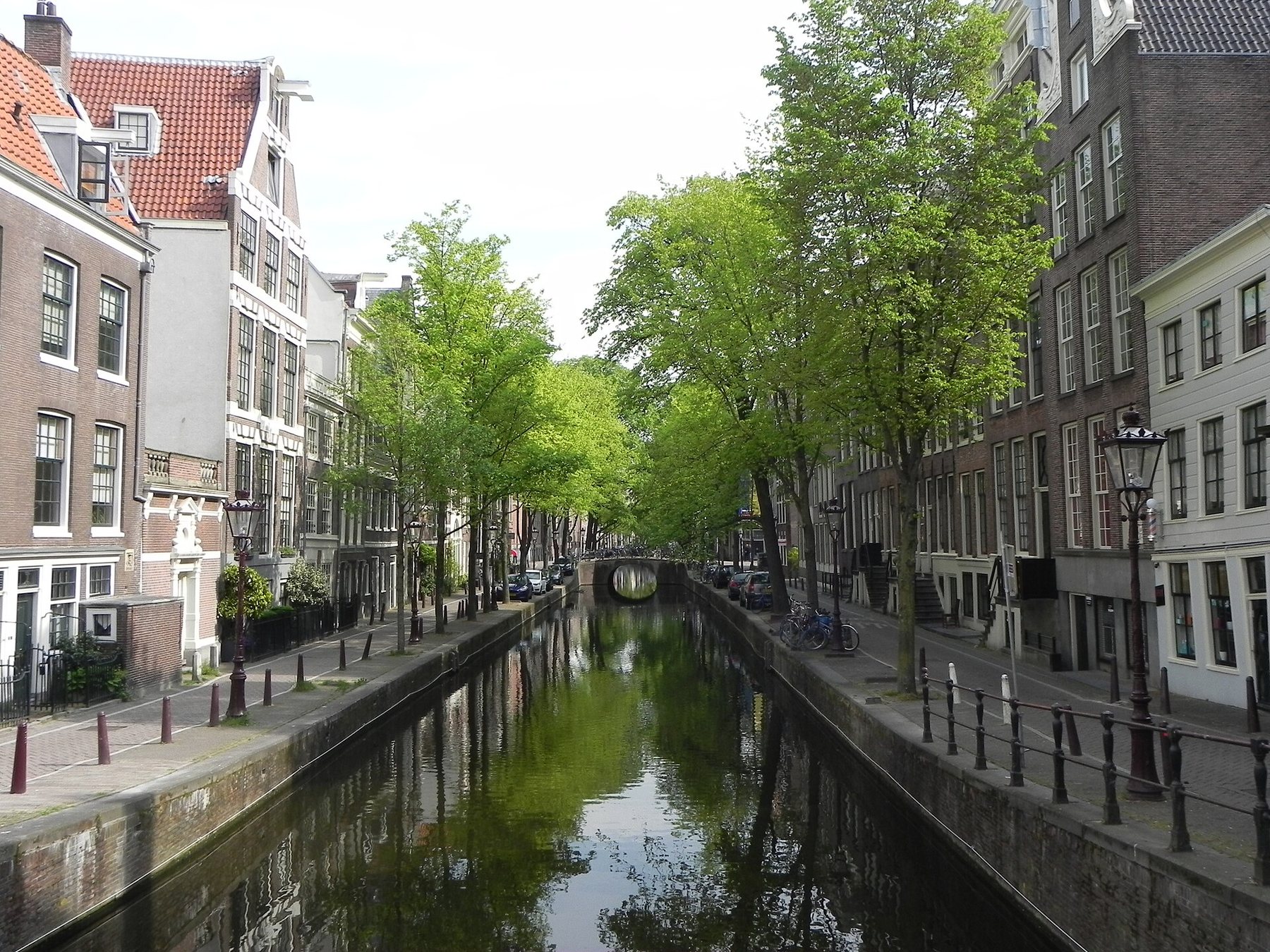
The Oudezijds Achterburgwal canal in Burgwallen-Oude Zijde, one of the three Amsterdam districts named in the ban, photographed on 3 May 2020. Photo: Oudezijds Achterburgwal35 by TonySchmid, CC BY-SA 4.0, via Wikimedia Commons (resized).
From the record. This is a look back at June 2020. The desk wrote it on 11 October 2026 from sources published at the time; Stay Gazette opened in July 2026 and did not report this as it happened.
On 25 June 2020, the City of Amsterdam confirmed that holiday rental of homes would be banned in three districts of its old center from Wednesday 1 July 2020: Burgwallen-Oude Zijde, Burgwallen-Nieuwe Zijde and Grachtengordel-Zuid. In the rest of the city, renting a home to tourists would be allowed from the same date only with a permit.
The plan itself was not new. The Dutch broadcaster NOS had reported it on 16 April 2020, with the same three districts and the same 1 July start date. What came in June was the confirmation after a public consultation, with the result attached: 780 people and organizations had responded, and the alderman for housing, Laurens Ivens, said 75% of them were in favor of the ban.
Kassa, the consumer platform of the Dutch broadcaster BNNVARA, carried the announcement in a report dated 25 June 2020. Reuters, reporting on Friday 26 June 2020 that the city had made the announcement on Thursday, said the three districts took in the 500-year-old red-light district and most of the inner-city canal ring, part of a UNESCO world heritage site.
What the city confirmed
The city's release, published in Dutch, gave its reason in a sentence: in those three districts tourism had put liveability for residents under so much pressure that a ban on holiday rental was necessary. No permits would be granted there.
Everywhere else, the release said, a resident needed a permit from 1 July 2020 to rent out their own home to tourists, for a maximum of 30 nights a year. It set out the conditions that came with the permit system:
- the home had to be lived in;
- it could be rented for at most thirty nights a year;
- it could be rented to at most four people;
- every rental had to be reported to the municipality.
The measure did not apply to owners of a bed and breakfast. The city said running a B&B already required a permit and that district quotas applied.
DutchNews.nl reported that the new permit cost €45, that hosts had to inform the city of every rental in advance, and that failing to get the permit could bring a fine of €20,750. The site said the limits of 30 nights a year and four guests at a time were the same as before, and applied to people normally resident in the home. “If you hire out a house where you don’t live, then you are an illegal hotel,” city housing spokeswoman Anouk Panman told DutchNews.nl.
The consultation and the legal limit
People could give their view on the ban until 28 May. The city said the 780 responses were considerably more than it had received in earlier consultation rounds on limiting holiday rental. Ivens said, in Dutch, that the number showed how much the subject mattered to people in Amsterdam. He also said that some of the supporters thought the ban did not go nearly far enough and wanted a total ban on holiday rental for the whole city, which he said was not achievable under current law and regulation.
The release explained why. The European Services Directive allowed services such as tourist rental to be restricted only where there was an overriding reason of public interest. The city executive could therefore step in only in districts where the balance was demonstrably and seriously disturbed. Its evidence was a research report on the tourist carrying capacity of districts by the city's own department for research, information and statistics, known as OIS. The three districts scored worst.
The city said the research would be repeated in two years. If other districts then scored on a level with the three, the executive could designate more ban districts.
TechCrunch, reporting on 26 June 2020, noted that Europe's top court had ruled the previous December that Airbnb is an online intermediation service.
How Amsterdam got there
The city had been tightening its rules for some time. TechCrunch reported that in 2018 Amsterdam cut the cap on the number of nights a property could be rented from 60 to 30 a year. The city's June release said tourist rental of homes had grown strongly over the preceding years: 1 in 15 homes in Amsterdam was offered online, and the supply of homes on the rental platforms had grown five-fold, to about 25,000 advertisements a month.
NOS reported in April that the ban and the permits were a response to a ruling by the Council of State in January, which held that taking housing out of the housing stock without a permit was forbidden. According to NOS, residents of the 96 other districts would need a permit, and the fine for illegal holiday rental stayed at 20,750 euros.
DutchNews.nl reported two other signs of the mood in the city. Amsterdam had asked for emergency powers to shut down hotels and holiday lets if overcrowding created a risk of a second wave of coronavirus infection. And a petition asking the municipal council to limit the number of tourists to 12 million a year had been signed by almost 30,000 residents.
Airbnb objected and some residents wanted more
Airbnb opposed the measures. In a statement carried by DutchNews.nl, the company said about 95% of Airbnb accommodation was outside the three districts and so helped to spread tourism beyond the center. Kassa's Dutch-language report of the company's reaction gave the figure as 96 percent. “We are very concerned that these proposals are illegal and violate the fundamental rights of Amsterdam residents as well as decreasing income in these difficult times,” it said. The company added that it wanted to work with Amsterdam on sustainable solutions, that it had been working on measures to reduce nuisance, and that it supported the Dutch government's efforts to develop national legislation on holiday rentals.
NOS had reported in April that Airbnb called the measures illegal and said it was unclear whether Amsterdam had the power to take them.
From the other direction came people who thought three districts were too few. DutchNews.nl named Stephen Hodes of the think tank Amsterdam in Progress among experts who had said the city should go further and ban all Airbnb holiday rentals.
Panman described what residents were reacting to: getting home through busy streets to find the neighbors on both sides renting to tourists who kept a different rhythm. “It is a subject that evokes strong feelings amongst Amsterdammers, and 75% were in favour,” she told DutchNews.nl.
The Gazette Verdict, looking back
Amsterdam's June 2020 package was a targeted measure, and for most hosts the permit mattered more than the ban. The city banned holiday rental only in the three districts where its own research showed the worst pressure, and said European law would not let it go further. By Airbnb's count, about 95% of its accommodation lay outside them. Hosts outside kept their 30 nights, at the price of a €45 permit and a report to the city for every stay, against a €20,750 fine for going without the permit, as DutchNews.nl reported. The cost fell on resident hosts inside the three districts, who lost every night. The gain was meant for the residents around them. A host should take two things from it: the paperwork was the cheap part of staying legal, and a city that promises to repeat its research in two years has told you the map can change.
The other side
For a resident host inside the three districts, nothing about this was targeted. From 1 July the legal number of nights went from 30 to none, with no permit on offer, in what Airbnb called difficult times for income. Airbnb said the measures were illegal and violated the fundamental rights of Amsterdam residents, and the city itself said European law limits what it may restrict. If about 95% of Airbnb's accommodation sat outside the three districts, as the company said, the ban could do little about tourism pressure across the city, while taking lawful income from people who lived in their homes and kept to the 30-night rule.
What it meant for hosts
A host with a home in Burgwallen-Oude Zijde, Burgwallen-Nieuwe Zijde or Grachtengordel-Zuid had until the end of June 2020. From 1 July holiday rental there was banned, and the city said no permits would be granted in those districts.
A host anywhere else in Amsterdam had four things to do, going by the city's release and the DutchNews.nl report: get the permit, which DutchNews.nl put at €45; live in the home; keep to thirty nights a year and four guests; and report every rental to the municipality, in advance according to DutchNews.nl. The fine DutchNews.nl gave for failing to get the permit was €20,750, which made the permit a small cost by comparison.
Bed and breakfast operators were on a separate track. The city said they already needed a permit and fell under district quotas.
Hosts outside the three districts also had a date to keep in mind. The city said it would repeat its research in two years and could then add districts that scored as badly.
Sources
- City of Amsterdam (Gemeente Amsterdam), Verbodsgebieden vakantieverhuur van kracht (25 June 2020).
- BNNVARA Kassa, Vakantieverhuur in delen oude centrum Amsterdam per 1 juli verboden (25 June 2020).
- Reuters (as published by The Jakarta Post), Amsterdam bans AirBnB rentals in old center from July 1 (26 June 2020).
- TechCrunch, Amsterdam ejects Airbnb et al from three central districts in latest P2P platform limits (26 June 2020).
- DutchNews.nl, Amsterdam new holiday rental rules begin on July 1 (26 June 2020).
- NOS, Amsterdam verbiedt Airbnb-verhuur in drie wijken om overlast tegen te gaan (16 April 2020).
Part of the Stay Gazette record for June 2020. Filed on 11 October 2026; every specific was checked against the sources above, which were read on or before that day. To report an error, write to the desk; see the corrections policy.

Also filed on June 2020
- CrackdownAirbnb Agrees to Drop Its Lawsuit and Give New York City Host DataAirbnb settled its federal case against New York City on 12 June 2020 and agreed to a narrower reporting law that the City Council had yet to pass. Hosts were told to consent to sharing their details or stop listing short-term rentals.
- The recordJune 2020, the whole month
- The recordEvery month on the record