Local Guests and Last-Minute Bookings Drive Short-Term Rental Damage, Truvi Study Finds
Data from over 95,000 bookings reveals that guests living within 20 miles, same-day bookers, and amenity-rich houses create the highest operational damage risk.
A guest living eighteen miles away books a four-bedroom home at four o'clock on a Friday afternoon, completes an automated identity check in ninety seconds, and receives the keyless entry code five minutes later. To an unseasoned operator, that reservation looks like pure margin—an opportunistic gap-fill on an otherwise empty weekend calendar. To an experienced property manager who has swept up broken glass and scrubbed carpet stains at six o'clock on a Sunday morning, that reservation looks like an impending catastrophe.
For years, short-term rental hosts and property management companies relied on gut instinct, platform star ratings, and basic driver license checks to keep destructive guests out of their homes. But detailed data published by risk management provider Truvi confirms what frontline operators have long argued in private group chats: the most dangerous guest in the short-term rental industry is rarely the international tourist traveling thousands of miles, but rather the local resident living just down the highway.
The research released in Truvi's STR Risk & Resilience Report 2026 provides a quantitative breakdown of operational property damage across global rental markets. By measuring distance, booking lead time, structural property types, amenity density, and distribution channels, the dataset reveals that property damage is rarely an act of random bad luck. Instead, damage follows predictable mathematical patterns. For professional hosts, property managers, and real estate investors navigating tight margins and rising insurance premiums, recognizing these behavioral markers is no longer optional—it is a core operational discipline.
What happened
In October 2026, short-term rental risk protection platform Truvi published its STR Risk & Resilience Report 2026, drawing on a sample of more than 95,000 bookings protected through its system between January and September 2026. The study evaluated real-world damage claims to identify which reservation characteristics correlate most strongly with property damage incidents.
According to Truvi's data, guests booking a rental property located within 20 miles of their primary residence are 72 per cent more likely than average to be involved in a damage incident. Conversely, guests traveling at least 1,000 miles to reach their accommodation represent one of the lowest-risk categories in the entire dataset. Distance between a guest's home address and the property emerges as one of the most reliable indicators of potential property friction.
Booking lead time showed a similarly strong correlation. Same-day reservations carried a 60 per cent higher risk of damage than the average booking, with overall damage risk dropping steadily as the time window between reservation and check-in widened. Truvi also analyzed property types, finding that detached houses are approximately 2.4 times more likely than apartments to suffer a damage incident.
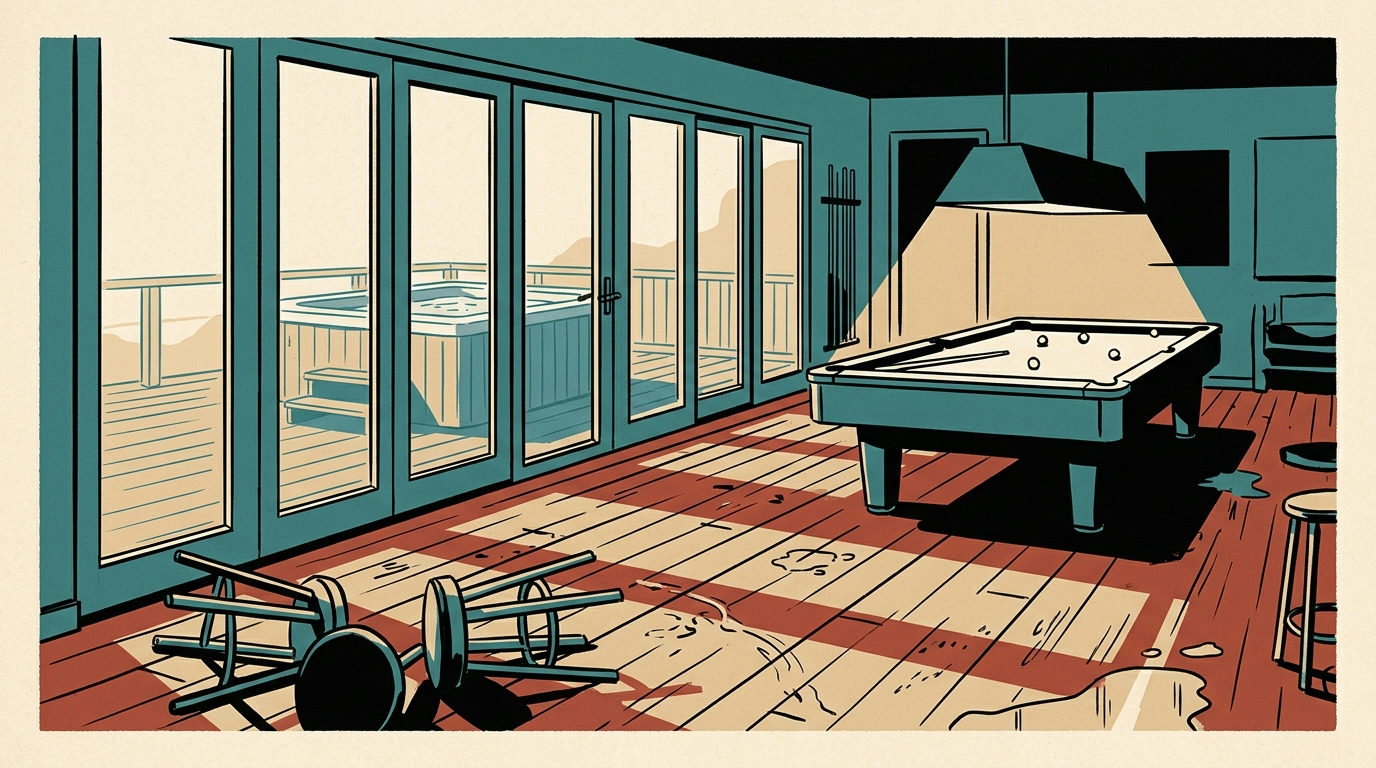
The concentration of entertainment amenities further magnified property risk. Single-family homes and villas advertising five or more group entertainment features—such as hot tubs, saunas, pool tables, and arcade setups—recorded more than double the average damage risk. When Truvi isolated these amenity-dense properties against houses of comparable square footage, the high-amenity homes remained 60 per cent more likely to record an incident.
Finally, the report highlighted a sharp uptick in direct booking risk. Reservations completed outside major online travel agencies moved from 1.34 times the average damage risk in Truvi's May 2026 analysis to 1.85 times average in the September dataset. Truvi attributed this escalation to the reality that direct booking engines often lack the centralized guest-review histories, fraud databases, and behavioral signals built into major online booking platforms. Truvi emphasized that its findings reflect bookings protected through its proprietary platform and should not be viewed as a fully representative sample of the entire global short-term rental market.
The twenty-mile radius and the mechanics of local risk
To understand why a guest living within 20 miles presents a 72 per cent higher damage risk, operators must analyze guest motivation. Long-distance travelers who fly or drive hundreds of miles usually view a short-term rental as a base of operations for sight-seeing, corporate work, or visiting family. Their primary activity occurs outside the house. They return to the rental primarily to sleep, shower, and rest before the next day's itinerary.
Local guests, by contrast, rarely rent a home twenty miles away for quiet sleeping. In the vast majority of cases, the local staycation is selected because the rental property offers space, privacy, or amenities that the guest's primary residence lacks. The home itself is the destination. When a rental becomes the destination, every hour of guest occupancy concentrates on-site, dramatically increasing operational stress on furniture, flooring, plumbing, and outdoor areas.
Local stays also suffer from a severe dilution of social accountability. A guest staying in a mountain cabin 1,200 miles from home understands that causing chaos risks stranding them in an unfamiliar city with law enforcement involved and platform accounts banned. A local guest hosting a weekend gathering knows their home, job, and routine remain twenty minutes away. If a party gets out of hand, the guest can simply walk away at dawn, leaving the property manager to handle the physical and financial debris.
Furthermore, local bookings are frequently used as unauthorized event venues. Despite strict party bans across major platforms, local bookers view short-term rentals as temporary event spaces for birthday celebrations, reunions, or informal nightlife gatherings. By transferring party risk from their own living rooms to an investment property, local guests offload potential physical damage onto the host while paying only a fraction of what commercial event venues charge.
The lead-time trap and the short-term occupancy illusion
The finding that same-day reservations carry 60 per cent more risk than average highlights a major structural friction in modern yield management. Over the past five years, automated pricing engines and revenue management algorithms have encouraged property managers to discount prices aggressively as check-in dates approach. The logic appears sound on a spreadsheet: an unbooked night yields zero dollars, so capturing a discounted same-day booking helps cover fixed debt service and operating overhead.
However, pricing algorithms evaluate occupancy revenue while ignoring operational risk costs. A legitimate vacationer planning a family trip or corporate stay rarely decides at 3:00 PM on a Friday to book a four-bedroom house for that exact evening. Spontaneous, ultra-short lead time bookings are disproportionately driven by individuals whose plans fell through elsewhere, whose local venues turned them away, or who made impulsive weekend party decisions.
The operational compressed window exacerbates the hazard. When a booking arrives three months in advance, property managers have ample time to cross-reference guest profiles, collect signed rental agreements, process security deposits, and verify government-issued identification. When a booking arrives two hours before check-in, host operations are rushed. Front-desk personnel or automated software systems must clear the guest immediately to avoid a delayed check-in complaint, creating operational loopholes that bad actors routinely exploit.
The financial math of last-minute gap-filling is often deeply flawed.
Amenity inflation and the group entertainment trap
The Truvi data regarding group entertainment facilities exposes a structural vulnerability in property development strategies. Over the past decade, short-term rental coaching programs and real estate influencers urged hosts to differentiate their listings by installing hot tubs, saunas, pool tables, home theaters, and outdoor game lounges. The goal was simple: boost average daily rates and secure higher search placement on listing portals.
While these amenities successfully drive higher rental rates, they also act as magnet features for high-risk group behavior. Truvi's finding that properties with five or more group facilities carry more than double the average damage risk—and 60 per cent higher risk than similarly sized homes without those features—demonstrates that amenity-dense listings alter the profile of the guest cohort.
Amenity-rich homes actively attract multi-family groups, bachelor parties, and social gatherings where alcohol consumption and late-night activity are central to the stay. A pool table in a living room invites heavy foot traffic, spilled drinks, and dropped billiard balls on hardwood floors. A hot tub invites late-night noise, chemical imbalances, filter clogging, and water overflow that can damage decks or seep into subflooring.
The dilemma for property managers is acute. Removing revenue-generating amenities reduces property appeal and daily rates in competitive resort markets. However, maintaining these amenities without strict operational controls converts residential real estate into high-wear entertainment complexes. Operators who stack group amenities must build higher maintenance reserves and implement rigorous guest verification protocols to insulate cash flow from structural damage.
The direct booking paradox: independence without the safety net
One of the most concerning trends in the Truvi report is the widening risk gap between direct bookings and online travel agency reservations. Direct bookings moved from 1.34 times average risk in Truvi's May analysis to 1.85 times average in the September dataset. This sharp increase coincides with an industry-wide push by property management companies to build direct booking channels and reduce platform dependency.
Direct bookings represent the Holy Grail of short-term rental economics: zero platform commissions, direct ownership of guest contact data, and full control over cancellation policies. However, many operators launched direct booking websites without building enterprise-grade guest verification systems. They connected payment processors directly to basic booking forms, assuming that a cleared credit card transaction equaled a safe guest.
Major platforms like Airbnb and Vrbo spend millions of dollars building proprietary risk algorithms that analyze user behavior across millions of historical stays. They monitor device fingerprints, IP addresses, payment card origin, account age, and multi-listing booking attempts. When a bad actor gets flagged or banned on a major platform, they do not give up—they search for local property management websites where they can book directly with minimal friction.
As Truvi noted in its analysis, accepting direct bookings without implementing robust screening controls creates an adverse selection problem. Bad actors actively seek out direct channels precisely because those sites lack guest-review histories and cross-platform verification network effects. Direct booking independence is a lucrative strategy, but only if operators deploy equivalent screening safeguards to protect their physical assets.
The screening arms race and the limits of identity checks
The findings in Truvi's report underscore a fundamental distinction that many short-term rental hosts fail to grasp: identity verification is not risk assessment. Confirming that a guest is who they claim to be is merely the entry point of guest screening, not the finished product.
In her comments accompanying the report, Kayla Perez, vice president of operations at Truvi, captured this operational reality clearly:
“Two guests can pass exactly the same identity checks and still present very different levels of risk. Where they’re travelling from, how far in advance they book and the type of property they’re staying in can all tell us something important.”
A guest can present a genuine driver's license, pass a facial recognition scan, clear a criminal background check, and use a valid credit card under their own legal name. Yet if that same guest lives twelve miles from the home, books a five-bedroom property with a hot tub six hours before check-in, and invites nine friends over for a celebration, the guest's verified identity will do nothing to stop a structural damage event from occurring.
The industry must move beyond binary identity checks toward dynamic context-based risk modeling. Advanced risk screening evaluates contextual reservation metadata—combining distance, lead time, occupancy-to-bedroom ratios, channel origin, and historical listing density—to generate an operational risk score. When a high-risk combination triggers, operators can systematically apply secondary controls, such as requiring larger security deposits, requesting signed damage waivers, or requiring manual phone verification before issuing keyless door codes.
Operational playbook and the friction tradeoff
For property management companies and individual hosts, reducing damage risk requires accepting a fundamental operational tradeoff: risk prevention introduces guest friction, and guest friction can lower instant conversion rates. Many operators resist adding screening steps because they fear losing valid bookings to competitors down the street.
However, top-tier operators realize that losing a high-risk booking is not lost revenue—it is avoided loss. The cost of a major damage incident far exceeds the revenue captured from a single weekend stay. A single party incident can result in thousands of dollars in structural damage, suspended platform listings, neighbor disputes, local council code violations, and revoked short-term rental operating permits.
Filling an empty Friday night with a high-risk local booking is not revenue management—it is gambling with your capital asset.
Professional managers are responding to Truvi's data by reconfiguring their operational settings across all channels. They are turning off instant booking for local residents, establishing minimum lead times for large single-family homes, and enforcing strict background screening protocols on all direct booking websites. Rather than viewing risk tools as an added expense, smart operators treat risk mitigation as essential infrastructure that protects cash flow and preserves real estate value.
Ultimately, the Truvi report provides short-term rental operators with clear, actionable intelligence. Damage incidents are not unpredictable acts of god. By taking back control of booking parameters, establishing smart geographic boundaries, and evaluating reservation context alongside identity, operators can build resilient portfolios capable of generating consistent, low-friction returns.
What hosts should do now
To protect assets and align operations with Truvi's findings, property managers and hosts should implement five immediate structural adjustments across their portfolios.
- Establish local booking rules: Set restrictions or require manual host approval for reservations made by guests residing within a 20-mile to 30-mile radius of the property, especially for large detached homes.
- Adjust same-day booking windows: Disable same-day instant bookings after midday, or enforce a mandatory two-day advance lead time on large, amenity-heavy properties to eliminate impulse party bookings.
- Upgrade direct booking verification: Implement automated third-party guest screening tools on direct booking engines to capture government ID, selfie verification, and signed rental agreements before confirming reservations.
- Calibrate risk controls for high-amenity listings: Require higher refundable security deposits or mandatory damage protection coverage on homes featuring hot tubs, pool tables, saunas, and group entertainment facilities.
- Audit pricing engine defaults: Reconfigure dynamic pricing tools to prevent automated fire-sale discounting on last-minute weekend dates where the risk of guest damage outweighs the marginal rental income.
By adopting these data-driven safeguards, short-term rental operators can shield their properties from preventable wear, maintain strong relationships with neighbors and regulators, and safeguard the long-term profitability of their rental businesses.
Checked by the standards desk (Eleanor Quist): 36 specifics checked, 29 traced to the source material, 5 general background, 2 removed before publication.
Report an error in this story · Corrections policy and log





Read the desk every morning.
The day's crackdowns and platform moves, the money, the design and the stays going viral, plus the desk's verdict, in one short email every morning.
Comments