The Morning Coffee Bar Setup That Leaves Thread Count in the Dust
Guests photograph a clean coffee counter and write five-star reviews about local roasts long before they notice high-end linens or designer tiles.
Walk through a thousand short-term rental listings on Airbnb or Vrbo, and you will see the exact same spending priorities repeated with exhausting predictability. Hosts drop four figures on Egyptian cotton sheets, install designer light fixtures overhead, and post professional wide-angle photography highlighting custom accent walls. Yet when guests step barefoot into the kitchen on their first morning, they are routinely greeted by a plastic pod machine sitting next to a greasy water tank, accompanied by stale, nameless dark-roast pods and two paper takeaway cups. The visual high of the property collapses in thirty seconds.
Hospitality is an emotional business governed by critical timing. Guests do not wake up thinking about thread count, HVAC ductwork, or the structural engineering of the sofa. They wake up thirsty, slightly disoriented, and hunting for caffeine. If that immediate morning experience feels cheap, clinical, or frustrating, every tiny flaw in the home suddenly becomes visible. If that morning experience feels deliberate, clean, and satisfying, small imperfections across the property are instantly forgiven.
A dedicated, well-executed coffee setup is cheap theater with outsized financial returns. It is the single amenity guests photograph most frequently outside the outdoor pool or balcony view, and it appears in five-star review text far more often than expensive furniture installations. Understanding why this happens—and how to construct a morning coffee experience that translates into review velocity and pricing power—requires looking closely at guest psychology, operational realities, and the math of hospitality.
How it actually works
The operational mechanics behind a successful morning routine rely on sensory triggers and zero-friction execution. When a guest walks into the kitchen, their evaluation of the space happens on a subconscious level. The presence of a clean, defined coffee area sends an immediate signal of care and attention. This is not about building an expensive commercial cafe inside a residential kitchen; it is about establishing a predictable, satisfying ritual that requires no complex technical troubleshooting from a sleepy guest.
The foundational system rests on four physical components: hardware that feels tactile, fresh whole beans or high-grade ground coffee, substantial ceramic mugs, and a single line of unmistakable instructions. If any one of those four components fails, the entire amenity breaks down. A high-end espresso machine paired with chipped, thin promotional mugs feels half-hearted. A manual pour-over cone paired with an ambiguous instruction sheet leads to frustrating spills and negative review comments about complicated equipment.
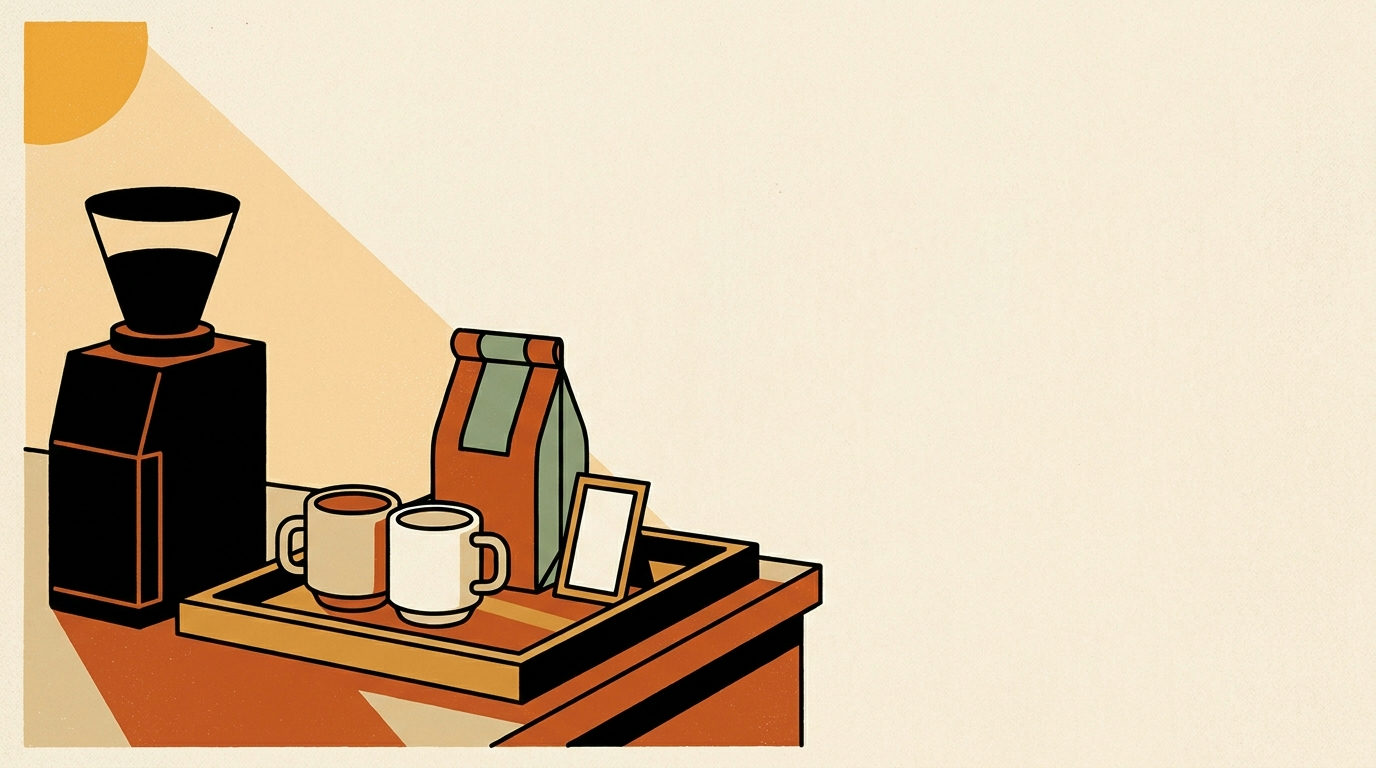
On a practical level, successful hosts organize the station into a self-contained zone that keeps guests out of the main cooking drawers. The grinder or maker sits alongside the beans, sugar, non-dairy alternatives, and ceramicware on a single tray or dedicated counter block. Everything is visible at a glance. By consolidating the setup, the host reduces wear on kitchen cabinetry and eliminates the common guest complaint of having to search six distinct cupboards just to find a stir spoon before 7:00 AM.
The asymmetry of guest memory
Short-term rental operators often fall into the trap of symmetrical accounting, assuming that every dollar spent on capital expenditure yields an equal portion of guest satisfaction. The market does not work this way. Capital expenditure lives in an asymmetrical universe where passive elements earn zero mentions, while high-touch, ritualistic elements generate passionate reviews.
Consider a typical $3,000 upgrade to a primary bedroom mattress. A high-grade mattress is essential for preventing bad reviews, but it rarely inspires a guest to pull out their phone, take a photograph, and upload it to social media or attach it to a public review. It is a protective amenity—it prevents negative feedback rather than driving active praise. A guest expects a comfortable bed as a baseline condition of paying a night rate.
A dedicated coffee station operating on local whole beans, by contrast, acts as a promotional engine. It costs a fraction of a mattress replacement, yet it touches the guest at the precise moment they are forming their daily narrative about the stay. When guests leave reviews that read, "We loved drinking our morning coffee on the porch with the local roaster beans provided," they are giving the platform algorithm rich textual keywords that drive conversion rates higher. Search engines and platform recommendation engines reward properties whose review text frequently mentions warm, specific home details.
Hardware versus theater: the four physical pillars
Building an effective coffee corner requires balancing durability against visual appeal. The biggest mistake hosts make when upgrading their kitchen setup is purchasing fragile, overly complex consumer machines that demand multi-step cleaning routines or exact water-to-grounds measurements. When a guest encounters a machine that flashes error codes or requires a fifteen-minute deep-clean cycle before yielding a cup, hospitality converts into work.
The first pillar is the grinding mechanism or delivery machine. If providing whole beans, a simple burr grinder with a single, clear button is superior to a digital interface loaded with sub-menus. For properties prioritizing operational speed, a sturdy, vintage-style drip brewer or a simple French press made of shatterproof stainless steel outperforms delicate glass carafes that inevitably break during turnovers. The goal is mechanical simplicity coupled with commercial durability.
The second pillar involves bean sourcing and freshness. Leaving a half-empty bag of mass-market, stale pre-ground coffee purchased six months ago signals neglect. Partnering with a local roasting company to supply fresh bags—ideally featuring custom or co-branded labeling—turns a basic commodity into a localized story. It grounds the guest in the destination before they even put on their shoes for the day.
The third pillar is ceramic selection. Throw away thin, narrow, mismatched mugs collected from trade shows or old promotional events. A heavy, wide-rimmed ceramic mug weighing twelve to sixteen ounces feels substantial in the hand. It retains heat longer, feels reassuringly solid, and serves as an anchor for the sensory experience. Guests instinctively connect heavy, well-made ceramics with premium hospitality.
The fourth pillar is the instruction card. Never rely on the manufacturer's original sixty-page instruction booklet tucked away in a drawer. Create a single, laminated card placed directly next to the machine, containing no more than three step-by-step bullet points printed in a large, clear font. If the machine cannot be operated using three plain-English bullet points, it does not belong in a short-term rental kitchen.
The event property playbook: when a counter machine is not enough
While a sleek counter setup handles small families and solo travelers, large-format properties—such as rural retreat centers, multi-family beach houses, and wedding group estates—face a completely different operational challenge. When twelve to thirty guests wake up in the same house, a standard kitchen coffee pot creates an immediate bottleneck. The morning routine devolves into a thirty-minute waiting line, frustrating guests and setting a chaotic tone for the group leader.
To solve this, operators of premium group properties are increasingly turning to outsourced mobile coffee catering for special morning gatherings, group brunches, or post-wedding send-offs held on-site. Bringing in an external setup turns a potential operational logjam into a memorable feature of the stay. According to Julie's Cafe Bakery, bringing in a dedicated coffee cart equipped with a trained barista and a commercial espresso machine creates a focused gathering point that elevates high-end group events.
For operators hosting high-ticket gatherings, understanding how these mobile services operate allows hosts to recommend or bundle catering packages smoothly. A standard mobile coffee cart setup handles crowd flow by maintaining tight menus and fast execution speeds, keeping lines moving while delivering professional quality directly to the rental lawn or terrace.
“A dessert table without good coffee is half a dessert table. The pastries get eaten, the urn of drip goes cold on the side, and the one thing that would have made the sweet stuff taste better never shows up.”
When hosting large morning spreads or events on property, matching beverage types to food items enhances the overall impression. Lighter, brighter coffee roasts featuring natural fruit acidity pair best with lighter morning items such as lemon loaf, blueberry scones, and fresh fruit tarts. The acidity cuts through the sweetness and keeps the sugar from flattening the palate. For rich, buttery options like morning buns, sticky buns, croissants, and coffee cake, a balanced medium roast latte provides the necessary body, picking up the browned butter notes seamlessly.
The Fort Collins formula: menu control and crowd control
The operational logic used by top catering roasters offers vital lessons for short-term rental hosts, whether managing counter bars or booking full-scale mobile carts for large estates. Roasters that cater large events, such as Lima Coffee Roasters in Fort Collins, maintain extreme discipline over their service offerings to avoid service delays.
Rather than offering sprawling fifteen-syrup bars that confuse guests and stall the line, Lima Coffee Roasters in Fort Collins operates with a lean menu structure: two signature lattes with rotating syrup options, a quick-pour draft drink like cold brew on tap or lemonade, and fresh drip coffee available on request. This tight structure allows a single barista on one machine to process between 60 and 80 drinks an hour, keeping lines brief and ensuring sixty guests move through the service area in roughly twenty minutes.
For property managers overseeing large groups, this menu design offers a direct lesson in guest management. Options generate friction. When hosts stock a kitchen counter with endless obscure flavorings, tea varieties, and alternative brewing gadgets, guests take longer to make coffee, make messier spills, and leave more equipment uncleaned. A streamlined selection featuring two core syrup profiles—such as classic vanilla and brown sugar for morning pastries, or caramel and mocha for rich afternoon spreads—keeps the station immaculate and easy to navigate.
The draft beverage element mentioned in the Fort Collins model also holds tactical value for properties operating in warm weather markets. Having a cold brew setup or draft tap ready to pour eliminates the warm-up delay associated with traditional espresso machines. For a morning gathering, cold brew on tap serves guests who prefer chilled beverages without tying up kitchen outlets or heating up the living space.
Power, space, and property prep: the infrastructure trap
Whether setting up an internal commercial coffee counter or hosting a caterer's cart for a group retreat, physical infrastructure requirements cannot be ignored. High-end coffee gear draws substantial power and demands adequate spatial planning. Ignoring these technical realities results in blown circuits, cold water, and ruined mornings.
A commercial espresso machine draws significantly more electrical current than a standard kitchen toaster or microwave. When mobile carts are brought on-site for weddings or corporate retreats, catering guidelines compiled by Julie's Cafe Bakery specify that the cart requires a six-by-six-foot flat, shaded space and a dedicated electrical circuit. Planners often attempt to run an espresso cart off the same circuit powering DJ sound equipment, outdoor string lights, or catering food warmers, causing breaker trips at peak morning hours.
Indoors, host kitchens face similar circuit constraints. Plugging a high-wattage espresso unit, a heavy-duty water kettle, and a burr grinder into a single electrical outlet strip invites tripped breakers during multi-guest morning rushes. Spacing out high-draw appliances across distinct electrical kitchen zones prevents sudden power loss and protects sensitive heating elements from burnout.
Advance planning is equally critical when booking mobile coffee amenities for seasonal group stays. Catering dates for peak holiday months like November and December book out far in advance. Office retreats, family reunions, and client gatherings frequently target the same peak weekends. Top mobile coffee operators are usually fully booked by mid November. Property managers offering concierge booking services for luxury group rentals must advise guests to lock in their beverage catering choices before finalizing catering menus or cake orders.
The math of morning hospitality: ROI on the first hour
Let us break down the underlying economics of a premium morning setup for a standard vacation rental versus an event-grade property. Many hosts balk at spending money on consumables, viewing fresh beans, specialty sugars, and high-end ceramics as unrecoverable expenses that trim operating margins.
Consider the actual cost structure for a typical single-family short-term rental. A high-grade, local whole-bean coffee program costs roughly $1.20 to $1.50 per day in consumables, assuming two coffee drinkers per stay. Over a month with 80% occupancy (24 occupied nights), the total consumable cost sits between $28.80 and $36.00. The initial hardware investment—a durable burr grinder, an intuitive coffee maker, a ceramic canister, and four heavy mugs—runs approximately $250 to $350 as a one-time capital cost.
Now consider the income side of the equation. In competitive markets, maintaining a 4.95 review rating versus a 4.84 rating directly impacts dynamic pricing power and search placement on major platforms. Properties rated in the top 5% can easily command a $15 to $25 nightly premium over average listings in the same zip code. At an extra $15 per night across 24 occupied nights, the host generates $360 in additional gross revenue per month. The monthly consumable cost is fully covered ten times over, while the initial hardware pays for itself within six weeks.
For large event properties or retreat venues, bringing in full-service coffee catering carries a different financial dynamic. Professional coffee cart catering for a two-hour booking—including a barista, setup, teardown, cups, lids, and complete menu service—typically ranges from $700 to $1,200 depending on headcount and menu selection. Event host planners calculate consumption at roughly 1.2 drinks per guest across a two-hour window, with the majority of orders occurring in the first 30 minutes after the table opens. One barista handles parties up to 100 guests; groups exceeding 120 guests require a second barista to maintain service speed.
Against the overall cost of catering, venue hire, and pastry spreads, a $700 to $1,200 coffee line is a modest expense line that dramatically improves guest sentiment. For hosts of estate-style rentals who bundle this service into high-tier weekend wedding packages or executive retreat pricing, adding a $1,000 catered coffee experience allows them to mark up the package by $2,000 while leaving guests with an unforgettable impression of high-end care.
Guests photograph a tidy coffee bar and mention it in reviews far more often than they mention the thread count.
What hosts should do now
Upgrading a short-term rental coffee experience does not require a complete kitchen remodel, but it does demand operational focus and attention to detail. Here are the immediate steps hosts should take to transform their morning setup into a review driver:
- Audit your current counter hardware: Get rid of broken glass carafes, sticky pod holders, and chipped, lightweight promotional mugs. Replace them with heavy twelve-to-sixteen-ounce ceramic mugs and a clean, reliable brewing machine.
- Partner with a local roaster: Source fresh whole beans or high-grade grounds from a roaster in your city or region. Request branded or co-branded bags to give your coffee corner an authentic local narrative.
- Simplify the station controls: Place a short, laminated instruction card directly next to the machine containing no more than three step-by-step bullet points for operation.
- Streamline your syrup and tea selection: Resist stocking clutter. Limit flavorings to two high-quality options like classic vanilla and brown sugar, alongside a clean presentation tray for stirrers and raw sugar.
- Plan event logistics early for large groups: If managing large estate properties that host retreats or weddings, establish relationships with local mobile coffee caterers like Lima Coffee Roasters in Fort Collins. Ensure your outdoor catering zones provide a flat six-by-six-foot shaded area and a dedicated electrical circuit capable of handling heavy commercial draws.
By treating the morning beverage routine as a primary hospitality asset rather than a secondary afterthought, operators secure higher guest satisfaction, stronger review text, and lasting pricing power in an increasingly crowded marketplace.
Checked by the standards desk (Eleanor Quist): 36 specifics checked, 8 traced to the source material and the sources added below, 28 general background, none removed.
Sources
- Julie's Cafe Bakery - Hosting a Dessert Table or Brunch? Here Is How to Pair a Coffee Cart With What You Serve.
- filterandshotcoffee.com - How Many Baristas Do I Need for an Event? | 2026 Guide.
- reformcoffeeco.com - Coffee Catering Cost in 2026: Pricing Guide for Every Event Type — Reform Coffee.
- caferingevents.com - How Much Does It Cost to Rent a Coffee Cart for an Event?.
- roastcc.com - Home Coffee Bar Setup Guide: Equipment at Every Budget | Roast Coffee Company.
An expert-analysis column by the Stay Gazette desk, written from the pages above; every specific in it was checked against them.
Report an error in this story · Corrections policy and log

Related from the desk
Read the desk every morning.
The day's crackdowns and platform moves, the money, the design and the stays going viral, plus the desk's verdict, in one short email every morning.
Comments