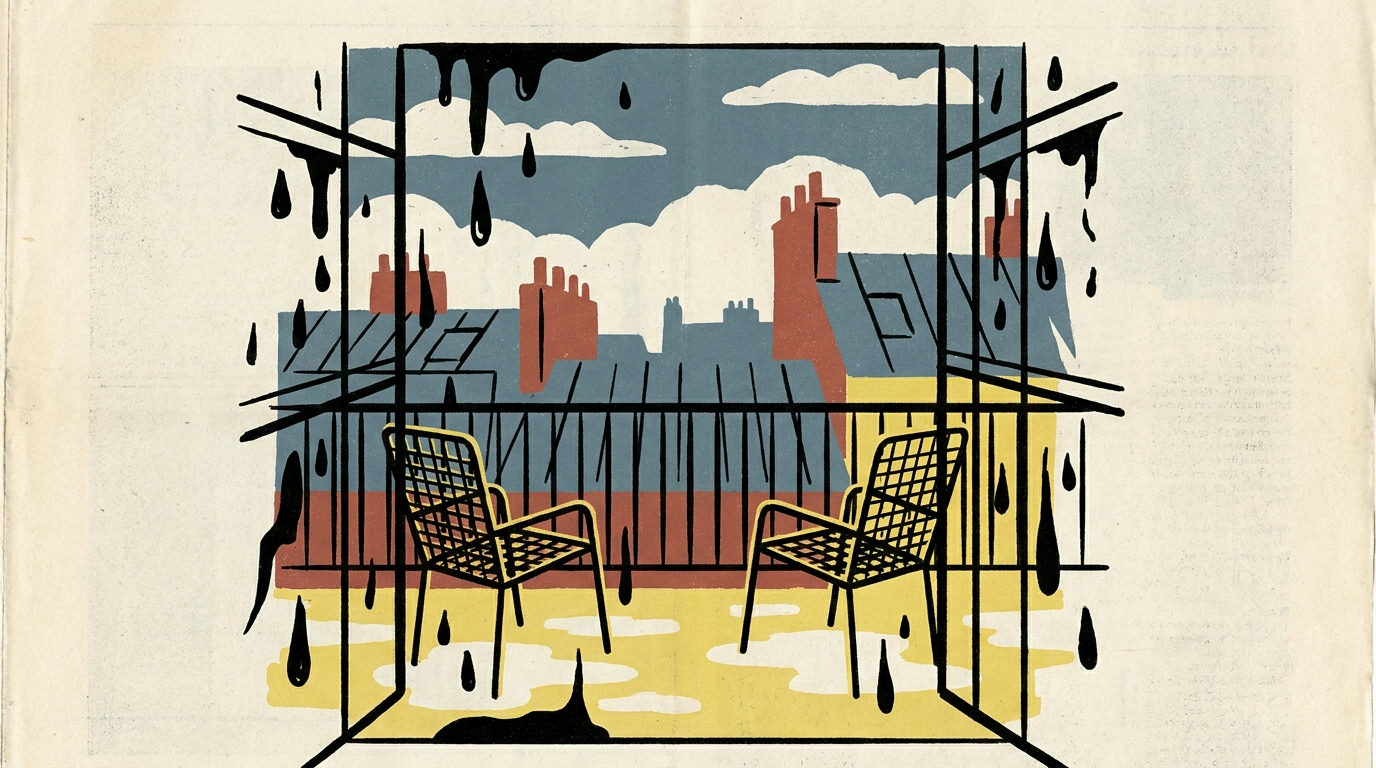
Airbnb Starts Paying Guests When It Rains
Airbnb has joined Vrbo and Marriott in rolling out automatic payouts for downpours, tapping Chubb to juice checkouts while leaving hosts to mop up the mood.
When the clouds gather over a four-hundred-dollar-a-night beach house, someone always wants their money back. For fifteen years, that dispute has played out in the private messaging threads of rental apps: an annoyed family cooped up inside during a coastal deluge, a host pointing firmly to their strict cancellation policy, and a support agent caught awkwardly in the middle. The platform collected its service fee on day one, leaving the two humans at the ends of the wire to fight over the puddles.
That dynamic is changing into a financial product. Booking platforms are no longer content to treat bad weather as an act of God that dampens consumer sentiment and throttles conversion rates. Instead, they are turning rain into an automated checkout upsell, pricing atmospheric inconvenience by the millimeter and settling payouts before the guest even dries off their umbrella.
The shift is clean, corporate, and powered by orbital radar. It also opens a fascinating divide between the corporate balance sheets pushing checkout add-ons and the property owners who still have to host damp, disappointed travelers inside homes built for sunny vacations.
What happened
The optional policy, available as an add-on during the final checkout screen, promises travelers direct cash payouts if rain spoils their itinerary.
The mechanics bypass the traditional claims process entirely. Guests who purchase the coverage receive between €50 and €1,000 per day if rainfall reaches or exceeds 1.5 millimeters in a single hour between 8 a.m. and 8 p.m. local time at the specific address of the listing. Chubb tracks conditions through an automated network of third-party satellite feeds, radar arrays, and government weather modeling from the National Oceanic and Atmospheric Administration, the European Centre for Medium-Range Weather Forecasts, and NASA. When the sky opens and crosses that threshold, the payment triggers automatically. The guest does not file paperwork, submit receipts, or take photos of flooded patios.
With this launch, Airbnb follows Vrbo and Marriott, both of which previously introduced weather guarantees designed to combat booking hesitation. The underlying thesis across the board is identical: hesitant travelers abandon carts when looking at unpredictable seasonal forecasts, and an immediate financial safety net pushes them across the finish line. For now, according to Airbnb FAQs cited in the report, coverage applies strictly to heavy precipitation. Other disruptive climate events, including the scorching heat waves that emptied Mediterranean plazas throughout recent summers, remain excluded.
The rise of parametric vacations
What Airbnb and Chubb are selling is known in the financial sector as parametric insurance. Unlike indemnity insurance, which requires a policyholder to prove an actual monetary loss through invoices, cancelled tickets, or repair estimates, parametric products pay out purely based on an objective index. If the rain gauge hits the trigger number, the money moves. If it falls a fraction of a millimeter short, you get nothing, even if your beach afternoon was entirely ruined by gloom.
This structure is tailor-made for platform commerce. Traditional travel insurance has always been a high-friction product despised by casual consumers. Filing a claim through a legacy travel underwriter often requires gathering flight receipts, medical certificates, written statements from lodging operators, and proof of non-refundable expenses, followed by weeks of waiting for an adjuster to review the file. Most travelers do not bother unless they face catastrophic losses.
Parametric travel insurance cuts those administrative costs to almost zero. By tying payouts to satellite data feeds from NOAA and NASA, Chubb eliminates adjusters, paperwork, and claims review departments. An algorithm pings the server, checks the hourly coordinates of the rental against radar precipitation models, and routes the cash to the traveler. For Airbnb, it transforms travel protection from a cumbersome, disputed service into an impulse digital purchase that functions like a software subscription.
Cart abandonment and checkout psychology
To understand why Airbnb, Vrbo, and Marriott are all converging on rainfall protection, one has to look at the checkout funnel rather than the sky. The single most expensive moment in the short-term rental ecosystem is the abandoned reservation. Every week, millions of travelers open an app, search for properties in Brittany, Cornwall, the Oregon coast, or the Smoky Mountains, select their dates, look at the five-day weather outlook, and quietly close the browser tab.
Weather uncertainty creates friction. In legacy hospitality, an urban business hotel does not care whether it drizzles on a Tuesday afternoon because corporate travelers must attend their meetings regardless of the clouds. But vacation rentals rely heavily on leisure travel, where the entire value proposition is experiential. A three-night weekend at a lakeside cabin or an alpine chalet loses much of its appeal if the forecast calls for a constant downpour.
By dropping a rainfall protection toggle directly into the payment flow, platforms neutralize that psychological roadblock. The traveler thinks less about being trapped indoors and more about the idea that an afternoon shower might effectively pay for their dinner. It softens the emotional risk of hitting the confirm button. Even if only a modest fraction of guests opt into the coverage, the presence of the guarantee lifts conversion across the marketplace, boosting gross booking value and processing volume in markets where shoulder-season weather makes travelers jumpy.
The hidden margin machine
There is another reason Silicon Valley platforms love embedded insurance: high-margin ancillary revenue. Pure marketplace commissions have ceilings. Push host service fees too high, and inventory migrates to direct booking engines or competitor channels. Push guest service fees beyond twenty percent, and price resistance stiffens. Ancillary financial products offer a lucrative third stream of income.
When an online platform presents an add-on product at checkout, it typically collects a distribution fee or commission from the underwriting partner. The platform takes no underwriting risk; Chubb carries the liability on its books and uses its actuarial balance sheet to absorb the payouts during particularly wet seasons. The platform simply provides the screen real estate, surfaces the offer at the moment of highest intent, and takes its cut.
Airlines perfected this playbook decades ago, earning billions annually from seat selection fees, priority boarding passes, and co-branded credit cards. Marriott learned the lesson and applied it to hotel distribution. Now the short-term rental giants are building the exact same engine. Rain protection is not merely a courtesy to travelers caught in a storm; it is an experiment in financializing the vacation experience, squeezing additional revenue per booking out of variables that property managers cannot control.
Booking platforms are turning rain into an automated checkout upsell, pricing atmospheric inconvenience by the millimeter.
The gap between payouts and property reality
While Chubb and Airbnb automate their data feeds, hosts remain anchored in the physical world. And the physical world gets messy when it rains. An automated transfer of a few hundred euros into a guest digital wallet does not magically create things to do inside a house designed primarily as a warm-weather launchpad.
Consider the typical listing inventory that drives peak vacation revenue: coastal cottages, rural farmhouses, properties with pools, decks, outdoor dining areas, and scenic mountain views. When severe weather hits, the carrying capacity of these homes shrinks dramatically. Guests who intended to spend twelve hours a day hiking, sunbathing, or touring vineyards suddenly find themselves confined to indoor living rooms with their children and pets.
The result is rapid wear and tear. Indoor utility consumption spikes. Television bandwidth maxes out. Wet clothes pile up on furniture. Mud gets tracked across softwood floors. More critically, guest frustration often persists regardless of insurance. A guest who receives a seventy-euro automated payout from Chubb might feel momentarily pleased by the windfall, but if the house lacks adequate indoor entertainment, board games, covered porches, or strong heating, that same guest may still leave a four-star review reflecting a disappointing overall trip.
Platforms can insure the financial transaction, but they cannot insure the guest sentiment. The host remains the sole shock absorber for bad weather, handling the practical consequences while the booking channel takes its fee at the front door.
What the fine print excludes
That distinction reveals much about the financial prudence of parametric insurance.
Rain is episodic, localized, and historically well-modeled. Insurers have decades of granular rainfall data across every postal code in the developed world. They understand the statistical probability that a specific village in Normandy will see 1.5 millimeters of rain between midday and three in the afternoon in late October. They can price that risk with razor-thin margins and ensure that, over tens of thousands of policies, the house always wins.
Extreme heat, wildfire smoke, and systemic climate disruption are far more dangerous to an insurer balance sheet. When a summer heat dome settles over Andalusia, Sicily, or the American Southwest, it does not strike for an isolated hour. It lingers for three weeks, covering thousands of square miles and affecting millions of people simultaneously. If an insurance product promised travelers daily compensation whenever temperatures passed 40 degrees Celsius, an entire regional portfolio could suffer massive correlated payouts simultaneously. Chubb is a veteran underwriter, not a charity. It covers the risks it can comfortably price and leaves the messy, broad-scale climate disruptions outside the fence.
The death of the weather refund dispute
There is, however, an unexpected operational silver lining for experienced property managers. For years, bad weather has been the source of the most exhausting, bad-faith refund demands in the short-term rental industry. Guests regularly contact hosts demanding refunds because their weekend was washed out, occasionally attempting to weaponize the platform customer support system under extenuating circumstances policies.
Airbnb overhauled its major disruptive events policy earlier to clarify boundaries around predictable seasonal weather. By introducing a formal, paid insurance product for rain, the platform further closes the door on informal weather refunds. The corporate position becomes clean and defensible: if a guest wanted financial protection against a downpour, they had the opportunity to buy it at checkout. If they declined the policy, they have no standing to request that the host shoulder the cost of bad luck.
This dynamic shifts the ground beneath guest complaints. In the past, support representatives might have pressured hosts to offer partial credits or courtesy refunds to placate an angry traveler whose outdoor plans fell apart. With Chubb embedded in the checkout funnel, the platform has an incentive to protect its insurance partners and its own policy lines. The host can point to the platform official protections and hold the line on their cancellation terms without feeling like the villain.
Who wins and who loses
As weather guarantees normalize across the major online travel agencies, the short-term rental market will see clear divisions between those who profit from the shift and those who absorb its frictions.
- The Platforms: Clear winners. Airbnb, Vrbo, and Marriott gain a powerful conversion tool that combats cart abandonment during shoulder seasons. They capture ancillary revenue from insurance distribution while taking zero underwriting risk.
- The Insurers: Winners. Underwriters like Chubb gain access to massive, high-intent consumer traffic at the exact moment of purchase, backing high-margin parametric products with minimal claims processing overhead.
- The Guests: Mixed. Travelers who purchase the protection gain instant liquidity when bad weather strikes, easing the pain of ruined plans. However, guests who decline the coverage will face increasingly unsympathetic customer support agents when seeking relief from weather-related disruptions.
- The Unprepared Hosts: Losers. Operators with summer-focused properties lacking indoor amenities will face restless, bored guests spending hours confined inside, increasing utility costs, wear and tear, and critical review scores.
- The Adaptive Hosts: Tactical winners. Professional operators who design their spaces to accommodate poor weather while pointing to platform guarantees will maintain high occupancy and protect their cancellation revenue.
The future of automated travel hedging
Rain is only the opening act. The integration of high-resolution satellite monitoring and automated micro-payouts establishes a template that will soon expand into other facets of travel friction. As climate volatility increases, travelers will demand protections against a broader array of atmospheric and operational disruptions.
We are likely to see parametric products applied to ski resorts lacking snowpack, coastal retreats facing toxic algae blooms, or urban destinations gripped by severe transit strikes. If a satellite or public data feed can verify an event with objective mathematical precision, an insurer can build an algorithm around it, and an online travel agency can sell it as a checkbox.
For the short-term rental business, this means the guest reservation is becoming unbundled. The stay itself remains a physical contract between host and traveler, but the financial risk of the surrounding environment is being sliced, securitized, and sold back to the guest as a fintech feature. The platforms are positioning themselves not just as marketing channels, but as financial intermediaries hedging every variable of the traveler journey.
What hosts should do now
Automated weather guarantees are entering the mainstream of the booking flow. Smart operators must adjust their listing strategy to take advantage of the conversion lift while insulating their properties from wet-weather friction.
- Audit your indoor footprint: Inspect your property through the eyes of a family trapped indoors for forty-eight consecutive hours. Provide fast, reliable Wi-Fi, streaming subscriptions, board games, a curated selection of books, and comfortable indoor seating that accommodates your maximum guest capacity.
- Build a local bad-weather guide: Create a dedicated section in your digital welcome book for rainy-day activities. List local museums, covered markets, bowling alleys, indoor play centers, and cozy restaurants. Give guests an immediate reason to leave the house even when the weather turns poor.
- Hold firm on cancellation terms: Now that Airbnb, Vrbo, and Marriott provide explicit weather guarantees at checkout, stop offering discretionary weather refunds. Remind guests politely that booking channels offer dedicated weather protections at purchase, and enforce your stated policies.
- Protect high-wear surfaces: Equip entryways with heavy-duty mud mats, umbrella stands, boot trays, and extra dark-colored towels for wiping down pets and luggage. Minimize the physical damage that accompanies water-logged travelers.
- Target shoulder-season demand: If your market suffers from unpredictable spring or autumn weather, highlight your indoor comforts in listing photos and descriptions. Lean into cozy features like fireplaces, soaking tubs, and fully equipped kitchens to capture bookings from guests who know their trip is protected regardless of rain.
The clouds will continue to gather over vacation rentals, just as they always have. The difference now is that the tech platforms have figured out how to extract a profit from the storm. Hosts must ensure their properties are built to withstand the downpour.
Checked by the standards desk (Eleanor Quist): 35 specifics checked, 26 traced to the source material, 8 general background, 1 removed before publication.
Sources
- Skift - reported October 19, 2026.
- Skift - Airbnb Joins Vrbo and Marriott In Paying Out On Too Much Rain.
Read and analysed by the Stay Gazette desk.
Report an error in this story · Corrections policy and log


Read the desk every morning.
The day's crackdowns and platform moves, the money, the design and the stays going viral, plus the desk's verdict, in one short email every morning.
Comments