Philadelphia's License Rules for Short-Term Rentals Take Effect After Two Delays
From 1 January 2023 the booking platforms had to hold a valid city license number for every Philadelphia listing. Three days earlier The Philadelphia Inquirer had reported that 247 people had received a limited lodging operator license and 164 a hotel permit, and a rental lobbying group said the zoning board could not see applicants until February or later.
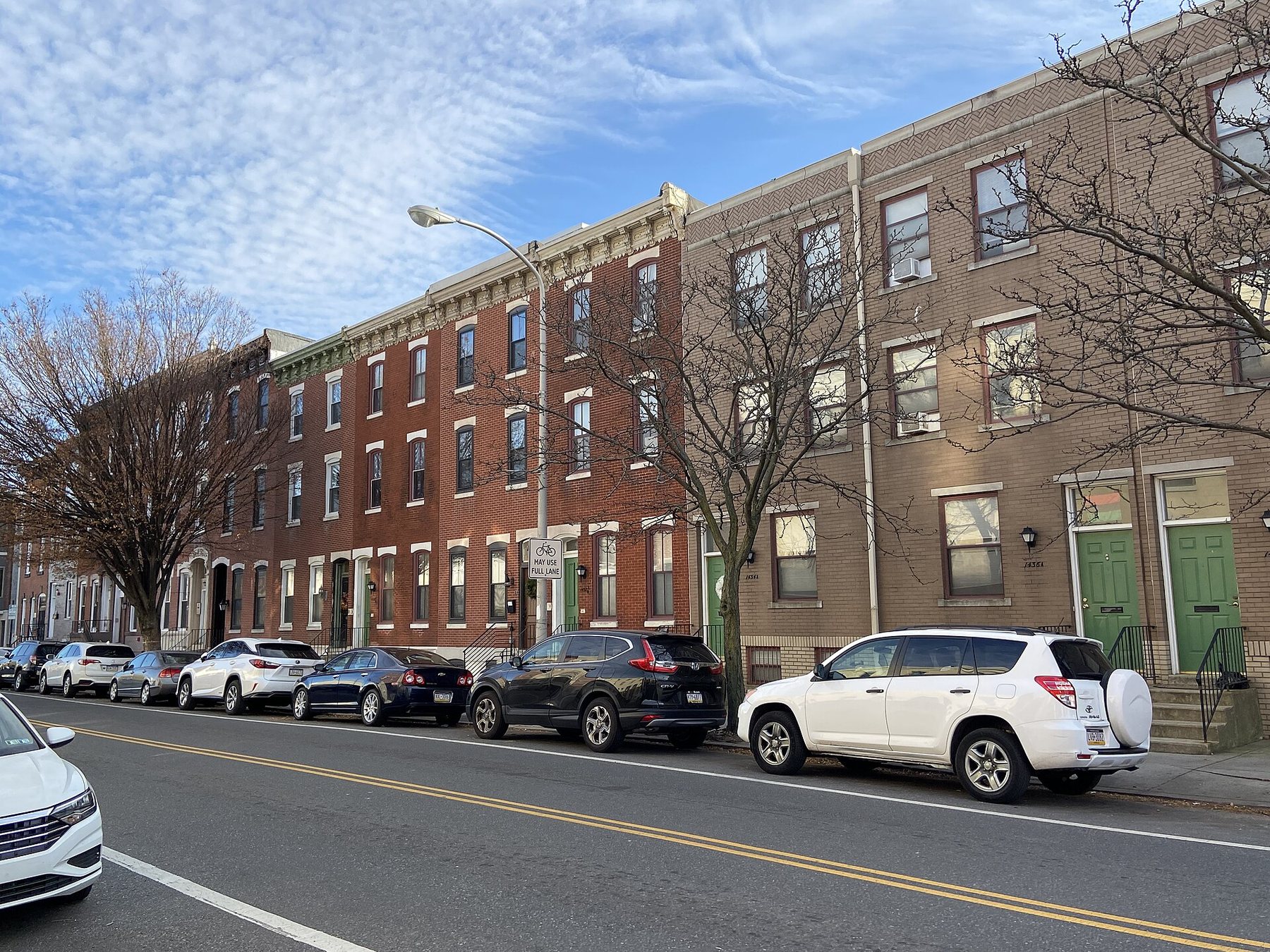
Row homes in the 1400 block of Christian Street in Philadelphia, Pennsylvania, photographed in December 2021. The picture illustrates the city's housing. It does not show a property in this story. Photo: Row homes on Christian Street by Nolabob, CC BY-SA 4.0, via Wikimedia Commons (resized).
From the record. This is a look back at January 2023. The desk wrote it on 11 October 2026 from sources published at the time; Stay Gazette opened in July 2026 and did not report this as it happened.
On 1 January 2023, Philadelphia's tightened rules for short-term rentals took effect after two delays. From that date the booking platforms had to hold a valid city license number for every listing, and the city said a listing without one could be removed until the number was supplied.
Three days before the deadline, The Philadelphia Inquirer reported that only 247 people had received a limited lodging operator license and 164 a hotel permit, set against Airbnb hosts numbering in the thousands. A short-term rental lobbying group warned that most of the city's short-term rentals could be shut out.
What the rules required
The city's guidance, published on 21 July 2022, said the changes were based on Bill No. 210081. It sorted every short-term rental into one of two classes:
- Limited Lodging, where the host lived in the unit as a primary residence. The host needed a Limited Lodging zoning permit and then a Limited Lodging Operator License.
- Visitor Accommodation, where the host's primary residence was somewhere else. The property needed a Visitor Accommodation zoning permit and then a Rental License for hotel use.
A permit and a license were required to offer a unit for any amount of time. Under the 2015 rules, PhillyVoice reported, a license had been needed only by people renting their homes out for more than 90 days.
Before the license, the guidance said, a host had to have:
- A zoning use permit.
- A Commercial Activity License.
- A tax-compliant Business Income and Receipts Tax account.
- Lead Safety Certification, for properties built before March 1978.
Hosts also had to advertise through a booking agent licensed by the city and pay the city's Hotel Tax monthly, unless the booking agent collected and remitted it for them. PhillyVoice listed further duties: smoke and carbon monoxide alarms, and a notice to guests that excessive noise was prohibited. It also reported that permit applications had to give contact details for a property's owners, its booking agents and any other holder of an equity interest.
Billy Penn's roundup of 1 January 2023 called the license itself inexpensive: the work was the zoning permit and proof the space was up to code.
Where zoning came in
For a host living in the unit, the city said a use permit could be issued within 3 business days on proof of residency. For a unit the host did not live in, the Visitor Accommodation use was permitted only in seven zoning districts: CMX-3, CMX-4, CMX-5, CA-1, CA-2, RMX-1 and RMX-2.
Anywhere else, a host whose application was denied had 30 days to appeal to the Zoning Board of Adjustment, which ruled at a public hearing on a variance or special exception. Before the hearing, the applicant had to appear before a Registered Community Organization at a public meeting. The city encouraged applicants to speed the appeal with an accelerated fee of $750 per property. On 1 January 2023 Planetizen, summarizing the Inquirer's report, put the low license count down in part to delays at the board.
The July 2022 guidance had set out a timetable. It recommended that a host hold a zoning permit or variance by 1 December 2022, and said hosts had to have a license number by 31 December 2022.
What changed for the platforms
What gave the date its force was the platforms. The requirement to hold permits and licenses dated from 2015, the city's guidance said, and PhillyVoice reported that it had not been strictly enforced. The new rules put the check at the point of listing. The Inquirer reported, and Short Term Rentalz repeated, that the companies would be liable for violations. Councilmember Mark Squilla, the bill's main sponsor, told Axios Philadelphia that booking sites such as Airbnb would help enforce the rules by asking operators for proof of a license.
Platforms had first been due to confirm that their hosts were licensed by 1 July 2022. The city moved that to 1 January 2023, saying many hosts would need more time to get their zoning and licenses and avoid being delisted. It added that the extension did not remove the legal requirement to be licensed.
The reports published in the first days of January 2023 gave no count of listings taken down. Axios Philadelphia reported on 9 January 2023 that 276 limited lodging licenses had been issued by the previous week, according to the city administration.
How the city got here
Squilla introduced the tougher bill in February 2021, after what PhillyVoice described as a series of controversies over party houses that disturbed long-term residents. When neighbors complained, PhillyVoice reported, there was no clear way to reach an owner or to learn who was renting a property out.
City Council passed the bill in June 2021, and the Inquirer and Short Term Rentalz reported that Mayor Jim Kenney signed it that month. WHYY reported that Airbnb had lobbied against it. Ed Grose of the Greater Philadelphia Hotel Association praised it. WHYY quoted him: “It’s not like we’re making short-term rentals illegal, we’re making them fair”.
The law was meant to take effect in April 2022. The city put it back to the summer and then to 2023. The Inquirer and Short Term Rentalz reported that rental advocates had earlier won a delay by arguing that word of the changes had not reached every host and that the zoning board's delays would leave many without a license by the deadline.
What hosts and the sponsor said
Theron Lewis, founder of the Philadelphia STR Association, a lobbying group, told the Inquirer in its report of 29 December 2022: “What’s coming to a head right now is whether we are about to ban 70% or more of short-term rentals”. He said people applying for a variance could not get a hearing until February or later, and that at least 2,000 of his members were struggling to meet the law.
Squilla told Axios Philadelphia that the rules would at first cut how many short-term rentals operated in Philadelphia, and that over the long term they would help hold problem operators to account. Short Term Rentalz reported his suggestion for hosts who could not comply in time: rent for longer periods, of more than 30 days. He tied the rules to the World Cup and the nation's 250th anniversary in 2026, and summed up his position to the Inquirer: “We’re not anti-rentals; we want more rentals”.
The Gazette Verdict, looking back
Philadelphia was right to put the license check on the platforms and wrong about the order of work. A rule loosely enforced since 2015 was never going to be obeyed until a listing depended on it. But the city switched that check on while a rental lobbying group said the zoning board could not see variance applicants until February or later. Three days before the deadline the Inquirer reported 247 limited lodging operator licenses and 164 hotel permits, against thousands of Airbnb hosts. On 9 January 2023 Axios Philadelphia put the city's figure at 276 limited lodging licenses. The hosts who paid were those renting a unit they did not live in, outside the seven listed districts. They needed a variance, a community meeting and, for speed, $750 a property. The lesson for a host anywhere was that an unenforced permit rule is still a rule, and the day a platform asks for the number is too late to apply.
The other side
The city's case is a strong one. The permit rule dated from 2015. The bill passed in June 2021, and its start slipped from April 2022 to the summer and then to 1 January 2023. In July 2022 the city published a step-by-step guide and recommended that hosts have their zoning in hand by 1 December. Squilla said the city was not against rentals and wanted every host in compliance before the big events of 2026. The rules answered real complaints: party houses, and owners whom neighbors could not trace. A host who could not get legal still had a choice the law left open, renting for longer periods of more than 30 days.
What it meant for hosts
For a host who lived in the unit, the path was short: proof of residency, a Limited Lodging zoning permit, a Commercial Activity License, a tax-compliant business tax account, lead certification for a building from before March 1978, then the Limited Lodging Operator License. In the 10th Councilmanic District the host also had to own the property. Elsewhere, the city said, a renter could be eligible.
For a host who did not live in the unit, the first job was to look up the zoning district. Inside one of the seven listed districts, the host could apply for the Visitor Accommodation permit and the Rental License. Outside them, the road ran through the Zoning Board of Adjustment: 30 days to appeal a denial, a community meeting, a public hearing, and the option of the $750 accelerated fee. Until the board ruled, the choice Squilla named was to rent for longer periods. For stays exceeding 30 days, the city's guidance said, a host needed a Rental License.
The budget lines were the license and the Hotel Tax, due monthly unless the booking agent collected it. When City Council passed the bill in June 2021, WHYY reported that the limited lodging operator license would cost $150 and that a violation could bring a fine of up to $1,000 a day. The nearer risk was a listing removed for want of a number.
Sources
- City of Philadelphia, Updated guidance on required zoning permits and licenses for Philadelphia short-term rentals and hosts (21 July 2022).
- Billy Penn at WHYY, Stepping up carjacking enforcement; New Airbnb rules take effect; Nursing home vax rate | Sunday roundup (1 January 2023).
- PhillyVoice, Airbnb hosts must apply for licenses and permits as new regulations go into effect (3 January 2023).
- Short Term Rentalz, Fresh STR rules come into effect in Philadelphia (4 January 2023).
- Axios Philadelphia, Philadelphia cracks down on Airbnbs and short-term rentals (9 January 2023).
- Planetizen, New Short-Term Rental Rules to Take Effect in Philadelphia (1 January 2023).
- The Philadelphia Inquirer, On Jan. 1, Philly will start enforcing new rules for Airbnb and other short-term rentals (29 December 2022).
- WHYY, Philly Council passes tougher Airbnb regulations (10 June 2021).
Part of the Stay Gazette record for January 2023. Filed on 11 October 2026; every specific was checked against the sources above, which were read on or before that day. To report an error, write to the desk; see the corrections policy.

Also filed on January 2023
- The MoneyVacasa Cuts About 1,300 Jobs in Its Second Round of Layoffs in Three MonthsIn January 2023 Vacasa, which described itself as the largest vacation rental management platform in North America, said it was eliminating approximately 1,300 positions, approximately 17% of its workforce, in local operations and central teams alike. The company said the cuts were shaped to keep up service to owners and guests.
- The recordJanuary 2023, the whole month
- The recordEvery month on the record