Barcelona Keeps Tourist Room Ban as Catalonia's Shared-Home Rules Take Effect
Barcelona City Council said on 4 August 2021 that it would go on refusing licenses for rooms rented to tourists for 31 days or less. Two days later the year Catalonia gave town halls to write their own rules ran out, and Airbnb said new shared-home hosts in Catalonia would have to show a registration number.
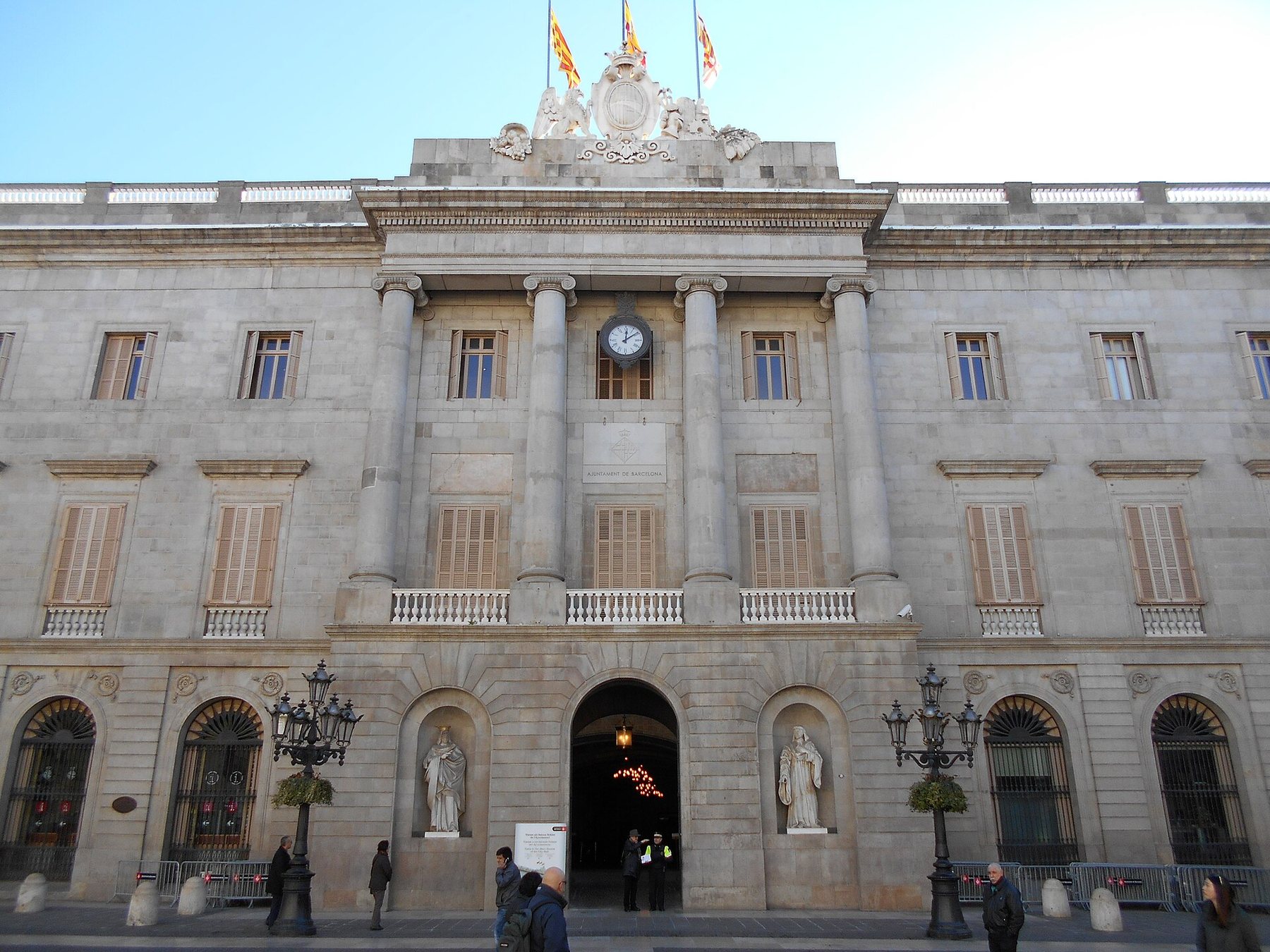
The facade of Barcelona City Hall, photographed in February 2015. The picture was taken more than six years before August 2021 and shows the building, not the decision reported here. Photo: Ajunt BCN by Canaan, CC BY-SA 4.0, via Wikimedia Commons (resized).
From the record. This is a look back at August 2021. The desk wrote it on 11 October 2026 from sources published at the time; Stay Gazette opened in July 2026 and did not report this as it happened.
On 4 August 2021, Barcelona City Council said the city would keep its ban on renting rooms to tourists for periods of 31 days or less. The statement came from the council's press office two days before a deadline set by the Catalan government, and its message to hosts was that the deadline would change nothing in Barcelona.
The deadline was 6 August 2021. A year earlier, Catalonia's tourism decree had created a category for a room rented to tourists in the home where the host lives, and had given town halls one year to regulate it. On the day that year ran out, Airbnb said hosts in Catalonia could register to share rooms in their homes. Barcelona said it would still accept no license of that kind.
What the city said
Barcelona did not admit this kind of tourist accommodation, known in Catalan as a llar compartida, or shared home, because of a suspension of licenses that the municipal government had approved a year before, the press release said. The suspension covered licenses, other authorizations and permits for building work meant to set up a shared home.
The city had announced that suspension on 25 August 2020, for one year, saying it would use the time to develop its own rules. In January 2021 the council gave initial approval to an update of its Special Urban Plan for Tourist Accommodation, known by its Catalan initials as the PEUAT. According to the August 2021 release, that update extended the license suspension, and its text did not admit shared homes in the city.
From there the city drew a legal conclusion. It said the municipal urban plan prevailed over the Catalan government's decree, so the suspension remained in force and it would be impossible to grant any municipal authorization for the activity. That would hold, the release said, until the PEUAT update received final approval. The release gave no date for that approval.
One kind of room rental was left alone. The city stressed that rooms could still be rented for more than 31 days for ordinary or long-term use, and gave students and temporary workers as the usual tenants.
What Catalonia's decree allowed
The rule in question was Decree 75/2020 on tourism. The city's two releases said the Catalan government approved it on 4 August 2020 and that it was published on 6 August 2020. As the city described it, the decree provided for stays of no more than 31 days, with a maximum of four places per apartment, and required that the person applying for the license be the person who normally lived in the home.
The city said the decree also let municipalities regulate the activity themselves, and gave them a year to do it. It said Barcelona was allowed its own regulation because it held a large share of Catalonia's shared homes.
The newspaper Ara reported on 6 August 2021 that the decree regulating shared homes took effect in Catalonia that day. Airbnb's Spanish newsroom said the same day that it had built a tool for hosts to enter their shared-home registration number, and that from that day new shared-home hosts would have to supply and display a number before a listing became visible on the platform.
Ara also gave the scale as it was estimated when the decree was approved: the Catalan tourism department then put the number of tourist places of this type at between 9,000 and 10,000 in Barcelona and about 14,000 in Catalonia in total.
Why Barcelona refused
The August 2021 release gave the city's reasons in one sentence. The PEUAT update excluded shared homes to preserve the social function of housing and to avoid a saturation of tourist rooms, which the city said would cause problems among neighbors, affect the housing market and hurt neighborhood shops.
The council had argued along those lines before. In its release of 25 August 2020, deputy mayor Janet Sanz, whose portfolio included urban planning, said, in Catalan, that renting rooms in shared homes could have a major effect on the market for ordinary housing and that the rules could not put the right to housing at risk.
NacióDigital reported on 29 January 2021, the Friday the PEUAT update received initial approval, that Sanz said the council wanted to prohibit tourist room rentals. The outlet reported her figures: the council had detected 7,600 advertisements for tourist rooms operating without regulation, equal to 14,000 places, and under the Catalan decree as many as 670,000 places could qualify, on top of the 154,000 tourist places the city already had. Those figures and the regional estimate reported by Ara came from different bodies at different dates.
How Airbnb and hosts responded
Airbnb welcomed the decree and, in the same statement on 6 August 2021, criticized the situation in Barcelona. The company said the absence of definitive rules for rooms in Barcelona had a very negative effect on families, while not affecting the platform's own business. It said it was concerned for those hosts in Barcelona, half of whom, by its account, said they depended on the income to keep their homes, and that it hoped to work with the authorities on a solution.
The statement carried comments, in Spanish, from Mónica Casañas, general manager of Airbnb Marketing Services, SL, whom Ara described as head of Airbnb's Spanish subsidiary. She said the lack of clear rules for sharing rooms in one's own home in Barcelona hurt the families who most needed it, and she described home sharing as a financial lifeline for many people.
Ara recalled that the City Council had criticized the Catalan rules as a red carpet for Airbnb.
A second objection was reported at one remove. Chekin, a company that sells online check-in software for vacation rentals and hotels, wrote on its blog on 12 August 2021 that the city had extended its ban past 6 August. Its headline spoke of one more month, a term that neither its own text nor the city's release gave. The blog said an association it named as the Asociación de Vecinos y Anfitriones argued that the situation created legal uncertainty, and warned that thousands of guests could be left without accommodation in August and September. The association's own statement was not found for this story.
The Gazette Verdict, looking back
Barcelona gave its hosts a clear answer, and the hosts paid for it. The city had refused shared-home licenses since August 2020 and said so again two days before the regional deadline, so nobody renting a room there could claim to be surprised. But the bill landed on residents. On 6 August 2021 Airbnb said hosts in Catalonia could register a room in their homes. In Barcelona, where Ara reported that the regional tourism department had estimated 9,000 to 10,000 such places, the same host had no license to apply for. Airbnb said half of those hosts reported depending on the income to keep their homes, and that its own business was not affected. The ban rested on a plan that had only initial approval. The lesson for a host: a regional rule gives a host nothing until the town hall applies it.
The other side
The city's case is strong on its own numbers. Deputy mayor Janet Sanz said in January 2021, as NacióDigital reported, that the council had already detected 7,600 advertisements for tourist rooms, equal to 14,000 places, and that the decree could make as many as 670,000 places eligible in a city that had 154,000 tourist places. The decree itself, the city said, let Barcelona write its own rules. The city left alone the rentals of more than 31 days usually made to students and temporary workers. And of the objections reported here, the only one made in its author's own name came from a platform that said, in the same statement, that its own business was not affected.
What it meant for hosts
For anyone renting a room in Barcelona in August 2021, the practical position was the one the city spelled out on 4 August:
- No shared-home license could be obtained in Barcelona. The city said it would accept none.
- Renting a room to tourists for 31 days or less remained prohibited in the city, before 6 August and after it.
- Renting a room for more than 31 days, for ordinary or long-term use, stayed legal.
- The position would last until the PEUAT update received final approval. The release gave no date, so a Barcelona host had none to plan toward.
For hosts elsewhere in Catalonia, 6 August was the date that mattered. As the city described the decree, a room could be rented for stays of up to 31 days, with at most four places per apartment, by the person who normally lived there. The decree let each town hall regulate the activity, so the town hall was the place to check first. Airbnb said a new shared-home host would have to show a registration number before a listing became visible.
Sources
- Ajuntament de Barcelona, Servei de Premsa (Barcelona City Council press office), Barcelona mantindrà la prohibició del lloguer d’habitacions turístiques (4 August 2021).
- Airbnb Newsroom (Spain edition), Airbnb da la bienvenida al ‘home sharing’ en Cataluña (6 August 2021).
- Ara (Spanish-language edition), Airbnb habilita un registro para el alquiler de habitaciones a turistas en Catalunya (6 August 2021).
- Chekin (company blog), Barcelona alarga durante un mes más la prohibición de alquilar habitaciones vacacionales (12 August 2021).
- NacióDigital, Barcelona prohibirà el lloguer d'habitacions turístiques a tota la ciutat (29 January 2021).
- Ajuntament de Barcelona, Servei de Premsa (Barcelona City Council press office), Barcelona suspèn les llicències d’habitacions d’ús turístic en habitatges (25 August 2020).
Part of the Stay Gazette record for August 2021. Filed on 11 October 2026; every specific was checked against the sources above, which were read on or before that day. To report an error, write to the desk; see the corrections policy.

Also filed on August 2021
- PlatformsAirbnb Pledges Temporary Stays for 20,000 Afghan Refugees and Asks Hosts to HelpAirbnb and the nonprofit Airbnb.org said on 24 August 2021 that Airbnb.org would provide temporary housing to 20,000 Afghan refugees, funded by the company, its chief executive and donors. Two days later Airbnb told hosts how to offer free or discounted stays.
- The recordAugust 2021, the whole month
- The recordEvery month on the record