Court of Appeal Rules Santa Barbara Could Not Ban Coastal Rentals on Its Own
A California appeal court upheld an order that stopped Santa Barbara from enforcing its 2015 crackdown on vacation rentals in the coastal zone without the Coastal Commission's approval. The city answered with an interim policy and a 30 June deadline for operators.
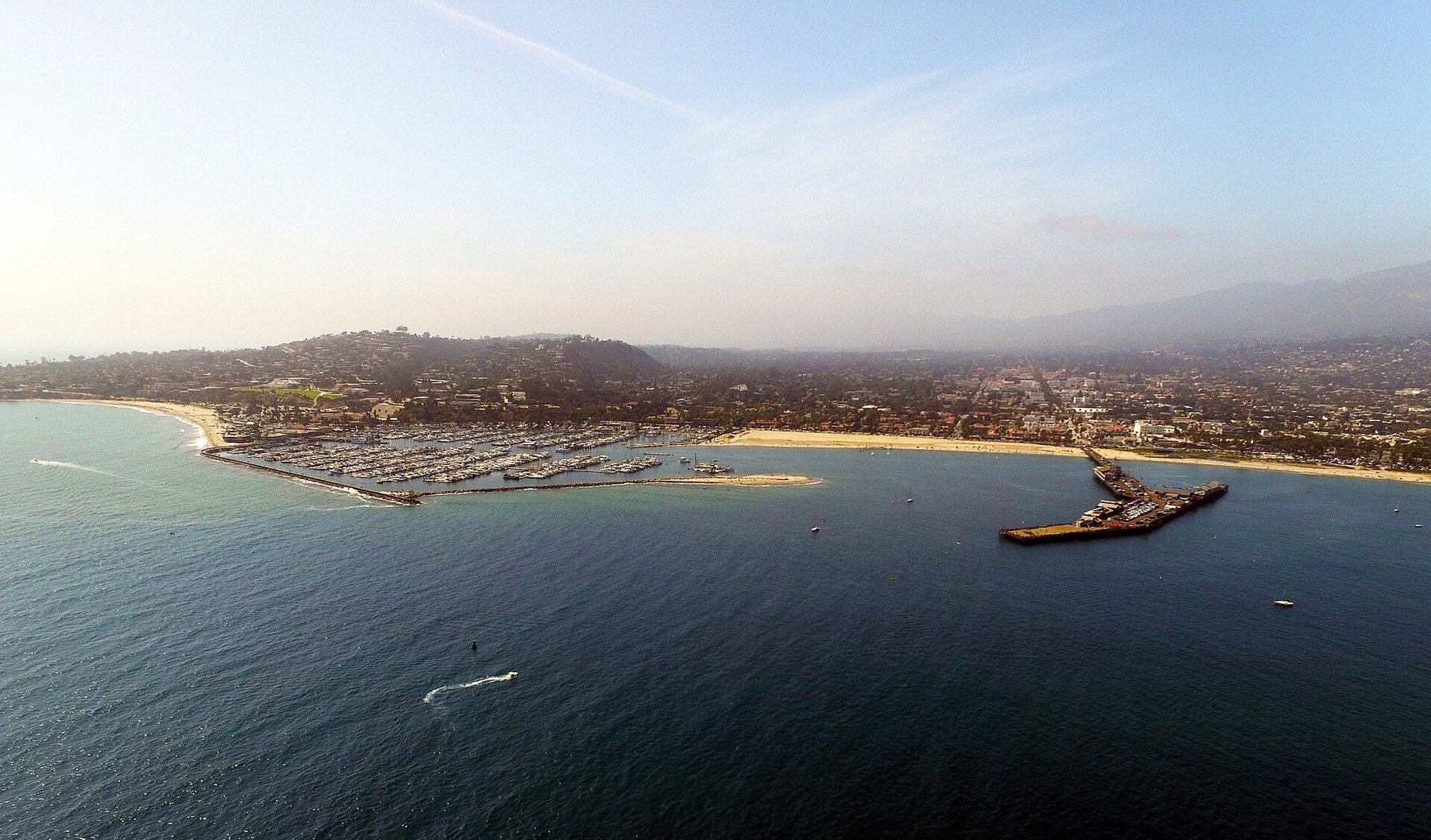
The waterfront of Santa Barbara, California, seen from the air on 1 September 2018: a marina behind a breakwater, a long pier and the beach, with the city behind them. The ruling of 4 May 2021 concerned vacation rentals in the city's coastal zone. Photo: Santa Barbara California by Don Ramey Logan by Don Ramey Logan, CC BY 4.0, via Wikimedia Commons (resized).
From the record. This is a look back at May 2021. The desk wrote it on 11 October 2026 from sources published at the time; Stay Gazette opened in July 2026 and did not report this as it happened.
On 4 May 2021, the California Court of Appeal ruled that the City of Santa Barbara could not shut down short-term vacation rentals along its coast without the approval of the California Coastal Commission. The opinion, in Kracke v. City of Santa Barbara, upheld a trial court order that stopped the city from enforcing its 2015 crackdown in the coastal zone unless it obtained a coastal development permit, an amendment to its coastal program approved by the Commission, or a waiver.
Santa Barbara had 114 registered vacation rentals in its coastal zone by 2015 and 6 by August 2018. The court certified the opinion for publication. On 26 May 2021 the city announced an interim enforcement policy for the coast and said its City Council had announced, on 25 May, a decision to seek review by the California Supreme Court or, in the alternative, depublication of the case.
What the city did in 2015
Before 2015, the opinion said, Santa Barbara treated short-term vacation rentals on its coast as permissible residential uses. A homeowner had to register the rental, obtain a business license and pay the 12 percent daily transient occupancy tax. The opinion put the number of registered rentals paying daily occupancy taxes at 52 as of 2010 and 349 by 2015, of which 114 were in the coastal zone. In that fiscal year the city collected $1.2 million in occupancy taxes from them.
In June 2015, the opinion said, the city began regulating the rentals as hotels under its municipal code, which effectively banned them in the coastal zone. After a hearing, the City Council had unanimously directed staff to enforce zoning rules proactively. The city had found, in the court's summary, that the spread of the rentals was driving up housing costs, reducing the housing stock and changing the character of residential zones.
The city did not seek a coastal development permit, or an amendment to its certified Local Coastal Program, before it acted. The court noted that the record showed the city submitted an amendment to that program in 2018, which was pending before the Commission. The city maintained in court that the rentals were not legally permitted under the program or its municipal code.
How the case reached the appeal court
Theodore P. Kracke, whose company managed short-term vacation rentals, filed suit on 30 November 2016. Six days later, the opinion recorded, the Coastal Commission's chair sent a guidance letter to local governments, Santa Barbara among them. It said vacation rental regulation in the coastal zone had to take place within a local coastal program or under a coastal development permit, and that the Commission did not believe outright bans made through other local processes were legally enforceable there.
After a trial, the Ventura County Superior Court granted Kracke's petition. Its writ required the city to allow vacation rentals in the coastal zone on the same basis as before 23 June 2015 until it obtained a coastal development permit or otherwise complied with the Coastal Act. The Santa Barbara Independent reported that the City Council voted to appeal, on the argument that enforcing its own rules did not require a permit from the Coastal Commission. The Commission filed a friend-of-the-court brief supporting Kracke. The League of California Cities filed one supporting the city.
What the court held
Justice Steven Perren wrote the 11-page opinion for Division Six of the Second Appellate District, and Justices Kenneth Yegan and Martin Tangeman concurred. The question was whether the city's change of enforcement policy was a development under the Coastal Act, which required a coastal development permit for any development that changed the intensity of use of, or access to, land or water in a coastal zone.
The court said it was. It relied on its own 2018 decision in Greenfield v. Mandalay Shores Community Association, in which it had held that a homeowners' association's ban on short-term rentals in the Oxnard Shores beach community was such a change. The same was true in Santa Barbara, the court wrote, although a city and not a private entity had imposed the ban.
The city argued that because its coastal program did not expressly include vacation rentals, it could regulate them without regard to the Coastal Act. The court called that contention incorrect. It had noted that the program was certified in 1981, when such rentals were virtually nonexistent. It also pointed to the city's own conduct: “The City cannot act unilaterally, particularly when it not only allowed the operation of STVRs for years but also benefitted from the payment of transient occupancy taxes.”
The ruling had limits. The court did not say whether coastal rentals should be banned or regulated. That, it wrote, was a matter for the city and the Commission to decide. The judgment was affirmed, and Kracke was awarded his costs on appeal.
Courthouse News Service called the decision the first of its kind in California and wrote that the state's judges had often upheld local governments' rental rules and bans.
How the city answered
The city's response came in an announcement dated 26 May 2021, printed by the Santa Barbara Independent. It said the council had announced on 25 May its decision to seek Supreme Court review or depublication, and it did not say that a petition had been filed.
The same announcement set out an interim enforcement policy for the coastal zone. The city stated its position plainly: “Coastal zone and inland short-term vacation rentals (STVRs) are illegal in lower density Santa Barbara residential zoning districts, and remain so after the Kracke case.”
What changed was enforcement on the coast. The city said action there would be limited to cases where it received complaints about tenant behavior or other nuisance-like conditions. It would not start vacation rental enforcement on its own initiative in the coastal zone, except over business licensing and transient occupancy tax collections. It also said it would act on any property-related health and safety violation in the coastal zone, vacation rental or not. The council also directed staff to put options for regulating coastal rentals on the agenda of a future meeting, with no date set.
CalCoastNews, in a report published on 5 May, quoted Kracke: “The city fought us every step of the way. Now is their prime opportunity to draft fair regulation of STVRs rather than continue to waste taxpayer money and seek review by the California Supreme Court.” His attorney, as quoted by KEYT News Channel 3-12, said certification for publication meant the opinion had binding legal authority in California and could be cited by other lawyers.
The Gazette Verdict, looking back
The court was right, and the city brought the ruling on itself. Santa Barbara registered, licensed and taxed vacation rentals for years, collected $1.2 million in occupancy taxes from them in one fiscal year, and then cut its coastal supply from 114 to 6 without the Coastal Commission's approval. The Commission's chair told the city in 2016 that the Commission did not believe a ban made that way was enforceable. The city fought the case to May 2021 and was ordered to bear Kracke's costs on appeal. Coastal operators got back the footing they had before June 2015. They did not get a ruling that rentals must be allowed for good. The lesson for a host is to treat a court win on procedure as borrowed time: get the license, pay the tax, and take part when the rules are written.
The other side
The city was enforcing zoning it already had, and it had a housing reason. It found that vacation rentals were driving up housing costs, reducing the housing stock and changing the character of residential zones, and its council acted unanimously. It maintained that neither its coastal program, certified in 1981, nor its municipal code permitted the rentals. On the city's reading, a decision to enforce existing rules is not a development. The League of California Cities supported the city on appeal. Courthouse News noted that California judges had often upheld local rental rules and bans. And a ruling that makes a housing decision depend on a state commission's approval takes the final say from the city's own council.
What it meant for hosts
For an operator in Santa Barbara's coastal zone, the city's interim policy brought a narrow reprieve and a deadline. The city would act on complaints and on health and safety violations, and it would enforce business licensing and the transient occupancy tax, which the opinion put at 12 percent. Operators in the coastal zone without business licenses were told to contact the city's Finance Department by 30 June 2021 to arrange licensing and tax payments.
For a host inland, the ruling changed nothing. It concerned the coastal zone, and the city said vacation rentals remained illegal in its lower density residential zoning districts.
The court had left the choice between a ban and regulation to the city and the Coastal Commission. The city had said it would ask the California Supreme Court to review the ruling or depublish the case, and its staff had been told to bring regulatory options to a future council meeting.
For hosts elsewhere on the California coast, the opinion was a published holding on coastal rental bans. Whether it would stay published was the question the city had just raised.
Sources
- California Court of Appeal, Second Appellate District, Division Six, Kracke v. City of Santa Barbara, 2d Civ. No. B300528 (opinion filed 5/4/21, certified for publication) (4 May 2021).
- Courthouse News Service, California Appeals Court Rules Santa Barbara Can't Enforce Vacation Rental Ban (4 May 2021).
- KEYT News Channel 3-12, Court decision ends ban on short-term vacation rentals in coastal zones (4 May 2021).
- Santa Barbara Independent, Santa Barbara Must Allow More Vacation Rentals (5 May 2021).
- CalCoastNews, Santa Barbara’s vacation rental ban deemed illegal (5 May 2021).
- City of Santa Barbara (announcement printed by the Santa Barbara Independent), City of Santa Barbara Announces Interim Coastal Zone Short Term Vacation Rental Enforcement Policy In Response to Court of Appeal Ruling in ‘Kracke v. City of Santa Barbara’ (26 May 2021).
Part of the Stay Gazette record for May 2021. Filed on 11 October 2026; every specific was checked against the sources above, which were read on or before that day. To report an error, write to the desk; see the corrections policy.

Also filed on May 2021
- PlatformsAirbnb Cuts Host Sign-Up to 10 Steps and Announces Two Flexible SearchesAirbnb's release of 24 May 2021 carried more than 100 upgrades. The ones that mattered to hosts were a 10-step process for listing a home, a faster inbox and two new ways for guests to search.
- The recordMay 2021, the whole month
- The recordEvery month on the record