Amsterdam Court Annuls the Holiday Rental Ban in Three Central Districts
The Amsterdam District Court ruled on 12 March 2021 that the national housing law gave the city no room for the district ban it had imposed in July 2020. Resident hosts in the three districts could apply for the ordinary 30-night permit from 16 March, and the city said new ban areas seemed a matter of time.
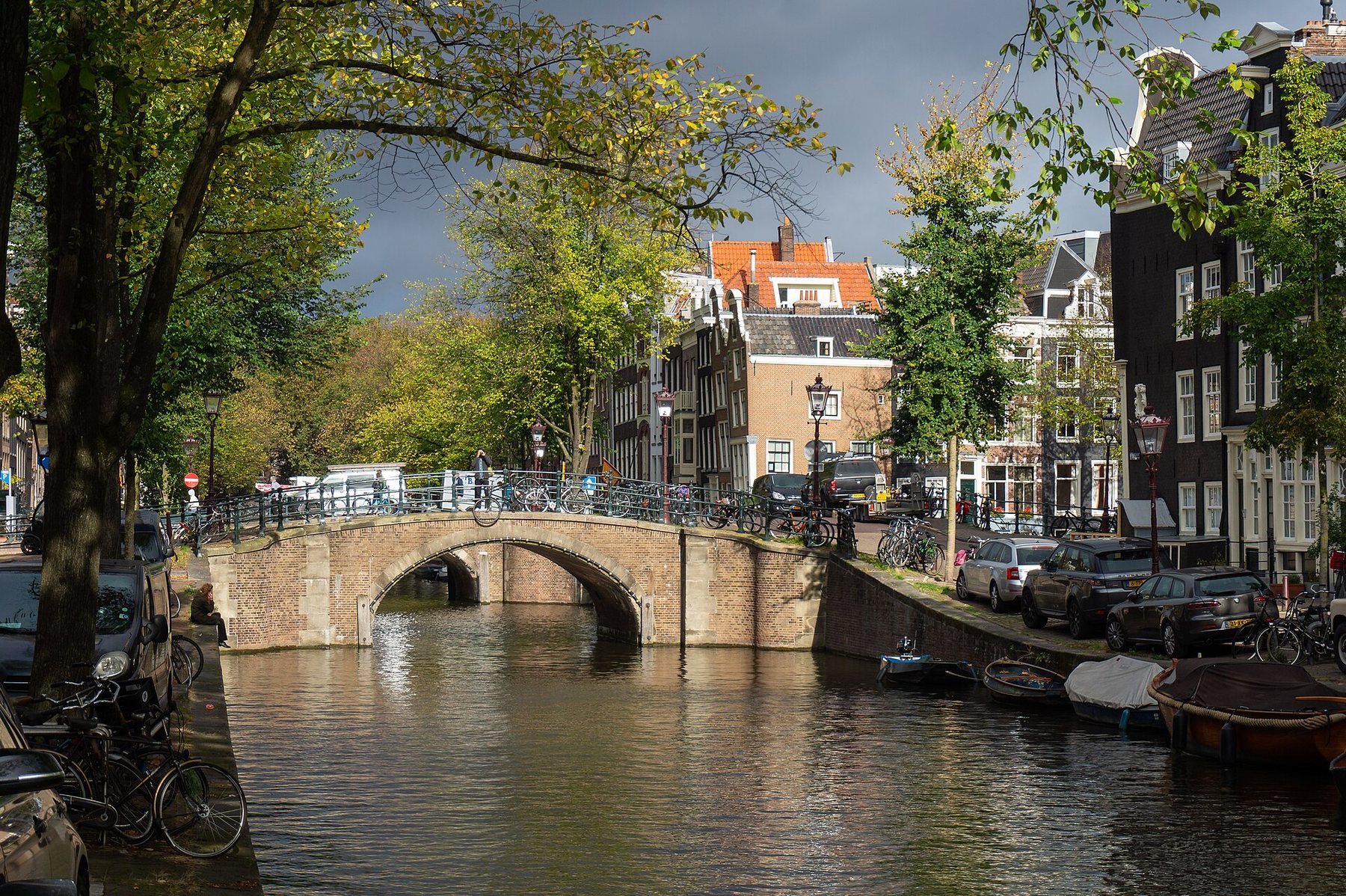
The Reguliersgracht at its crossing with the Keizersgracht, canals in the center of Amsterdam, photographed on 24 October 2018. Photo: Reguliersgracht, Amsterdam by Marco Ober, CC BY-SA 4.0, via Wikimedia Commons (resized).
From the record. This is a look back at March 2021. The desk wrote it on 11 October 2026 from sources published at the time; Stay Gazette opened in July 2026 and did not report this as it happened.
On 12 March 2021, the Amsterdam District Court annulled the city's ban on holiday rentals in three central districts: Burgwallen-Oude Zijde, Burgwallen-Nieuwe Zijde and Grachtengordel-Zuid. The ban had applied there since 1 July 2020. The court held that the national Housing Act 2014, as it stood until 1 January 2021, let a city require a permit for holiday rental but left no room for a ban covering whole districts.
The published ruling removed the claimant's name and showed only that it was an association. DutchNews.nl, TechCrunch and the Amsterdam broadcaster AT5 named it as Amsterdam Gastvrij, a group that represented homeowners who rented through Airbnb and other platforms. Airbnb told TechCrunch it was not involved in the proceedings.
Reuters reported on 16 March 2021 that the city had said residents of the three areas could apply from that Tuesday for the permit already open to homeowners in the rest of Amsterdam: up to 30 nights a year, for no more than four guests at a time. In a statement carried by AT5, the city said it seemed a matter of time before there were new ban areas.
What the court decided
The case, AMS 20/4800, was heard on 12 January 2021 by a chamber of three judges. Its target was a decision of the city executive, the mayor and aldermen, designating the three districts as areas where homes could not be used for holiday rental. The decision was taken on 23 June 2020, the ruling said, and published in the government gazette on 30 June 2020. It rested on a clause in the city council's Housing Ordinance 2020 that let the executive designate such areas.
The association argued, the ruling recorded, that the Housing Act 2014 gave no legal basis for a ban, that if a ban were possible at all the power to impose it lay with the council and not the executive, and that the ban conflicted with the European Union's Services Directive and with the First Protocol to the European Convention on Human Rights. The court needed only the first argument.
Under Article 21 of the Housing Act, the court wrote, a home could not be withdrawn from the housing stock without a permit, and settled case law treated holiday rental as withdrawal even for a single day. But the Act as it stood when the city acted, the court went on, said only that a permit was needed and that the council could set the grounds for refusing one and the conditions attached to it. A rule under which no permit was ever granted in a district was, by its nature, not a permit condition. It was a complete ban on holiday rental in those districts, the court held, and the Act left no room for one.
The court held the ordinance clause non-binding, upheld the appeal and annulled the designation. It did not rule on the other arguments. It ordered the city to refund the association's court fee of 354 euros and to pay 1,068 euros toward its legal costs. The ruling could be appealed to the Council of State within six weeks.
Why the date of the law mattered
The ban took effect on 1 July 2020. Six months later, on 1 January 2021, a national law on the tourist rental of homes came into force and amended the Housing Act 2014. The ruling listed what it introduced: a registration duty, a reporting duty, a limit on nights and a permit requirement for tourist rental.
The court read that law as support for its conclusion. With the new law, it said, the possibility of a district ban had been created, though only for extreme cases. If the Housing Act had already allowed such a ban, the new law would not have needed to provide for it explicitly. The court's news summary, dated 15 March 2021, made the same point.
The ruling also reproduced part of the government's explanatory memorandum to the new law, which said a total ban was a major interference with the right of property and the free movement of services, and would be seen as justified only in very exceptional circumstances.
In the statement carried by AT5, which named no speaker, the city said it had brought in the ban districts in 2020 because nuisance from holiday rental had gotten out of hand in a number of neighborhoods. The judge, it said, had now found that the city was too early and should only have introduced them in 2021, because the law had been clarified on this point.
How the ban came about
About 7,000 Amsterdam listings stood on Airbnb in 2014, the court wrote, and 30,000 by 2018. Reports about holiday rental to the reporting line Zoeklicht rose from 1,717 to 2,846 between 2014 and 2018. The city had cut the number of days a home could be rented each year from 60 to 30.
From 17 April to 28 May 2020 the executive put a draft of the ban out for public comment. It drew 780 responses, and 75% of them favored a ban. The city's stated ground was a study dated February 2020 in which the three districts received the maximum score for tourist pressure and the minimum score on almost every livability indicator.
What the city and the hosts' group said
DutchNews.nl reported that the city's housing chief, Laurens Ivens, told the newspaper Het Parool it was a matter of time before the bans could return. Reuters reported the city as saying it was still studying the ruling to decide what steps it could take.
The court had pointed to other routes. In a closing remark outside its decision, it said the city could consider changing its ordinance, under which a holiday rental permit could not be refused because of a negative effect on livability. It could introduce a quota together with a limit on nights, in line with the new national law. And it could use the zoning plan to require that houses be lived in.
DutchNews.nl reported that Amsterdam Gastvrij's spokesman, Tim Klein Haneveld, told Het Parool he was pleased with the verdict but not surprised, and that the group had strongly doubted whether the ban was legally justified.
The Gazette Verdict, looking back
The March 2021 ruling was a win for hosts on timing, and a host who read it as the end of bans in central Amsterdam misread it. The court did not reach the arguments that a district ban breached European law. It said the Housing Act gave the city no room for one before 1 January 2021, noted that the amended Act allowed bans in extreme cases, and listed three other tools: a refusal ground for livability, a quota with a limit on nights, and zoning. The money was small. The city owed 354 euros in court fees and 1,068 euros in costs. Resident hosts in the three districts could again apply for up to 30 nights a year, behind a permit AT5 priced at 45 euros. The city said within days that new ban areas seemed a matter of time. A host there should have taken the permit and treated it as a window.
The other side
The ruling was about more than dates. The court held that a permit system could not be stretched into a blanket ban, and it reproduced the explanatory memorandum to the new law, which called a total ban a major interference with the right of property and the free movement of services, justified only in very exceptional circumstances. On that reading the hosts won a point of principle. A new ban would have to fit the extreme cases the amended Act allowed, and the association's arguments under the Services Directive and the human rights convention, which the court never had to decide, were still there to be raised against it.
What it meant for hosts
For a resident host in the three districts, the practical change came on Tuesday 16 March 2021. From that day, Reuters and TechCrunch reported, residents could apply for the same holiday rental permit as hosts in the rest of the city. AT5 reported that a permit cost 45 euros and could be applied for on the city's website.
Beyond the 30 nights and four guests that Reuters reported, the Housing Ordinance printed in the annex to the ruling, in the version valid from 1 July 2020, listed more:
- the applicant had to have the home as a main residence and be registered at its address;
- the number of nights of each rental had to be reported to the city electronically;
- the permit was valid for the calendar year in which it was granted and the first three months of the next.
A host there had two reasons not to count on the opening lasting. The ruling was open to appeal for six weeks. And the city, through AT5, and its housing chief, through DutchNews.nl, had each said it was a matter of time before ban areas returned.
Sources
- Rechtbank Amsterdam (Amsterdam District Court), published by de Rechtspraak, ECLI:NL:RBAMS:2021:1017, Rechtbank Amsterdam, AMS 20/4800 (12 March 2021).
- Rechtbank Amsterdam (court news page on rechtspraak.nl), Het oordeel van de rechter (15 March 2021).
- AT5, "Amsterdam teruggefloten over Airbnb-verbod" (12 March 2021).
- DutchNews.nl, Court tears up Amsterdam’s city centre tourist rental ban (13 March 2021).
- TechCrunch, Court overturns Amsterdam’s three-district ban on Airbnb rentals (15 March 2021).
- Reuters (as published by WDEZ), Amsterdam to allow Airbnb rentals in city centre after court order (16 March 2021).
Part of the Stay Gazette record for March 2021. Filed on 11 October 2026; every specific was checked against the sources above, which were read on or before that day. To report an error, write to the desk; see the corrections policy.

Also filed on March 2021
- PlatformsVrbo Launches Fast Start to Bring Established Hosts From Other SitesVrbo opened Fast Start in the United States on 29 March 2021, offering hosts with strong reviews elsewhere a 90-day badge, an imported review score and a higher place in its sort order. Its release used Airbnb's word Superhost, and an Expedia Group executive said that was intentional.
- The recordMarch 2021, the whole month
- The recordEvery month on the record