Expedia Blames Toronto's Short-Term Rental Rules for Vrbo's Exit
The Logic reported on 12 January 2021 that Vrbo had ceased operations in Toronto, and Expedia Group said the city's regulatory environment had caused it to withdraw. Toronto had begun enforcing its principal-residence and registration rules on 1 January.
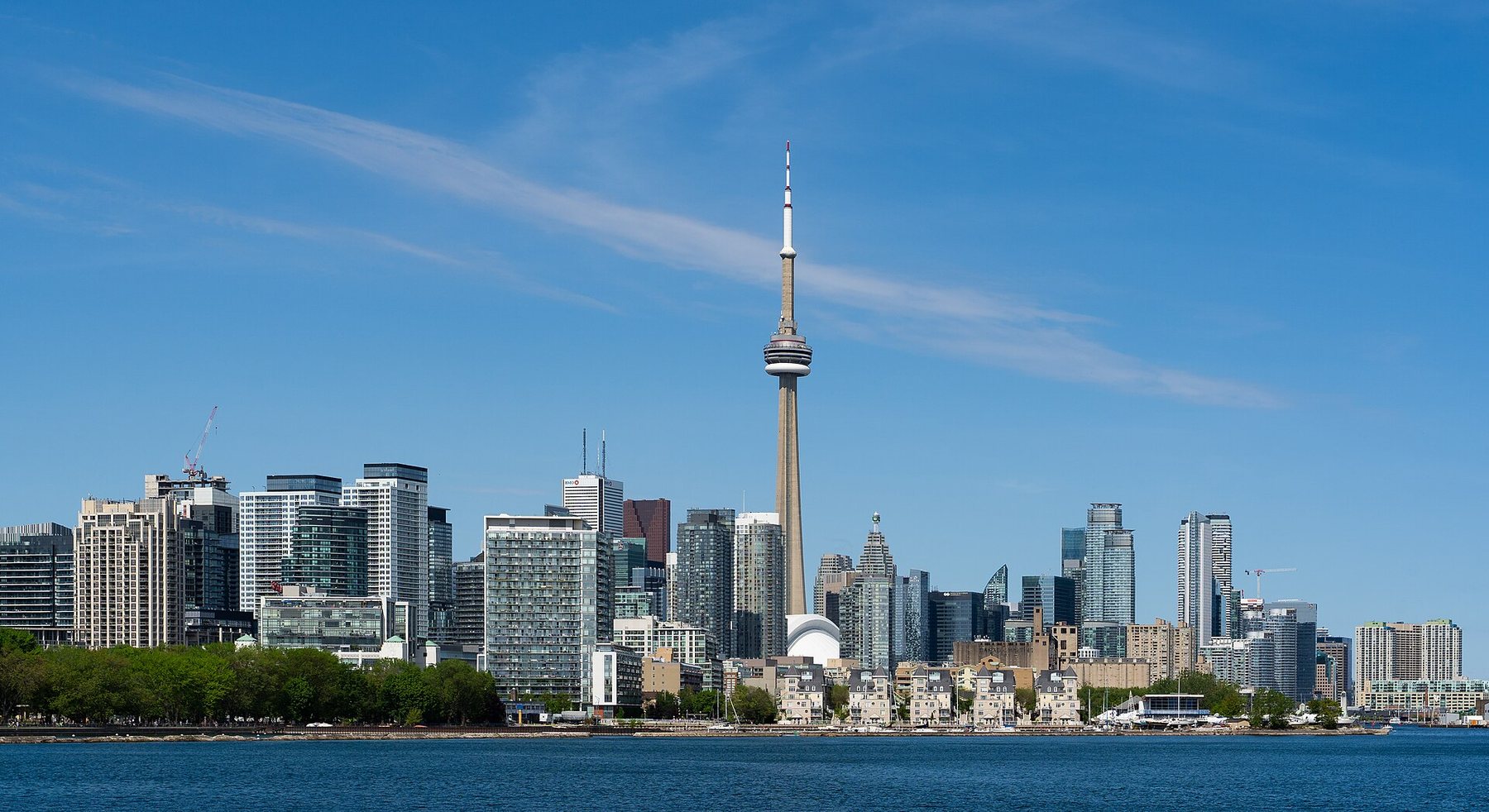
The Toronto skyline, with the CN Tower at its center, viewed across the water from Trillium Park on 23 May 2021. Photo: Toronto skyline viewed from Trillium Park by Maksim Sokolov (maxergon.com), CC BY-SA 4.0, via Wikimedia Commons (resized).
From the record. This is a look back at January 2021. The desk wrote it on 11 October 2026 from sources published at the time; Stay Gazette opened in July 2026 and did not report this as it happened.
On 12 January 2021, the Canadian business news site The Logic reported that Vrbo, the vacation-rental platform owned by Expedia Group, had ceased operations in Toronto because of the city's new rules on short-term rentals. Expedia confirmed the withdrawal to The Logic and put the cause on the city. “After years of ongoing discussions, Expedia Group is saddened that the regulatory environment in Toronto has caused us to withdraw from the short-term vacation-rental market,” Philip Minardi, Expedia's director of policy communications, said in an emailed statement.
The City of Toronto had begun enforcing those rules on 1 January 2021, The Logic reported: a host had to register with the City and could rent only a principal residence for stays of less than 28 consecutive days. Vrbo had listed more than 300 houses, condos, apartments and studios in Toronto, the local site blogTO and the trade site Short Term Rentalz reported. The Logic wrote that the bulk of Vrbo's Toronto listings were secondary residences.
None of the January reports cited here gave the day Vrbo stopped taking Toronto bookings. A City staff report dated 1 February 2021 pointed to an earlier date. Among the things short-term rental companies had told the licensing office, it recorded that Expedia ceased short-term rental operations in Toronto at the end of October 2020. Staff wrote that they were still validating what the companies had told them.
What Toronto began enforcing
The City had set out the terms in a news release on 10 December 2020. Anyone renting a home or rooms for periods of less than 28 consecutive days had to be registered with the City by 31 December 2020 to keep doing so. Operators could short-term rent only their principal residence, the home where they lived. Registration cost $50. A registered operator had to put the City-issued number on every listing.
Short-term rental companies had to make sure every listing on their platform carried a valid City registration number. After 1 January 2021, the City said, it would take enforcement action against operators who were not registered or were not following the rules, and against companies that let unregistered operators list.
Tax came with registration. From 1 January 2021 registered operators had to start collecting the Municipal Accommodation Tax and pay it quarterly, with the payment for the first quarter due by 30 April. The Globe and Mail reported on 6 January that an entire home could not be rented for more than 180 nights in a year, and that charges under the bylaw carried penalties of between $1,000 and $10,000 per infraction.
The rules were not new. A letter from Councillor Paula Fletcher to the City's Planning and Housing Committee, dated 18 January 2021, recounted that City Council approved them in December 2017 and January 2018, and that the Local Planning Appeal Tribunal dismissed appeals against the zoning changes in November 2019.
Why Vrbo left, by each side's account
Expedia blamed the regulatory environment. Minardi told The Logic that tourism would be critical to Toronto's economic recovery after the pandemic and that Expedia Group hoped to restart discussions with the city that would let it re-enter the market.
The City described a business decision. Carleton Grant, the executive director of municipal licensing and standards, told The Logic that Vrbo had chosen not to acquire a license to operate in Toronto despite many conversations about the new rules. “It was a good working relationship … but they ultimately made a business decision not to operate in Toronto. Their model could not meet the requirements of our rules,” Grant said.
That left one company. Grant told The Logic that Vrbo's exit meant Airbnb was the only licensed short-term rental platform in Toronto. The Globe reported on 6 January that Airbnb was giving its Toronto users until 8 January to prove they had a registration for any listing that needed one. After that date, according to company statements the Globe cited, such listings would be deactivated or blocked from booking new short stays.
How many hosts had registered
Registration ran far behind the estimates of how many rentals existed. On 4 December 2020, Global News reported that only 1,785 short-term rentals had registered. By 6 January the City had handed out 2,003 registration numbers, the Globe reported, citing the City's open data portal. Third-party analysts, the Globe added, estimated between 14,000 and 20,000 short-term rental listings in Toronto.
Grant told the Globe that before COVID he would have called 2,003 an incredibly low number, and that he would still call it low, with caveats. The City's later count was higher: as of 24 January 2021 it had received 3,263 applications and approved 2,744, according to the staff report of 1 February.
Enforcement began quietly. The Globe reported that a few inspections had been done as of 2 January and no bylaw infractions found. An official City response to The Logic said that since 1 January officers had inspected several locations and were investigating alleged violations, but that it was too soon to report the outcome. Grant told The Logic that the City did not have the right tools to track illegal short-term rental activity and needed a third party to help.
Operators, advocates and a council member
The rules closed the short-stay market to operators with many units. The Globe reported that large corporate property managers had effectively been banned. It spoke to the operator of a property management company who said he did not own any of the apartments he listed and was not registering with the City. At his peak, the Globe reported, he had listed 96 apartments in three cities. “We’re wrapping up the business, we’re going to different cities,” he said.
Thorben Wieditz, an organizer of Fairbnb, a group that had pushed for regulation, told the Globe that listings would creep back onto the platform with tricks and made-up numbers, and that fines had to be steep enough that operators could not treat them as a cost of doing business.
A member of City Council raised the same worry. In her 18 January letter, Fletcher asked the committee to have the licensing office report to the 2 February 2021 meeting of City Council on four questions, among them whether short-term rental companies would de-list every property with no valid City-issued number and how they would tell a valid registration number from a made-up one.
The Gazette Verdict, looking back
Toronto's rule did what it was written to do, and Vrbo's exit showed it. A platform whose Toronto listings were mostly secondary residences, by The Logic's account, had little left to sell once only a principal residence could be rented for less than 28 days. Expedia gave up a city where Vrbo had listed more than 300 properties and said the rules were the cause; the City's licensing chief called it a business decision. The owners of those second homes paid: their choice was stays of 28 days or more, or no Toronto listing. Airbnb gained the position of the only licensed platform. The resident host paid $50 and a quarterly tax, under penalties the Globe put at $1,000 to $10,000 per infraction. A host should take this from it: a principal-residence rule does not bend for a platform, so check what the rule allows for your unit before you count on any site to carry it.
The other side
A rule that sends a major platform away and leaves one licensed company is hard to call a success. Expedia said it had talked with the city for years and still hoped to return, and it argued that tourism would be critical to Toronto's recovery. By 6 January the City had handed out 2,003 registration numbers against outside estimates of 14,000 to 20,000 listings, a figure its own licensing chief called low. Inspections by 2 January had found no infractions, and the City said it lacked the tools to track illegal listings without outside help. On those facts the bylaw had shrunk the lawful market before the City could show it was able to police the rest.
What it meant for hosts
A Toronto host in January 2021 needed a City registration number to rent for less than 28 consecutive days, and could get one only for the home they lived in. The deadline for anyone already hosting had been 31 December 2020. The number had to appear on every listing, and Airbnb's own deadline for its hosts to show one was 8 January.
The costs were small for a resident host and steep for a mistake. Registration was $50, the Municipal Accommodation Tax had to be collected from 1 January 2021, and the Globe put the penalties at $1,000 to $10,000 per infraction.
An owner of a second home or an investment unit had no short-stay option left in Toronto. The Logic reported that secondary residences had to be rented for a minimum of 28 straight days. For owners who had used Vrbo, the platform itself had withdrawn from the city.
Sources
- The Logic, Vrbo exits Toronto market over city’s new short-term-rental rules (12 January 2021).
- The Globe and Mail, Toronto embarks on short-term rental crackdown (6 January 2021).
- blogTO, Airbnb's main competitor pulls out of Toronto over the city's new short term rental rules (12 January 2021).
- Short Term Rentalz, Vrbo exits Toronto rental market following new crackdown (13 January 2021).
- City of Toronto (letter from Councillor Paula Fletcher to the Planning and Housing Committee, item PH20.7), Update on Short Term Rental Regulations (18 January 2021).
- City of Toronto (news release, read in the Internet Archive capture of 7 January 2021), Short-term rentals operators in Toronto must register by December 31 to continue hosting (10 December 2020).
- Global News, Less than 10 per cent of Toronto short-term rentals have registered ahead of deadline (4 December 2020).
- City of Toronto (Executive Director, Municipal Licensing and Standards), Supplementary Report - Update on Short-term Rental Regulations (1 February 2021).
Part of the Stay Gazette record for January 2021. Filed on 11 October 2026; every specific was checked against the sources above, which were read on or before that day. To report an error, write to the desk; see the corrections policy.

Also filed on January 2021
- PlatformsAirbnb to Cancel and Block Washington Area Bookings for Inauguration WeekAirbnb said on 13 January 2021 that it would cancel reservations in the Washington, D.C. metro area for inauguration week, block new ones, refund guests in full and reimburse hosts at its own expense. Hosts who had already blocked their own calendars were left out, DCist reported.
- The recordJanuary 2021, the whole month
- The recordEvery month on the record