Airbnb Blocks One-Night New Year's Eve Stays for Guests Without Positive Reviews
Airbnb stopped guests with no history of positive reviews from booking an entire home for the single night of 31 December 2020 in seven countries. Stays already booked stood, and hosts were told to update their house rules.
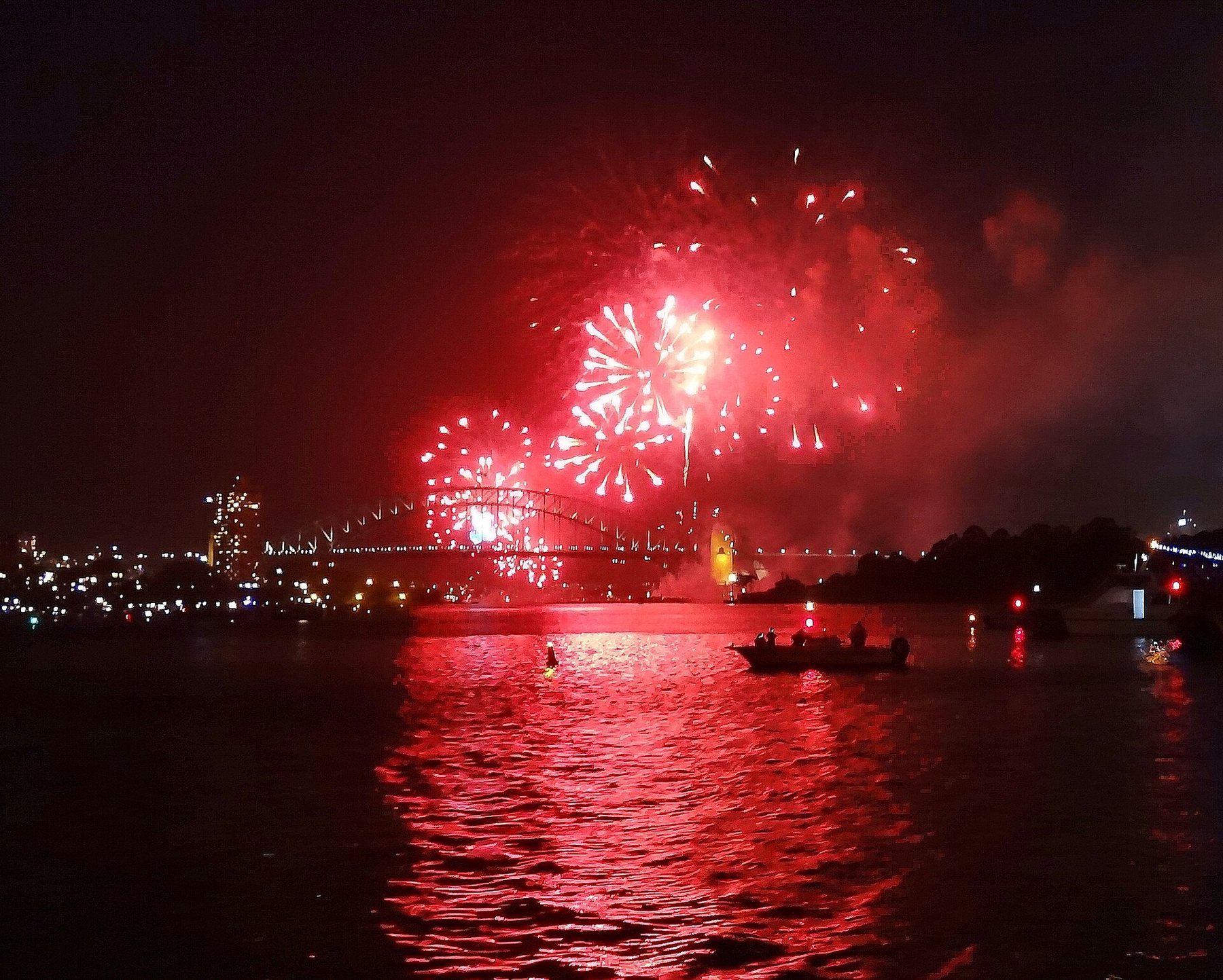
New Year's Eve fireworks over Sydney Harbour, photographed on 31 December 2014. Australia was one of the seven countries where Airbnb applied the rule in December 2020. Photo: NYE2014 - Sydney Harbour by Ian Rose, CC BY-SA 4.0, via Wikimedia Commons (resized).
From the record. This is a look back at December 2020. The desk wrote it on 11 October 2026 from sources published at the time; Stay Gazette opened in July 2026 and did not report this as it happened.
On 3 December 2020, Airbnb said that guests without a history of positive reviews on its platform could no longer book a one-night stay in an entire home for New Year's Eve. The rule took effect that day in seven countries: the United States, the United Kingdom, Canada, Mexico, Australia, France and Spain.
Guests who did have a history of positive reviews were not affected, and one-night stays that were already booked were allowed to go ahead. Airbnb tied the plan to the pandemic. In its announcement, the company said the world was grappling with another wave of Covid-19 and that it wanted to do its part to try to stop large gatherings that could spread the virus.
What the rule did
Airbnb described the measure in two ways, and they were the same rule. The announcement on its main newsroom put it as a minimum stay: “This approach will be anchored by a two-night minimum in entire home listings for guests without a history of positive reviews in parts of North America, Western Europe and Australia.” Its Australian announcement put it as a block on one-night stays in entire home listings for 31 December 2020.
The details matched in both posts:
- From 3 December 2020, guests without a history of positive reviews were prohibited from making one-night reservations in entire home listings on New Year's Eve.
- Guests with a history of positive reviews were not subject to the restriction.
- One-night reservations that were already booked went ahead as planned. Airbnb said its data had shown that one-night New Year's Eve bookings made that early very rarely led to unauthorized parties.
- As the night approached, Airbnb said, it would apply stricter limits to one-night and two-night reservations that might carry a higher risk of parties. It said it would use its technology that restricted certain local and last-minute bookings by guests without positive reviews, and would block reservations within an expanded radius.
- Every guest with a successful booking, anywhere in the world, had to attest that they would not throw an unauthorized party and that Airbnb might pursue them legally if they broke its rules on parties and events.
- Hosts in the seven countries were given guidance on reducing the chance of a party, including to update their house rules and communicate them to guests up front.
- Airbnb said it would operate a virtual command center, with trained safety agents on call throughout New Year's Eve.
The United States, in Airbnb's list, included Puerto Rico and the US Virgin Islands. TravelMole reported on 4 December 2020 that bookings completed before 3 December were not affected. MobileSyrup reported on 6 December that the rule had started in Canada on 3 December.
Why Airbnb changed its approach
The New Year's Eve rule followed two earlier steps against parties that Airbnb set out in its announcement. In August 2020, Airbnb instituted a global party ban at its listings, with a 16-person occupancy cap. Over Halloween weekend in the United States and Canada, it went further and prohibited all one-night reservations in entire home listings. Airbnb said that initiative went successfully.
Hosts in the two countries then told the company how it could be done better. In Airbnb's account, their feedback was that “the strategy could be improved by allowing a pathway for guests who have demonstrated a commitment to being responsible travelers through their histories of positive reviews,” while protections against unauthorized parties stayed in place. Airbnb said it took that feedback seriously and that it motivated the New Year's Eve plan.
The company listed its other moves during the pandemic in the same post, among them an announced intent to bring legal action against unauthorized partiers and restrictions on certain local and last-minute bookings. TravelMole reported that Airbnb had also restricted certain users under 25 who were trying to book a home for a party, and that its crackdown on so-called party houses came after several widely reported cases of homes being trashed and of gun violence at parties.
The numbers Airbnb gave in Australia
The Australian announcement carried the only enforcement figures. Airbnb said it had taken action against more than 400 listings across Australia, which were suspended or removed from the platform for violating its policies on parties and events or for having received a number of complaints. It said it had expanded its manual screening of high-risk reservations to the whole country, after a pilot in Melbourne that prevented more than 1,400 bookings from taking place. It pointed residents to its Neighbourhood Support Page, where anyone could submit a concern or complaint about a specific listing.
Derek Nolan, Airbnb's Head of Public Policy for Australia, said the measures were designed so that guests with a track record as respectful travelers could still enjoy a wide range of options. “Negative incidents are extremely rare on Airbnb - however, we continue to work diligently to make them even rarer,” he said.
Neither announcement said how many guests the rule was expected to block. Neither said how many reviews, or how recent, made up a history of positive reviews. The Australian post conceded that no system was perfect or able to prevent every problem.
How it was received
The local and trade press reported the rule as a crackdown and recorded no objection to it. NBC Los Angeles, which carried a City News Service report, TravelMole and MobileSyrup each ran Airbnb's account, and none of the three quoted a host, a guest or a public official against the plan. MobileSyrup reported, from an emailed Airbnb release, that the rule followed a similar one piloted in Canada over Halloween, which Airbnb said went successfully.
Airbnb signaled that it meant to keep using reviews as the test. NBC Los Angeles reported the company as saying it would look to move forward with policies that could allow a pathway for guests who had shown, through their histories of positive reviews, a commitment to being responsible travelers, while keeping robust protections against unauthorized parties.
The Gazette Verdict, looking back
Airbnb got this one mostly right. Its Halloween rule had blocked every one-night booking of an entire home in the United States and Canada, good guests included. For New Year's Eve, citing feedback from its hosts, it narrowed the block to guests with no record of positive reviews, left existing bookings alone and made every guest attest to the party ban. The cost fell on hosts of entire homes, who lost one-night bookings from unreviewed guests on 31 December, and on those guests. The intended gain was for hosts and their neighbors: fewer parties in the middle of a pandemic. The weak point was disclosure: Airbnb published no definition of a positive history and no count of who was blocked. A host should treat a rule like this as a backstop. Airbnb itself told hosts to update their house rules, and it conceded that no system stops every problem.
The other side
The rule judged guests by their file and not by their conduct. A first-time user, or a traveler who had simply never been reviewed, was treated as a party risk on New Year's Eve in seven countries, and the host who might gladly have taken that one-night booking was not asked. Airbnb decided for both of them, without publishing how many reviews counted as a history. The evidence that the approach worked was Airbnb's own: it said the Halloween rule went successfully and gave no numbers for it. And a two-night minimum only raised the price of a party. Anyone set on one could still try to book two nights.
What it meant for hosts
For a host with an entire home in one of the seven countries, the change was immediate. From 3 December 2020, a guest without a history of positive reviews could not book that home for the single night of 31 December. One-night stays already on the calendar stood. Guests with a positive history could still book one night. Both announcements described the rule for entire home listings only.
The work Airbnb asked of hosts was small and specific: update the house rules and communicate them to guests before the stay. Every guest with a booking had to attest that they would not throw an unauthorized party, and Airbnb said trained safety agents would be on call throughout the night.
The rule also showed hosts where enforcement was heading. In Australia, more than 400 listings had been suspended or removed over parties or complaints, so a host who let parties happen put the listing itself at risk. And the company had said that a guest's history of positive reviews would decide who could book on a high-risk night, which meant the reviews attached to each guest counted.
Sources
- Airbnb Newsroom, Airbnb Announces New Year’s Eve Plan to Protect Public Health (3 December 2020).
- Airbnb Newsroom (Australia and New Zealand edition), Airbnb announces measures to help ensure safe and enjoyable New Year’s Eve (3 December 2020).
- NBC Los Angeles (City News Service), Planning on Using Airbnb to Party on New Year's Eve? Company Says New Policies Will Prevent Illegal Parties (3 December 2020).
- TravelMole, Airbnb cracks down on New Year's Eve parties (4 December 2020).
- MobileSyrup, Airbnb launches new restrictions to prevent News Year’s Eve parties in Canada (6 December 2020).
Part of the Stay Gazette record for December 2020. Filed on 11 October 2026; every specific was checked against the sources above, which were read on or before that day. To report an error, write to the desk; see the corrections policy.

Also filed on December 2020
- The MoneyAirbnb Goes Public at $68 a Share and Closes Its First Day at $144.71Airbnb's shares more than doubled on their first day on the Nasdaq. U.S. hosts who took up a reserved-share offer at $68.00 could sell at once, while the 86% of hosts outside the United States had no access to it.
- The recordDecember 2020, the whole month
- The recordEvery month on the record