Portland, Maine Voters Reject a Ban on Unhosted Short-Term Rentals
A referendum initiative to end short-term rentals in homes the owner did not live in lost on 3 November 2020, and a hand recount confirmed the result on 20 November by 19,772 votes to 19,499. The rest of the same campaign's slate, including rent control, passed.
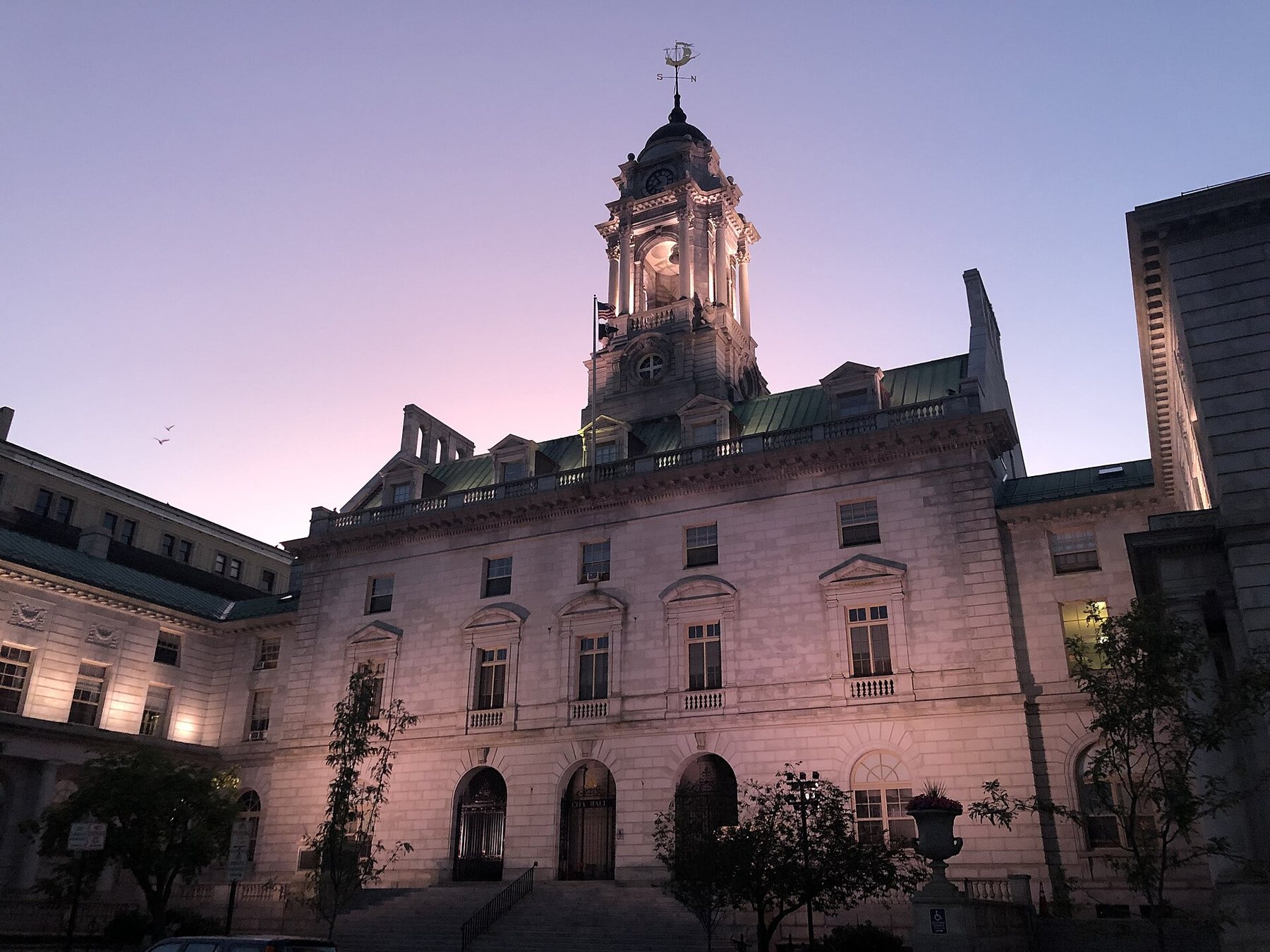
Portland City Hall in Portland, Maine, at dusk. The photograph was taken on 20 August 2019. Photo: Portland (Maine) City Hall at dusk by Ashuttleworth, CC BY-SA 4.0, via Wikimedia Commons (resized).
From the record. This is a look back at November 2020. The desk wrote it on 11 October 2026 from sources published at the time; Stay Gazette opened in July 2026 and did not report this as it happened.
On 3 November 2020, voters in Portland, Maine, narrowly rejected Question E, a referendum initiative that would have banned short-term rentals in homes the owner did not live in. The result was close enough to be counted again by hand. On 20 November 2020 the recount confirmed the defeat, with a final count of 19,499 yes votes and 19,772 no votes, the Portland Press Herald reported.
Question E was the only one of five measures from the People First Portland campaign that voters turned down. A $15 minimum wage and rent control passed on the same ballot. Airbnb put $125,000 into the effort to stop the short-term rental measure, according to the Bangor Daily News.
What Question E would have done
The measure was titled An Act to Restrict Short-Term Rentals in Portland. It would have prohibited unhosted, or non-owner-occupied, short-term rentals, which accounted for about half of the short-term rentals in the city, the Press Herald reported.
The ban was one part of it. Maine Public reported on 8 October 2020 that the measure would raise the annual fee from $100 to $1,000, and to $400 on Portland's islands. It set increased penalties for violations of the ordinance, required the city to keep a log of complaints and allowed the city to revoke a short-term rental license for any violation. The trade site ShortTermRentalz, describing the measure on 15 October 2020, put the fines at $1,000 a day or more and said it would also end tenant-occupied short-term rentals.
The rules Portland already had
Portland was not starting from nothing. The city first laid out short-term rental regulations in January 2018, limiting non-owner-occupied rentals to 300, and later raised that limit to 400 and tightened its definitions, ShortTermRentalz reported. When the recount ended, unhosted short-term rentals were capped at 400 on the mainland, according to the Press Herald.
The city had also hired an outside consultant to identify unregistered rentals. As of the trade site's 15 October report, it had collected $22,900 in fines.
Who argued what, and who paid
People First Portland, a political committee that the Press Herald described as organized by the Southern Maine Democratic Socialists of America, placed the question on the ballot. Its argument was about housing. Supporters said the measure could return up to 400 units to the long-term market. “What is really important to center here is that people are getting kicked out of their homes,” a People First Portland representative told Maine Public in October. The representative said there had been a lack of oversight and enforcement for the 400 short-term rentals operating in the city.
Short-term rental operators answered that owners needed the income. One Portland property owner told a press conference in October that renting out the family's unoccupied property had become essential, and that losing it would affect the family's long-term financial plans, Maine Public reported. Opponents also argued that the city had already settled the question. The treasurer of one opposition committee told the Portland Press Herald, in a report published on 15 October 2020, that the city already had regulations. “We have already been through this twice before,” he said. The Press Herald described his committee as a political action committee founded by Airbnb.
City Hall opposed the whole slate. Mayor Kate Snyder and all but one member of the City Council publicly opposed the five measures in October, the Bangor Daily News reported. The mayor said officials were “not necessarily opposed to the policy goals of the ballot questions, but rather the process and context in which they were developed.”
The Bangor Daily News also reported the money on the opposing side. Airbnb's $125,000 went to opponents of Question E, and national lobbyists and local opponents together spent close to $1 million against the five initiatives.
A wrong tally, then a hand recount
The first numbers were wrong. The city clerk's office reported results at about 1 a.m. on Wednesday 4 November 2020. That afternoon, city staff acknowledged they had entered the figures for early and absentee votes on the referendum questions incorrectly, a discrepancy that affected 25 percent of the vote, the Bangor Daily News reported. A city spokesperson, Jessica Grondin, said total votes had been put in the early-vote column instead of the absentee votes alone. In effect, the newspaper explained, votes cast in person on Election Day were counted twice. The city reissued its figures by 3:45 p.m.
The correction changed no outcome. It widened the margins on the measures that passed and left Question E defeated by fewer than 250 votes, according to the updated tallies.
People First Portland then collected 100 signatures from registered voters to force a recount. Under state law, the narrow margin meant the campaign did not have to pay for it, the Press Herald reported. The city clerk's office recounted more than 39,000 ballots by hand at the Portland Exposition Building over two days, finishing on Friday 20 November 2020. The margin came out slightly larger than before and still under one percentage point: 19,772 against and 19,499 in favor, a gap of 273.
The four other People First Portland measures stood. They raised the minimum wage to $15 an hour over the coming years, with hazard pay, strengthened the city's ban on the use of facial recognition software by public officials, set building standards the campaign called a Green New Deal for Portland, and brought in rent control with other tenant protections.
The Gazette Verdict, looking back
Portland's hosts kept their rentals, and the result still read as a warning. The ban failed by 273 votes out of more than 39,000, on a ballot where the same voters passed rent control and a $15 minimum wage, and after Airbnb put $125,000 into the campaign against it. The owners of the unhosted rentals, capped at 400 on the mainland, kept their income and a $100 annual fee that would have gone to $1,000. What they did not win was the argument. Nearly half the voters chose to ban those rentals, and supporters could point to how little enforcement of the existing rules had produced: $22,900 in fines. A host in a city like this should treat a cap as a license held on good behavior: register, follow the rules in plain view, and assume the question will be put again.
The other side
The supporters' case deserves its strongest form. Portland's voters were worried enough about housing to pass rent control on the same ballot, and the campaign argued that up to 400 units run as short-term rentals could go back to residents. The city's limit on those rentals had been raised from 300 to 400, and the campaign said oversight of them was lacking. Against close to $1 million in opposition spending on the five measures, including $125,000 from Airbnb, a ballot initiative came within 273 votes. Read that way, the vote was no endorsement of unhosted rentals. It was a narrow escape helped by outside money.
What it meant for hosts
For anyone running a short-term rental in Portland at the end of November 2020, the rules were the ones in force before the vote. The risk was easier to see.
- Unhosted rentals stayed legal on the mainland within the city's cap of 400. The annual fee the measure would have raised to $1,000 stayed at the $100 Maine Public had reported.
- The existing rules were still being enforced. The city had a consultant looking for unregistered rentals and had collected $22,900 in fines as of mid-October, so registration was the first thing to have in order.
- The fines of $1,000 a day or more and the power to revoke a license for any violation did not take effect.
- Owners weighing a switch to long-term tenants faced new terms. The rent control measure that passed capped rent increases at the rate of inflation and extended to 90 days the notice landlords had to give tenants they were seeking to evict, with an exemption for buildings of four or fewer units where the owner also lived, the Bangor Daily News reported.
- The margin was the number to keep. About half of the city's short-term rentals had come within 273 votes of a ban.
Hosts elsewhere could take one more thing from Portland. The measure did not come from City Hall, where the mayor and all but one councilor opposed it. It came from advocates who took their measures straight to the voters, and under state law a close result could be recounted at no cost to the side that asked.
Sources
- Portland Press Herald (published on CentralMaine.com), Hand recount confirms defeat of short-term rental restrictions in Portland (20 November 2020).
- Bangor Daily News, Portland boosts minimum wage to $15 as it passes wave of progressive policies (4 November 2020).
- Bangor Daily News, Portland referendums win by wider margins after initial miscalculation fixed (4 November 2020).
- Portland Press Herald, Ballot measure would reduce short-term rentals, increase penalties in Portland (15 October 2020).
- Maine Public, Opposition Mounts To Portland Ballot Question Tightening Restrictions On Short-Term Rentals (8 October 2020).
- ShortTermRentalz, Portland faces Election Day vote on short-term rentals limit (15 October 2020).
Part of the Stay Gazette record for November 2020. Filed on 11 October 2026; every specific was checked against the sources above, which were read on or before that day. To report an error, write to the desk; see the corrections policy.

Also filed on November 2020
- The MoneyAirbnb Files for Its IPO and Sets Aside Shares for HostsAirbnb's registration statement of 16 November 2020 showed a net loss of $696.9 million for the nine months to 30 September 2020 and a host endowment funded with 9.2 million shares. It also told investors that hosts would not be paid in full for the cancellations the company had refunded.
- The recordNovember 2020, the whole month
- The recordEvery month on the record