Wales Shuts Every Accommodation Business as Lockdowns Return Across Europe
From 6pm on 23 October 2020 every accommodation business in Wales had to close for a national firebreak. In the same two weeks Ireland, Germany and England set or announced their own limits on overnight stays.
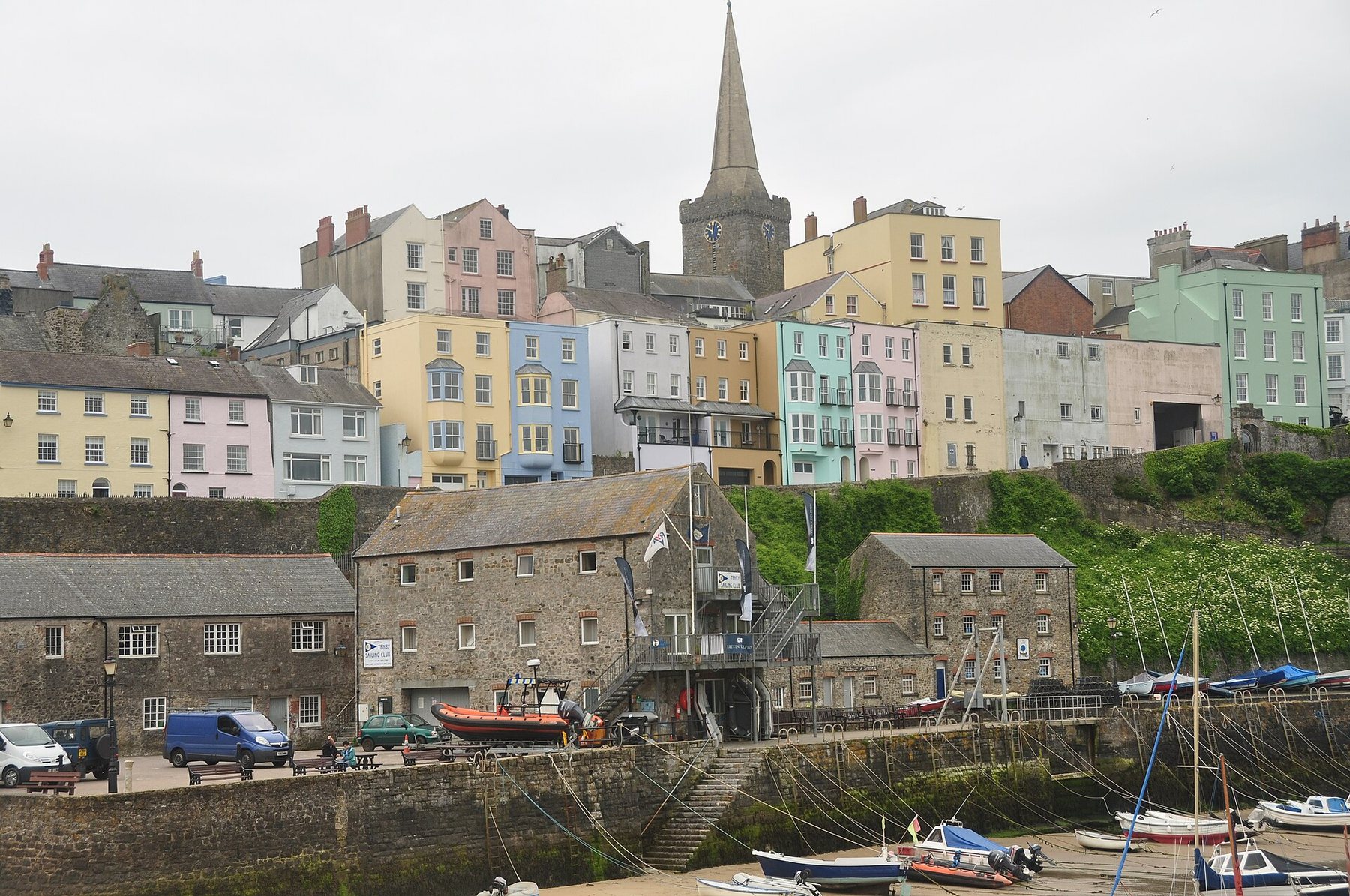
Painted houses above the harbor at Tenby, a seaside holiday town in Pembrokeshire, Wales, photographed in June 2013. The picture was taken years before the firebreak and does not show it. Photo: Tenby from the Harbour (6371) by Nilfanion, CC BY-SA 4.0, via Wikimedia Commons (resized).
From the record. This is a look back at October 2020. The desk wrote it on 11 October 2026 from sources published at the time; Stay Gazette opened in July 2026 and did not report this as it happened.
From 6pm on Friday 23 October 2020, every accommodation business in Wales had to close under a national firebreak that First Minister Mark Drakeford had announced on 19 October. The Welsh Government said the measures would end on Monday 9 November.
Wales was not alone. In the last two weeks of October, Ireland went to Level 5 of its Plan for Living with COVID-19, Germany's federal and state governments agreed to keep overnight accommodation for non-tourist purposes only, and the UK Prime Minister announced national restrictions for England. All four left little room for a holiday booking.
What the firebreak closed
The Welsh Government's press release of 19 October said people had to stay at home except for very limited purposes. Its list of what had to shut ran from non-food retail and hairdressers to events and tourism businesses, such as hotels.
The guidance the government published for the firebreak was blunter. Asked whether accommodation businesses in Wales were allowed to open, it answered: “No, all accommodation businesses are required to be closed.” That page did not list types of accommodation, and it made no exception for a self-catering cottage or apartment.
The travel rules shut the other door. The guidance said travel into Wales was limited to essential travel, such as for work or to return home, and that a holiday within Wales was not a permitted reason to travel. For owners, traveling into, out of or within Wales to visit, check or inspect a holiday home, or to stay in a second home, was not a reasonable excuse, and the same rules applied to caravans, boats and other temporary accommodation. The guidance gave the end of the measures as 12:01am on Monday 9 November.
The press release set the order against the case numbers of the time: Public Health Wales had recorded 4,127 new confirmed cases between 9 and 15 October. Drakeford said: “It is with a heavy heart that I once again ask everyone to stay at home and businesses to shut.”
Who could still stay
The closure had exceptions that mattered to operators. Closed accommodation could go on housing anyone who was living there as a main residence at 6pm on 23 October. A guest who was staying at that time and could not get back to a main residence could remain, and the guidance said the provider could keep serving that guest, without special authorization, until the guest could return home.
Local authorities or Welsh ministers could also authorize or ask closed accommodation businesses to provide other services. The guidance gave examples: housing key workers, people who had been displaced or were homeless, or medical patients.
The money on offer
The Welsh Government attached a support package of almost £300 million to the order. Every business covered by small business rates relief was to receive a £1,000 payment. Small and medium-sized retail, leisure and hospitality businesses that had to close were to receive a one-off payment of up to £5,000. The press release said the fund would open the week after the announcement.
A separate fund to help businesses develop in the longer term was raised from £80 million to £100 million, with £20 million set aside for tourism and hospitality. The press release did not mention holiday lets by name or say how one would be assessed for either payment.
The same two weeks across Europe
On 19 October, the day Wales announced its firebreak, the Irish government decided that all of Ireland would go to Level 5 from midnight on Wednesday 21 October, for six weeks. People were asked to stay at home, and there was to be a penalty for movement more than 5km from home, with exemptions for essential work and essential purposes. Hotels, guesthouses and B&Bs could remain open, but only to support the provision of essential services.
On 28 October, Germany's federal government and the heads of its states agreed on measures that were to take effect nationwide on 2 November and were limited to the end of November. Overnight accommodation inside Germany was to be offered only for necessary and expressly non-tourist purposes (the Gazette's translation from the German). Airbnb told hosts in Germany, on a page it updated in October 2020, that the federal states would each implement the measure, and that hosts were responsible for complying with all applicable guidelines.
On 31 October, Prime Minister Boris Johnson announced that from Thursday 5 November everyone in England must stay at home, with a limited set of exemptions. The government's statement said there was no exemption for staying away from home on holiday, and that overnight stays away from primary residences would not be allowed, except for specific exceptions including for work. People already on a domestic holiday would be allowed to finish it. MPs were set to vote on the measures on the Wednesday before they began. ShortTermRentalz reported that the lockdown was to last until 2 December.
What the trade asked for
The UK's short-term rental trade body had raised the money question before the orders came. ShortTermRentalz reported on 16 October that Merilee Karr, chair of the UK Short Term Accommodation Association and chief executive of UnderTheDoormat, had written to Chancellor Rishi Sunak asking for extra government support for visitor accommodation businesses.
The letter was about businesses that had not been ordered to shut. If pubs, restaurants and attractions closed, the association argued, demand for visitor accommodation went with them, but an accommodation business that was not forced to close could not get much of the support open to businesses that were. Karr said: “It is imperative that the government ensures that short-term rental businesses are included in any existing or forthcoming reliefs that may accompany further lockdown restrictions.” She warned that layoffs were likely without more support.
Holiday demand that year had been domestic. ShortTermRentalz reported on 14 October that the vast majority of demand for holiday homes in 2020 was in the UK, and Tenby, in Pembrokeshire, was on its list of the most popular domestic destinations for British Vrbo vacationers between May and August.
After the announcement for England, ShortTermRentalz reported that Sunak said the furlough program would be extended for a further month, covering 80 percent of employees' wages.
The Gazette Verdict, looking back
Closing every accommodation business outright was hard on Welsh holiday-let owners, and it still left them better placed than operators who stayed open with no guests. The Welsh order said who was closed (everyone), from when (6pm on 23 October), until when (12:01am on 9 November) and what a closed small business could claim: £1,000 under small business rates relief and up to £5,000 for small and medium-sized hospitality businesses, from a package of almost £300 million. The Welsh Government put up the money. Owners gave up the bookings between those dates. Set that beside the position the UK trade body had described a week earlier: open on paper, short of guests, and shut out of much of the support. The lesson for a host is to know, before an order arrives, how the property is registered for business rates, because the £1,000 payment was promised to every business covered by small business rates relief.
The other side
The case against is that staying open kept some income alive. Ireland left hotels and guesthouses open to support essential services, Germany kept accommodation for necessary stays, and the announcement for England kept an exception for work. Wales shut out those bookings too, unless a council or a minister asked for the rooms. For an operator near a hospital or a work site, the few guests the rules allowed might have been worth more than a one-off payment of up to £5,000, a ceiling whose terms for holiday lets the press release did not spell out. And the trade body had asked for support for businesses left open. It had not asked for closure.
What it meant for hosts
A host in Wales had four days between the announcement on 19 October and the closure on 23 October. Guests due to arrive after 6pm that Friday could not come. The guidance advised people who had booked and paid for a holiday to contact their travel agent or travel company, and their travel insurer, which left hosts and agencies to deal with cancellations for every stay up to 9 November.
Guests who could not get home could stay on, and so could anyone living in the property as a main residence. An owner who lived elsewhere could not travel to check the property until the firebreak ended. The guidance put the fixed penalty for most breaches of the regulations at £60, rising to £120 for a second offense and doubling for repeated offenses up to a maximum of £1,920.
On the money, the job was to check which payment the business qualified for, £1,000 or up to £5,000, before the fund opened. Hosts in Germany and England ended the month with a start date to plan for: 2 November and 5 November.
Sources
- Welsh Government, National coronavirus firebreak to be introduced in Wales on Friday (19 October 2020).
- Welsh Government (Internet Archive capture of 25 October 2020), Coronavirus firebreak: frequently asked questions (23 October 2020).
- Government of Ireland, Department of the Taoiseach, Ireland placed on Level 5 of the Plan for Living with COVID-19 (19 October 2020).
- Die Bundesregierung (German Federal Government), Der Beschluss von Bund und Ländern zur Bekämpfung der Corona-Pandemie (28 October 2020).
- UK Government, Prime Minister's Office, 10 Downing Street, Prime Minister announces new national restrictions (31 October 2020).
- ShortTermRentalz, Hospitality to shut for one month as England goes into national lockdown (31 October 2020).
- ShortTermRentalz, STAA calls on Rishi Sunak for additional government support (16 October 2020).
- ShortTermRentalz, Vrbo arrives in the UK following rebranding from HomeAway (14 October 2020).
- Airbnb Newsroom (page updated October 2020), Information for Home and Experience Hosts in Germany (23 March 2020).
Part of the Stay Gazette record for October 2020. Filed on 11 October 2026; every specific was checked against the sources above, which were read on or before that day. To report an error, write to the desk; see the corrections policy.

Also filed on October 2020
- The MoneyAirbnb Sets Aside 9.2 Million Shares for a Host EndowmentAhead of a stock market listing expected before the end of 2020, Airbnb told hosts it would seed a fund with 9.2 million shares and name a Host Advisory Board. The fund would invest nothing until it was worth more than $1 billion, and hosts were not given shares.
- The recordOctober 2020, the whole month
- The recordEvery month on the record