Toronto Opens Its Short-Term Rental Registry and Sets a Year-End Deadline
The City of Toronto began registering short-term rental operators online on 10 September 2020. Hosts could rent only the home they lived in, paid a $50 fee, and had until 31 December 2020 to register if they were already renting.
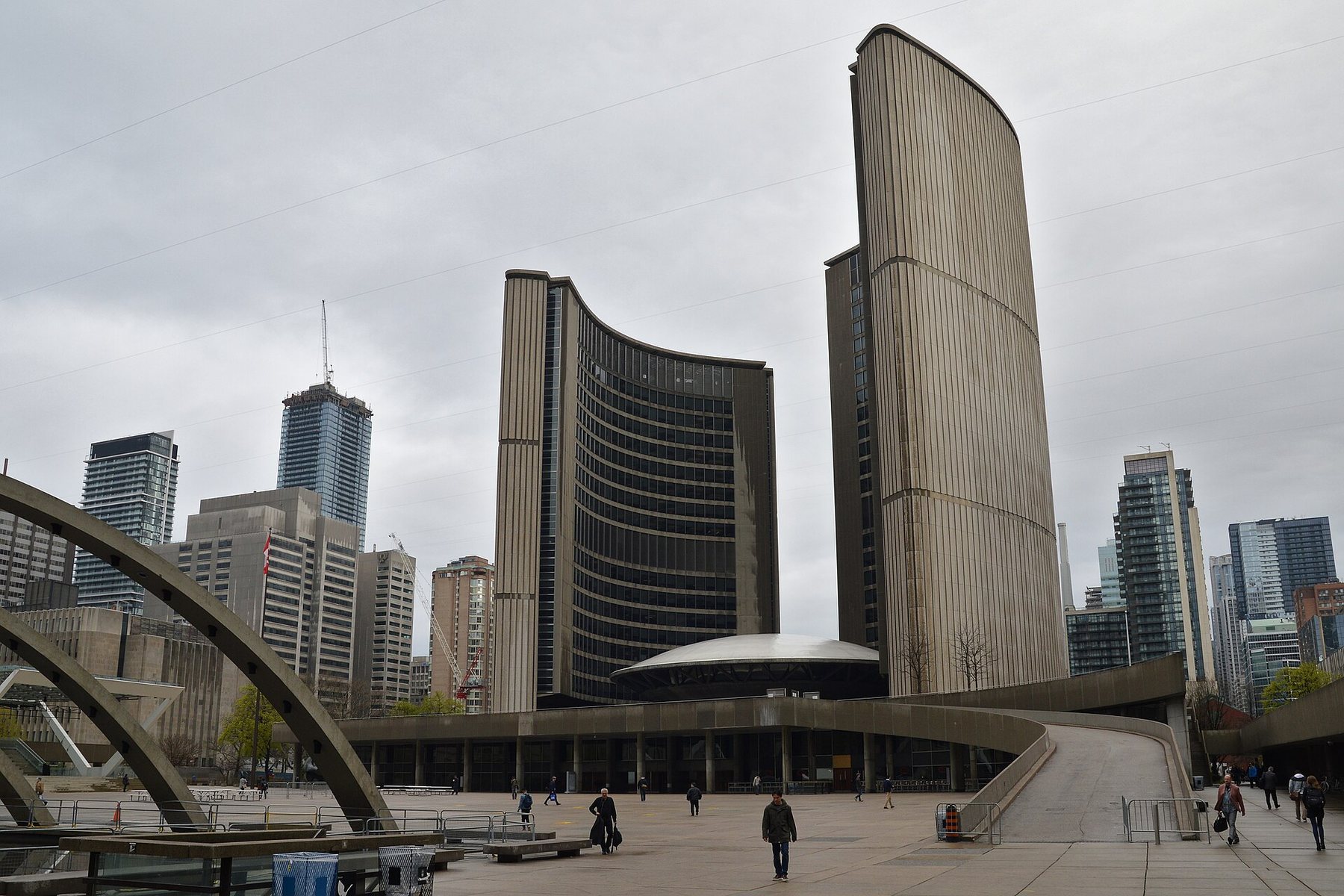
Toronto City Hall, its two curved towers around the low council chamber, seen across Nathan Phillips Square on 10 May 2019. Photo: Toronto City Hall - Toronto, Ontario 2019-05-10 (01) by Ryan Hodnett, CC BY-SA 4.0, via Wikimedia Commons (resized).
From the record. This is a look back at September 2020. The desk wrote it on 11 October 2026 from sources published at the time; Stay Gazette opened in July 2026 and did not report this as it happened.
On 10 September 2020, the City of Toronto opened an online registration system for short-term rental operators, meaning people who rented out their homes for less than 28 consecutive days. An operator had to register with the City to operate in Toronto, could rent only a principal residence, and had to show a City-issued registration number in every advertisement and listing. The fee was $50. People already renting had until 31 December 2020 to register.
“Registration is a necessary first step to allow the City to effectively administer the new rules applicable to short-term rentals,” Mayor John Tory said in the City's news release.
The registry was the City's first step in administering rules that Toronto's council had approved on 7 December 2017 and 31 January 2018. A provincial tribunal upheld the zoning changes behind them in November 2019, and the City said the pandemic then delayed the launch.
What an operator had to do
Registration was done online, and the City said it took a matter of minutes. An operator needed government-issued identification to show that they were over the age of 18 and that the home was their principal residence. The City accepted only an Ontario driver's license or an Ontario Photo Card that showed the address. The operator also had to give contact information, details of the rental, and the name and telephone number of an emergency contact who would be available 24 hours a day during rental periods. The $50 fee was paid online by credit card.
The release restated the rules the registry was there to administer:
- A person could short-term rent only their principal residence, which the City described as the home where they lived and the address they used for bills, identification, taxes and insurance.
- Homeowners and renters were both allowed to do it, in a house, an apartment or a condominium.
- An operator could rent up to three bedrooms for an unlimited number of nights a year, or the entire home for a maximum of 180 nights a year.
- A secondary suite, such as a basement apartment, or a laneway suite could be rented short-term only if it was the operator's principal residence.
Why it took nearly three years
The City had announced the opening date on 25 August 2020, in a release that Municipal World, a Canadian municipal affairs publication, reposted the next day. After council approved the regulations, the zoning bylaw amendments that permitted short-term rentals as a use were appealed to the Local Planning Appeal Tribunal. On 18 November 2019 the tribunal dismissed the appeals and upheld the amendments. The City said it had worked since then to implement the rules, and that the launch was delayed further when resources were redirected to the COVID-19 pandemic.
The local site blogTO, reporting on that announcement, was blunter. It said officials were starting to enforce the rules nearly three years after council voted to crack down on the city's Airbnb market. It also wrote that an estimated 10,000 Airbnb listings that it called illegal were still available in Toronto as of February 2020, a figure for which it gave no source.
City hall tied the registry to housing. Deputy Mayor Ana Bailão, who chaired the Planning and Housing Committee, said in the 25 August release that with the rules in action, “we have an opportunity to give people the flexibility to short-term rent their homes for extra income while minimizing impact on the availability of housing.”
The tax and the platform license still to come
Registration was not the only change on the way. The 25 August release said registered operators would need to start collecting and remitting the four percent Municipal Accommodation Tax, on a quarterly basis, from 1 January 2021. Details on how to collect and pay it were promised for the fall of 2020.
The companies were next. The City said it would require short-term rental companies to obtain a license in order to carry on business in Toronto. It defined such a company as one that facilitated or brokered short-term rental reservations online and was paid for the service, and it gave Airbnb, Expedia and Booking.com as examples.
Airbnb's response, sent to blogTO by email on 25 August 2020, was cooperative. Alex Dagg of Airbnb said the company had been working with the City on registration for many months and had connected it with Airbnb hosts for focus groups on the new system. “We are currently in discussion with the city on our platform licensing application and look forward to being licensed in the city,” Dagg said.
Complaints, records and penalties
The 10 September release said the City continued to respond to short-term rental issues on a complaint basis. Residents could contact 311 to report noise, waste, or concerns that someone was renting a home that was not their principal residence. Storeys, a real estate site, reported the launch that morning.
The release named no penalty. A real estate columnist, Jay Brijpaul, set out the stakes in the Toronto Caribbean Newspaper on 24 September 2020. By his account, an operator had to keep a record of every concluded transaction for three years, including the number of nights rented and the price charged. An operator found guilty of an offense was liable to a fine of up to $100,000, he wrote, and could face a daily fine of up to $10,000 until the problem was corrected.
Brijpaul also had a warning for landlords. Because tenants could register and short-term rent part of a home they leased, he advised owners to write into their leases that the tenant would not use the premises to run any business, short-term rental included. By his estimate, an average basement apartment fetched about $1,400 a month as a long-term rental and about $6,000 a month as a short-term one.
The Gazette Verdict, looking back
Toronto's registry was cheap to join and costly to ignore, and it left no lawful room for a short-term rental in a home the operator did not live in. The fee was $50. The real cost sat in the conditions: one principal residence, 180 nights a year for a whole home, a registration number on every listing and, from 1 January 2021, a four percent tax to collect and remit each quarter. The resident host paid a small fee and took on paperwork. The owner of a second unit had nothing to register. The City gained a list of operators and a tax, and the columnist Jay Brijpaul put the top fine at $100,000. Hosts had warning: council voted in 2017 and 2018, and the tribunal ruled in 2019. A host should take this from it: once a rule has passed and survived its appeal, plan for the day the registry opens, because a delay is only a delay.
The other side
The registry opened with little behind it. The City said it would keep responding to complaints through 311, and its release named no penalty. If blogTO's unsourced estimate of 10,000 non-compliant listings in February 2020 was near the mark, a sign-up page was a small answer to a problem council had voted on nearly three years earlier. Nor was it cheap for a resident host who followed the rules: only an Ontario driver's license or photo card counted as proof, a tax had to be collected every quarter, records kept for three years, and fines of up to $100,000 hung over mistakes, by one columnist's account.
What it meant for hosts
A Toronto host in September 2020 had a short list and a fixed date. Anyone already renting for periods of less than 28 consecutive days had to be registered by 31 December 2020 to keep going. Anyone starting had to register first.
To register, a host needed a home that was their principal residence, an Ontario driver's license or Ontario Photo Card showing that address, an emergency contact, and $50 on a credit card. Once a host was registered, the City-issued number had to appear in every advertisement and listing.
The limits then applied: up to three bedrooms with no cap on nights, or the entire home for at most 180 nights a year. From 1 January 2021 a registered operator also had to collect the four percent Municipal Accommodation Tax and remit it quarterly, so prices and bookkeeping had to be ready by then.
A host with a unit they did not live in had nothing to register, because the City's rules allowed short-term rental of a principal residence only. Renting for 28 consecutive days or longer fell outside the registration system's definition of a short-term rental.
Landlords had homework too. Tenants were allowed to short-term rent the home they lived in, so an owner who did not want that had to say so in the lease, as Brijpaul advised. Hosts who listed through Airbnb, Expedia or Booking.com had reason to watch the licensing talks, because the City had said those companies would need a license.
Sources
- City of Toronto, Registration of short-term rentals begins in Toronto (News Release) (10 September 2020).
- Storeys, Mandatory Registration of Short-Term Rentals Officially Begins in Toronto (10 September 2020).
- Toronto Caribbean Newspaper (column by Jay Brijpaul), It is now compulsory to register short term rental units (24 September 2020).
- City of Toronto (news release of 25 August 2020, as reposted by Municipal World), Toronto to launch registration of short-term rentals (26 August 2020).
- blogTO, Toronto is finally starting to enforce its own short term rental rules (25 August 2020).
Part of the Stay Gazette record for September 2020. Filed on 11 October 2026; every specific was checked against the sources above, which were read on or before that day. To report an error, write to the desk; see the corrections policy.

Also filed on September 2020
- WorldEU Top Court Backs France's Authorization Rule for Short-Term RentalsThe Court of Justice of the European Union ruled on 22 September 2020 that France could require prior authorization before a furnished home was let repeatedly to short-stay guests. The case came from two Paris studio owners fined EUR 15,000 each, and the rule did not cover a host's main residence.
- The recordSeptember 2020, the whole month
- The recordEvery month on the record