Airbnb Suspends All Beijing Bookings as Coronavirus Reaches the Rental Trade
Airbnb suspended bookings for every Beijing listing with a check-in from 7 to 29 February 2020, citing the outbreak and guidance from local authorities, and by 12 February had extended the window to 30 April. Guests could cancel covered trips without charge, and Airbnb China promised hosts and guests a fund of more than US$10 million.
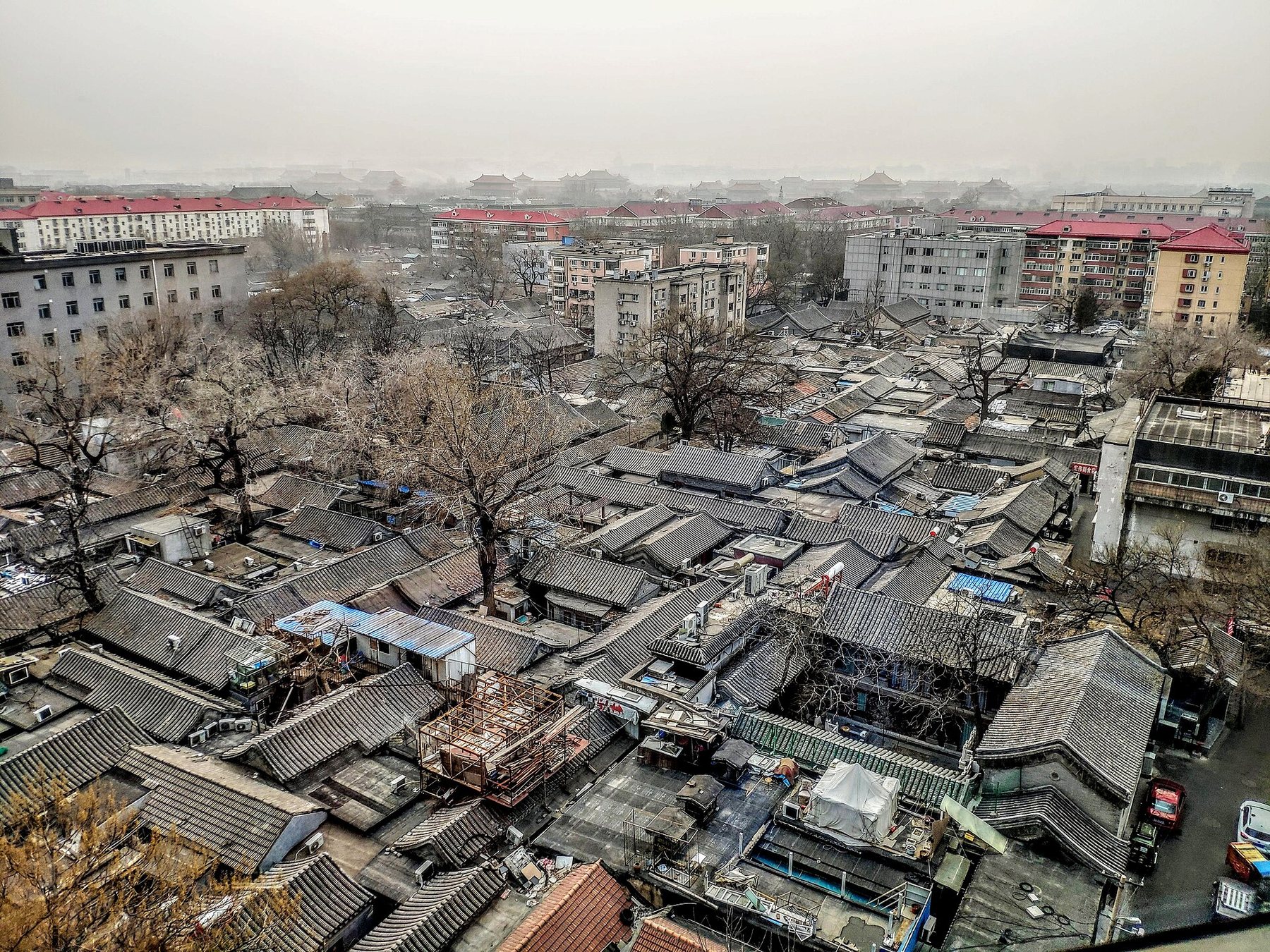
The gray tiled roofs of a hutong district of old courtyard houses in Beijing, seen from above in winter haze. Photographed on 23 December 2019, before the suspension; it does not show the event. Photo: Old districts 'hutong' in Beijing by Ekaterina Kvelidze, CC BY-SA 4.0, via Wikimedia Commons (resized).
From the record. This is a look back at February 2020. The desk wrote it on 11 October 2026 from sources published at the time; Stay Gazette opened in July 2026 and did not report this as it happened.
On 7 February 2020, Airbnb suspended bookings for every listing in Beijing with a check-in date from that day to 29 February. The company confirmed the step in an emailed statement that Reuters reported on Monday 10 February 2020, as the death toll from the coronavirus outbreak in China passed 900. A whole city's calendar was closed for the rest of the month. Then, on Wednesday 12 February, a company spokesman confirmed to the South China Morning Post that the suspension had been extended to cover check-ins up to 30 April.
Airbnb gave two reasons: the outbreak itself, and guidance that local authorities had given the short-term rental industry for the public health emergency. An Airbnb China spokesperson said the decision was for Beijing only, Reuters reported, and that the company was keeping the situation under review and following the authorities' guidance.
The suspension did not stand alone. On 5 February Airbnb China had announced a fund of more than US$10 million for hosts and guests in the country, and Airbnb's no-charge cancellation policy for the outbreak reached any host, anywhere, with a guest traveling from mainland China.
What Airbnb suspended
The statement was specific. Reuters quoted Airbnb as saying that “bookings of all listings in Beijing with check-in from 7 February 2020 to 29 February 2020 have been suspended”. That was every listing in the city, for the rest of the month.
Airbnb was not the only platform to act. The South China Morning Post reported on 10 February that Airbnb and its Chinese rival Xiaozhu had both acted on Friday 7 February, halting bookings on every Beijing listing at once and until the end of the month, to comply with guidance from Beijing and local authorities. Spokesmen for both confirmed that, at that time, only Beijing was affected. Tujia, another Chinese rival, said the guidance had affected most of its listings in the city.
The same report gave the figures of the day: 40,171 cases in China as of Sunday 9 February, which Chinese authorities reported on the morning of Monday 10 February, and 910 deaths globally, all but two of them in mainland China.
The end date did not hold. On 12 February the South China Morning Post reported that Airbnb had extended the Beijing suspension through April. It now covered check-ins from 7 February to 30 April, in accordance with guidance the government had issued to short-term rental platforms, a company spokesman confirmed to the newspaper that day.
The cancellation policy around it
The wider measure was Airbnb's extenuating circumstances policy for the outbreak, set out on a help page that changed during the month. As the page stood on 12 February 2020, a trip covered by the policy could be canceled without charge.
For hosts in mainland China outside Hubei province, the cover that day applied to reservations booked on or before 28 January 2020 by guests traveling from the mainland, with a check-in date of 29 February or earlier. Hubei had its own section, where the cover already ran to check-ins on or before 1 April 2020.
The policy also reached hosts nowhere near China. A host abroad with a guest traveling from mainland China was covered for reservations booked on or before 1 February, with the same check-in limit of 29 February. And whatever the booking date, it applied to anyone who had to cancel to comply with disease control restrictions, to perform medical or disease control duties, or after a diagnosis.
By 28 February the page had moved. The cover for all of mainland China, and for hosts abroad with guests from the mainland, ran to check-ins on or before 1 April 2020. The other scenarios now required documentation and included travel canceled by an airline or ground transportation provider because of the outbreak. The page also asked members to be mindful of respect, inclusion and Airbnb's nondiscrimination policy.
The fund and the ten commitments
Airbnb China's announcement, published in Chinese on the company's newsroom, was datelined Beijing, 5 February 2020 (the page's header date reads 4 February). It said the company planned to set up a special fund and put in more than US$10 million, about 70 million yuan, over the coming years to support hosts and guests in China. It listed ten commitments. Two touched a host's income directly.
- Airbnb would return its host service fee on all listings in Hubei province, for bookings made before 5 February 2020 with check-in between 5 February and 1 May 2020. Details were to follow.
- Hosts in mainland China could join a volunteer program. A guest canceling a stay at one of their listings, booked on or before 28 January with check-in from 9 to 29 February, would be released automatically, with no confirmation from the host. Airbnb said those hosts would get more support and some financial compensation. It named no amount.
The rest included host training, a full match of employees' donations for medical supplies and more marketing in China once the outbreak was over. Peng Tao, the president of Airbnb China, said in the Chinese-language announcement that the outbreak was a test of the business and that the company stood with its hosts, guests, partners and employees.
On 26 February the Chinese state broadcaster CGTN carried remarks from Nathan Blecharczyk, co-founder of Airbnb and chairman of Airbnb China. CGTN, which gave the fund as 10 million U.S. dollars, reported him saying it would support hosts who had lost money to canceled reservations and reward those who had been active in supporting the community. “This crisis does not change the importance of China to Airbnb. We will continue to invest in China and do all we can to support our community of hosts there,” he told the broadcaster.
What hosts and rivals said
The South China Morning Post spoke to a Beijing host of more than three years, a 32-year-old tech worker with a one-room apartment. She said her January occupancy had dropped to the slowest on record, with the apartment empty for nearly half the month, and that inquiries had gone quiet. She told the newspaper: “Now my listings calendar is locked and completely empty.” The idea of hosting people from all over the country, she said, had come to set off health alarms for many.
Huang Wei, a spokesman for Xiaozhu, told the newspaper that tourism stood up poorly to risks and that small businesses such as homestays were more exposed still. He expected the industry to stay flat for one to three months, and a large rebound if the virus could be stabilized.
The market at stake was large. The newspaper cited a DBS Bank research note that put short-term rentals in Asia at about US$7 billion in 2018, and Euromonitor figures that gave China close to 60% of the Asian market. Airbnb, for its part, had said the week before that it would refund and support guests who had canceled reservations, the newspaper reported.
The Gazette Verdict, looking back
Airbnb's February measures protected guests first and left hosts holding the empty calendar. A Beijing listing could take no check-in from 7 February, at first to 29 February and, by 12 February, to 30 April. A covered guest could cancel without charge, and nothing on the help page, as it stood on 12 and 28 February, paid the host for those nights. Airbnb's money was a fund of more than US$10 million, to go in over the coming years across China. The one concrete return was its own service fee, and only on Hubei listings. The compensation promised to volunteer hosts carried no figure. Guests got out without charge. Hosts paid with their calendars. The lesson for a host: guidance from an authority can close a calendar with immediate effect, a cancellation policy is only as firm as the platform's exceptions to it, and a month of costs should be in the bank before either happens.
The other side
Airbnb did not choose to close Beijing. It said it acted on guidance from local authorities, and its Chinese rivals Xiaozhu and Tujia were dealing with the same guidance. Letting guests cancel without charge during a public health emergency meant nobody traveled because the money was already spent, and a platform that kept a guest's payment for a trip the outbreak had stopped would not keep that guest. Two days before the suspension, Airbnb had pledged more than US$10 million, the return of its fee to Hubei hosts and compensation for hosts who let guests go without argument. Its co-founder said the fund would support hosts who lost money to cancellations.
What it meant for hosts
For anyone running rentals in February 2020, the practical points were these.
- Beijing hosts had a closed calendar for check-ins from 7 February: to 29 February as first announced and, as a company spokesman confirmed on 12 February, to 30 April.
- Hosts elsewhere in mainland China had to expect no-charge cancellations on bookings made on or before 28 January by guests from the mainland, at first for check-ins to 29 February and, by 28 February, to 1 April.
- Hubei hosts were due Airbnb's host service fee back on bookings made before 5 February with check-in from 5 February to 1 May, with the details still to come.
- Hosts outside China with a guest traveling from mainland China were inside the policy too, for bookings made on or before 1 February.
- Any host, anywhere, could see a booking of any date canceled if the guest had to comply with disease control restrictions, had medical or disease control duties, or was diagnosed. By 28 February that list included a journey canceled by an airline or ground carrier, and Airbnb asked for documentation.
Sources
- Reuters (as published by The Jakarta Post), Airbnb suspends bookings in Beijing for rest of February (10 February 2020).
- Airbnb China (Airbnb Newsroom, Chinese edition), 爱彼迎中国投入7000万元成立专项基金 首批十项承诺抗击疫情重振信心 (5 February 2020).
- Airbnb Help Center (Wayback Machine capture of 12 February 2020), Coronavirus information and extenuating circumstances policy (12 February 2020).
- Airbnb Help Center (Wayback Machine capture of 28 February 2020), Coronavirus information and extenuating circumstances policy (28 February 2020).
- South China Morning Post (as republished by KrASIA), Online home-sharing platforms in China like Airbnb feel the chill as coronavirus outbreak hits bookings (10 February 2020).
- South China Morning Post, Airbnb extends suspension of bookings in Beijing through April amid coronavirus crisis (12 February 2020).
- CGTN, Foreign companies vow they're confident China can fight against the epidemic (26 February 2020).
Part of the Stay Gazette record for February 2020. Filed on 11 October 2026; every specific was checked against the sources above, which were read on or before that day. To report an error, write to the desk; see the corrections policy.

Also filed on February 2020
- PlatformsAirbnb Bars Canadians Under 25 From Booking Entire Homes Near Where They LiveAfter three men were shot dead on 31 January 2020 at a party in a Toronto condo unit that police said was rented through Airbnb, the company said on 5 February it would stop local guests under 25 from booking entire homes in Canada. Toronto's mayor asked it to comply with the city's own rules.
- The recordFebruary 2020, the whole month
- The recordEvery month on the record