The 1.75 Million Pound Question on the Banks of Loch Lomond
An eight-unit Scottish retreat tests whether owner-operated holiday lets can command institutional prices in a market tightening around planning, tax, and licensing.
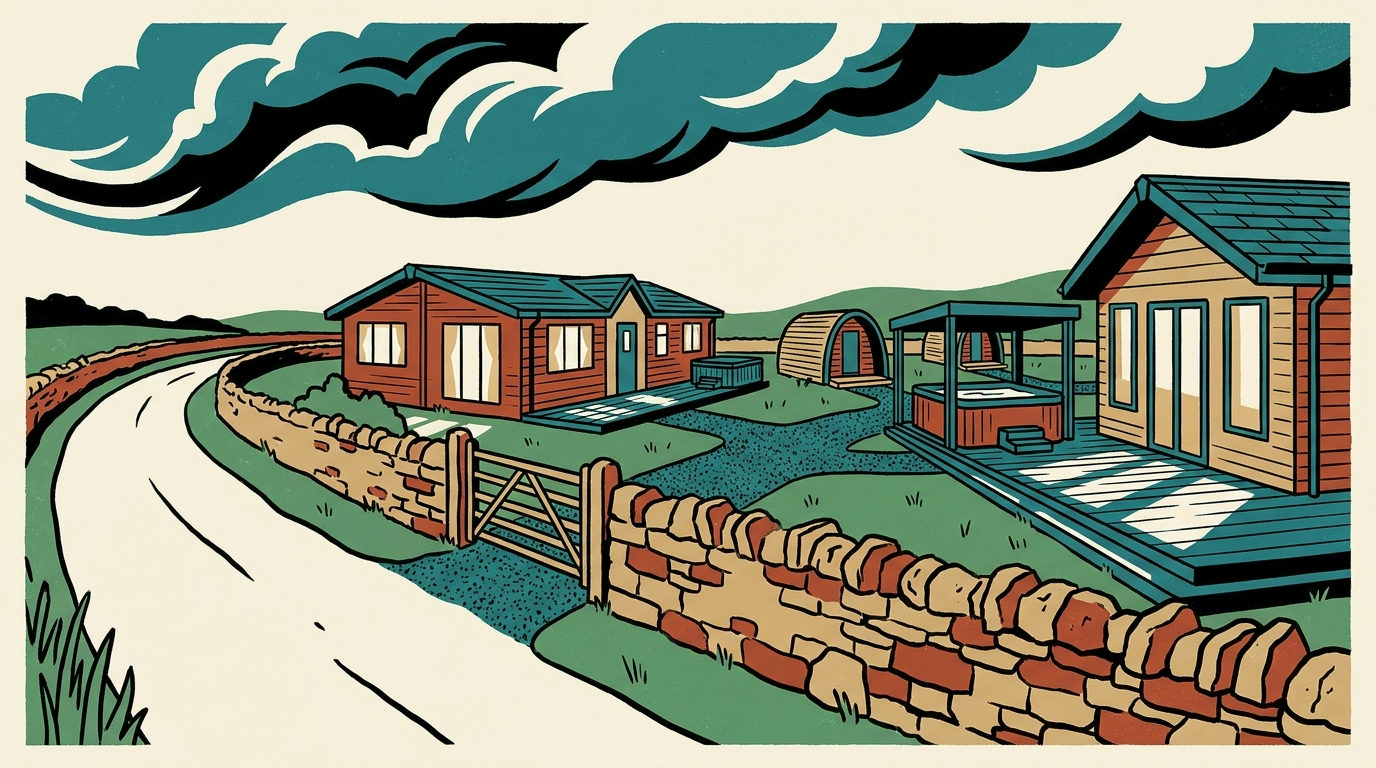
When a hospitality asset changes hands in the British countryside, the headline price tag almost always conceals a quiet arithmetic duel between sweat equity and financial capital. On Old Military Road in the village of Croftamie, just inside the boundary of Loch Lomond and The Trossachs National Park, a boutique compound of eight self-catering properties has arrived on the market through commercial brokerage CCL Property for £1.75 million. The compound, operating under the trading name Lomond Luxury Lodges, occupies roughly 1.8 acres of manicured grounds and represents the archetype of modern micro-hospitality: a balanced mix of detached timber lodges, self-contained apartments, glamping pods, private hot tubs, and saunas designed to siphon premium rates out of weekend escapists from Glasgow, Edinburgh, and south of the border.
On paper, the business demonstrates the post-pandemic resilience that suburban-fringe destinations have enjoyed. In the financial year ending 30 June 2025, Lomond Luxury Lodges generated £336,527 in turnover and delivered a calculated earnings before interest, taxes, depreciation, and amortisation (EBITDA) of £130,179. That performance marks healthy growth over its 2023 performance, when revenue stood at £300,346 against an EBITDA of £98,712. The underlying trajectory reflects a nearly 32 percent surge in operational earnings across a two-year stretch marked by relentless utility inflation, shifting domestic consumer habits, and structural regulatory shifts across the Scottish tourism sector.
Yet to understand whether a £1.75 million price tag represents an accessible commercial opportunity or a cautionary study in valuation multiples, one must strip away the manicured lawns and look hard at the balance sheets, the labour hours, and the statutory maze confronting short-term rentals across Scotland. The sale in Croftamie is not merely an isolated commercial real estate transaction. It is a benchmark test of what an independent, owner-operated hospitality compound is actually worth in an era when passive money demands institutional returns while local governments demand institutional compliance.
What happened
CCL Property officially launched marketing for Lomond Luxury Lodges, pitching the eight-key estate as an established going concern with substantial upside. The physical portfolio is anchored by Oakwood House, a four-bedroom primary residence capable of accommodating eight adults and two children. Flanking the main house are three three-bedroom detached lodges, two self-contained apartments (including one marketed as the Wee Secret, equipped with an indoor spa bath), and two pods aimed at the couple and short-break demographic. High-margin wellness infrastructure is distributed across the parcel: multiple units feature private hot tubs, two of the lodges house dedicated saunas, and private outdoor decking breaks up the site to protect guest privacy.

The trading history reveals consistent expansion in both top-line revenue and net operating margins. Operating across third-party distribution channels—principally Airbnb, Booking.com, and Vrbo—alongside an established proprietary direct-booking portal, the business converted its £336,527 gross revenue into £130,179 in calculated EBITDA for the trailing twelve months ending June 2025. The broker highlights that the enterprise is currently owner-operated with the operational assistance of part-time cleaning personnel, while openly noting that any incoming purchaser seeking a detached, arm-length investment model would need to introduce delegated management, inevitably eroding that headline EBITDA through additional wage costs.
CCL also laid out familiar growth avenues for an incoming buyer, pointing toward untapped midweek demand, targeted shoulder-season packages, the expansion of direct repeat bookings, and potential physical densification of the 1.8-acre plot. However, the listing carries a mandatory caveat: any physical expansion or addition of further lodging capacity remains strictly subject to obtaining formal planning consent from the Loch Lomond and The Trossachs National Park Authority, an administrative body notorious for its rigorous conservation policies.
The owner-operator illusion and the real cost of replacement labour
Every commercial hospitality listing that touts calculated EBITDA while noting that the business is owner-operated contains a built-in trap. When owners handle day-to-day administration, guest communication, maintenance triage, supplier logistics, and operational oversight, those operational hours rarely appear as a market-rate wage line on the profit-and-loss sheet. Instead, hundreds of hours of executive and manual labour are collapsed directly into net margin. The moment a commercial buyer looks at the £130,179 return and attempts to underwrite it as a passive yield vehicle, the math undergoes violent compression.
Consider what it actually takes to run an eight-unit rural leisure complex without personal physical intervention. You need on-call property management, rapid-response maintenance for high-stress assets like saunas and hot tubs, check-in logistics, and hands-on supervision of part-time housekeeping crews across rolling changeover days. In the current rural UK employment market, securing a competent residential general manager or an external hospitality management company commands between £35,000 and £50,000 annually, not including payroll taxes, pension contributions, or management fee percentages. Deduct that single commercial reality from the £130,179 EBITDA, and your operative earnings immediately collapse into the £80,000 to £95,000 bracket.
At an asking price of £1.75 million, a business throwing off an unadjusted £130,179 represents an entry yield of approximately 7.44 percent, or a purchase price roughly 13.4 times calculated EBITDA. That multiple might make sense for prime residential property in an appreciating micro-climate, but for an active, weather-dependent leisure business, a 13.4x earnings multiple is remarkably steep. Once delegated management is factored in, the yield on asking drops toward five percent. That is a razor-thin return for an operational asset carrying physical depreciation risk, platform dependency, and high utility overheads, especially when risk-free sovereign debt and simple commercial ground leases have spent the last two years offering competitive yields with zero operational friction.
The seller is effectively asking the market to capitalise both the real estate and the unpaid labour of the founding operators. For a lifestyle buyer—a couple or family seeking to relocate to Croftamie, inhabit the four-bedroom Oakwood House as a primary residence, and trade their personal time for that £130,000 cash flow—the figures can work pleasantly. Oakwood House provides built-in owner housing, eliminating personal rent or external mortgage costs. But for property investors sitting in London, Manchester, or Edinburgh looking to aggregate short-stay portfolios, the Croftamie listing illustrates the persistent valuation divide between lifestyle balance sheets and institutional capital requirements.
The listings agent openly acknowledged the fork in the road: a buyer can retain the existing owner-led structure or transition to managed operations. What is left unsaid is that the sale price is anchored to the former, while modern portfolio capital only pays for the latter.
The Scottish regulatory labyrinth and planning frictions
Any investor pricing a short-term rental business in Scotland without accounting for the profound transformation of the Scottish regulatory environment is walking into a financial minefield. Over the past three years, Holyrood has engineered the most comprehensive and restrictive statutory framework for short-term lets in the British Isles. The nationwide licensing scheme, established under the Civic Government (Scotland) Act 1982 (Licensing of Short-term Lets) Order 2022, ended the era of informal holiday rentals. Every operational property must hold an active licence issued by the relevant local licensing authority, demanding strict compliance across fire safety, legionella risk assessments, electrical installation condition reports, and public liability cover.
More critically, licensing in Scotland is tethered directly to town planning. In areas designated as Short-Term Let Control Areas—most visibly across the City of Edinburgh, but increasingly mirrored in planning policies adopted by rural councils and conservation authorities—operating an entire-dwelling commercial let requires express planning permission for material change of use, or unassailable proof of ten years of continuous, lawful commercial operation through a Certificate of Lawfulness. For an eight-unit complex like Lomond Luxury Lodges, ensuring that every single unit, from Oakwood House down to the newest luxury pod, possesses clean, incontestable planning consent and an active local authority operating licence is paramount.
Prospective purchasers must also reckon with the local planning authority itself. Croftamie does not sit under a generic rural council with relaxed development quotas. It falls squarely under the jurisdiction of the Loch Lomond and The Trossachs National Park Authority. The National Park has strict statutory duties to conserve natural heritage, protect rural amenity, and prevent unsustainable development pressures across surrounding communities. The broker’s marketing material notes that any development of additional accommodation on the 1.8-acre footprint would be subject to planning permission. In the real world of national park administration, securing approval for additional letting units, expanded parking lots, or new utility ties is rarely straightforward.
National park planners scrutinise traffic flow along historic corridors like Old Military Road, water drainage, dark skies policies, tree preservation zones, and the cumulative impact of tourism commercialisation on local housing availability. To price this property on the speculative assumption that an incoming owner can drop another four pods into the landscaped grounds is to ignore how aggressively Scottish conservation planning opposes high-density tourist intensification in sensitive green belts.
The seller is effectively asking the market to capitalise both the real estate and the unpaid labour of the founding operators.
The high-amenity trap: hot tubs, saunas, and lifecycle capex
A major reason Lomond Luxury Lodges managed to push its annual turnover from £300,346 in 2023 to £336,527 in 2025 is amenity density. The portfolio is deliberately engineered around experiential short breaks: private hot tubs across multiple units, dedicated saunas in two lodges, and an indoor spa bath inside the Wee Secret apartment. In the platform era, these are the exact algorithmic search filters that convert browsing guests into paying customers. Vrbo and Airbnb data consistently confirm that listings featuring hot tubs command premium average daily rates (ADRs) and enjoy significantly higher off-peak occupancy than comparable properties without wellness hardware.
Yet what generates booking momentum on the front end creates operational friction on the back end. Private hot tubs are among the most operationally demanding, capital-intensive amenities a property manager can deploy. In the UK, commercial holiday-let hot tubs fall under the stringent health and safety guidelines outlined in the Health and Safety Executive’s publication HSG282. This is not casual domestic spa maintenance. HSG282 dictates full water drainage, shell sanitisation, refilling, and chemical balancing between every single guest turnover, alongside documented microbiological testing for legionella and pseudomonas.
When a site operates eight units with multiple hot tubs and saunas, the operational toll escalates rapidly:
- Water and energy costs skyrocket. Heating hundreds of gallons of water from ambient outdoor temperatures to 38 degrees Celsius during cold Scottish winters consumes immense kilowatt-hours. In an era of elevated non-domestic energy tariffs across the UK, spa heating can easily consume five to ten percent of gross revenue if heating cycles are mismanaged.
- Housekeeping changeover windows are tightly squeezed. Draining, scrubbing, refilling, and bringing a tub back up to operational temperature between an 11:00 AM check-out and a 3:00 PM check-in demands sophisticated drainage pumps, commercial water pressure, and disciplined cleaning teams. If the water is lukewarm when the guest arrives, customer satisfaction collapses instantly, sparking platform refund claims.
- Depreciation schedules are brutal. Domestic-grade spa units placed in commercial self-catering environments suffer accelerated wear. Chemical wear, pump failures, cover damage, and heater burnouts dictate an asset lifespan of three to five years, rather than the decade expected by private domestic owners. Ongoing sinking funds for plant equipment replacement must be carved directly out of free cash flow.
The calculated EBITDA of £130,179 looks respectable in isolation, but an experienced operator will immediately calculate the deferred capital expenditure required to keep timber lodges, cedar barrel saunas, hot tub motors, and decking surfaces in marketable condition under wet Scottish weather conditions. In highland fringe environments, timber treatments and mechanical maintenance are perpetual balance-sheet deductions, not one-off events.
Platform reliance versus direct-booking sovereignty
The operational brief for Lomond Luxury Lodges notes that bookings are currently harvested across a hybrid channel mix: direct proprietary bookings alongside major online travel agencies, specifically Airbnb, Booking.com, and Vrbo. Channel diversification is the baseline requirement for modern short-term rental survival, but the balance between those channels determines the real underlying health of the enterprise.
Third-party platforms bring immediate global demand, automated payment processing, and protection against local advertising failure. But they extract a heavy toll in merchant commissions and structural vulnerability. Between host service fees and guest fees, OTAs extract anywhere from 15 to 25 percent of the total transaction value out of the guest’s pocket or the host’s gross distribution. When an asset generates £336,000 in gross receipts, a 10 percent shift in bookings from direct channels toward third-party OTAs can wipe out tens of thousands of pounds in net earnings. Booking.com and Airbnb also retain sovereign control over cancellation arbitration, ranking algorithms, and display prominence. A single algorithmic adjustment or a policy update can depress search visibility overnight.
The broker specifically highlighted the expansion of direct bookings, targeting repeat visitors, and driving shoulder-season demand as primary growth paths for a buyer. This is standard brokerage rhetoric, but converting it into balance-sheet cash flow requires substantial digital marketing expenditure. Direct bookings do not materialise spontaneously in the modern vacation market. They require active search engine marketing, email database nurture sequences, high-performing website infrastructure, professional brand equity, and loyalty incentives strong enough to persuade a holidaymaker to bypass the consumer protections offered by Airbnb or Booking.com.
Furthermore, capturing midweek demand in Croftamie—outside the standard Friday-to-Sunday weekend leisure run—requires breaking out of the leisure tourist mould entirely. Midweek corporate retreats, remote-work long stays, and regional wedding guests demand different marketing funnels, commercial outreach, and service propositions. If the existing operators have already captured the low-hanging fruit of local weekend getaways, squeezing additional revenue out of Tuesday and Wednesday nights in November demands real tactical execution, not simply adjusting dynamic pricing toggles.
Tax headwinds: the death of the Furnished Holiday Lettings regime
No analysis of the UK self-catering property market can proceed without confronting the fiscal earthquake triggered by Westminster’s macroeconomic policy shifts. The holiday let market in Britain was supercharged for decades by the Furnished Holiday Lettings (FHL) tax regime. Under the legacy FHL rules, owners of qualifying holiday accommodation enjoyed privileged tax advantages that traditional buy-to-let residential landlords could only dream of: full deductibility of mortgage interest against rental profits, generous capital allowances for furniture, fixtures, fittings, and equipment (such as expensive hot tubs and saunas), and valuable capital gains tax reliefs upon eventual disposal, including Business Asset Disposal Relief.
The abolition of the FHL regime fundamentally alters the investment underwriting for multi-unit properties across England, Wales, and Scotland. Without FHL status, individual investors face restricted mortgage interest relief, shifting capital allowances, and altered tax liabilities upon exit. For an unincorporated private buyer funding a £1.75 million purchase through commercial debt, the removal of full finance cost deductibility changes the post-tax net yield calculation completely.
To navigate this landscape, commercial assets of this scale increasingly require acquisition through corporate holding structures (Special Purpose Vehicles or commercial trading companies). Corporate wrappers shield the asset from individual income tax bracket spikes and allow full deduction of commercial debt interest, but they introduce corporation tax liabilities, stamp duty complications (such as Scotland’s Land and Buildings Transaction Tax, alongside the Additional Dwelling Supplement where applicable), and accountancy compliance expenses. A purchase price that might have looked attractive to a private investor under the tax landscape of 2021 must now be justified under the much harsher fiscal realities of the current UK tax code.
Moreover, business rates valuation remains an ongoing risk. In Scotland, self-catering units that meet statutory letting day thresholds are assessed for non-domestic rates rather than council tax, historically qualifying for relief under the Small Business Bonus Scheme depending on rateable values. As local authorities and the Scottish Government face immense budgetary pressures, non-domestic rating thresholds and relief criteria are subjected to perpetual political reassessment. A prospective buyer must model out potential fiscal drag across local rates, water charges, and national corporate taxation before declaring that £130,179 EBITDA safe.
Comparable markets: from the Scottish Highlands to the Lake District
The valuation tension visible in Croftamie is not an isolated Scottish anomaly. It mirrors commercial transactions occurring across every prime national park and protected leisure corridor in the United Kingdom, from Cumbria’s Lake District to the Cotswolds and the Cornish coast. Across all these premium rural enclaves, the commercial holiday-let sector has transitioned from an informal cottage industry dominated by hobbyist owners into a mature, highly politicised asset class.
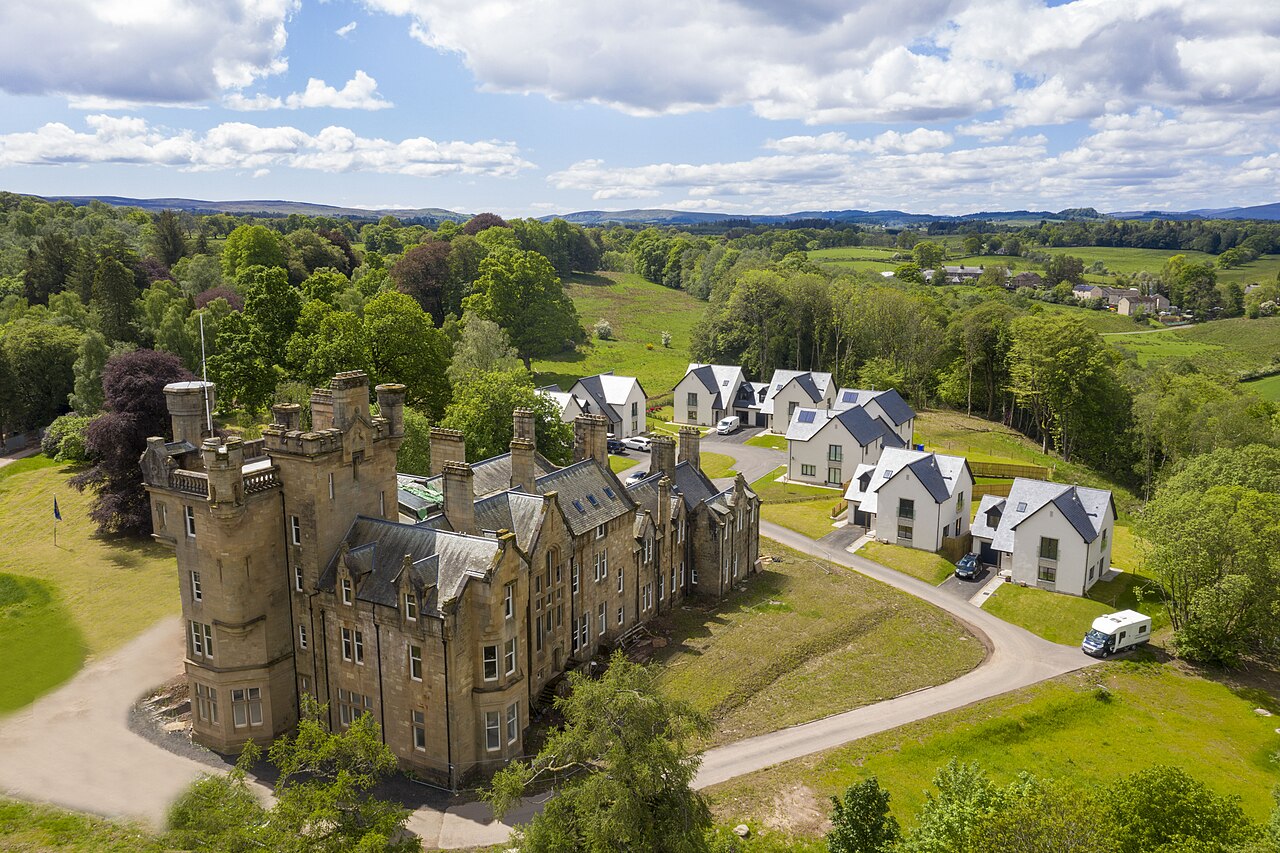
In the Lake District, for instance, commercial micro-compounds featuring four to ten lodges with hot tubs have historically commanded transaction multiples between 10x and 14x EBITDA, driven by intense domestic tourism demand from the north-west of England. However, brokers in those northern English markets have consistently noted a bifurcation in liquidity: properties that rely on heavy owner involvement linger on the market for months, whereas turnkey operations with self-sustaining operational teams, dedicated linen contracts, automated access systems, and proven direct-booking loyalty sell swiftly to boutique hospitality aggregators.
In Cornwall and Devon, shifting council tax premiums and threatened planning use-class changes (separating short-term holiday lets from primary residential properties) have chilled institutional appetite for scattered single-family units. Instead, institutional capital is pivoting almost exclusively toward cohesive, multi-unit gated complexes—precisely like Lomond Luxury Lodges—where scale provides operational efficiencies in cleaning, site maintenance, and guest management. Single buy-to-let apartments on city fringes are increasingly unprofitable under local licensing and tax rules, making multi-key rural compounds the preferred vehicle for professional holiday-let capital.
The Croftamie asset benefits from geographic proximity. Situated on the south-eastern boundary of Loch Lomond, the site sits roughly a 40-minute drive from central Glasgow and under an hour and a half from Edinburgh. This proximity insulates it from the catastrophic seasonality that afflicts the deep Scottish Highlands or remote islands, where winter occupancy falls off a cliff. A couple from Glasgow or Stirling can easily justify a two-night winter weekend break to a lodge with a private hot tub and sauna, preserving baseline cash flows through November, January, and February. This geographic advantage is clearly reflected in the business’s EBITDA expansion from £98,712 in 2023 to £130,179 in 2025.
The buyer's dilemma: three paths forward
When the broker reviews bids for Lomond Luxury Lodges, the offers will inevitably break down into three distinct operational profiles, each with an entirely different cost structure, return threshold, and valuation logic.
1. The Lifestyle Relocator
This profile represents the traditional purchaser of British country guest houses and holiday complexes. It is a family or retiring couple seeking a rural life change. For this buyer, the four-bedroom Oakwood House solves their personal housing requirement, eliminating the need to purchase an independent £400,000 to £600,000 home in the area. They intend to clean, garden, manage linen drop-offs, answer Airbnb guest messages at 10:00 PM, and maintain the hot tub chemicals with their own hands. To them, the £130,179 EBITDA is not a commercial return on invested capital; it is a comfortable, combined household income linked to a beautiful home on 1.8 acres. They will pay close to the £1.75 million asking price because they are blending personal residential utility with commercial enterprise.
2. The Regional Multi-Operator
This buyer already owns fifteen, thirty, or fifty short-term rental keys across Central Scotland, Perthshire, or the Trossachs. They already employ full-time maintenance vans, centralised housekeeping managers, customer service teams, and revenue managers running algorithmic pricing software across Airbnb and Vrbo. For this buyer, Croftamie does not require hiring an expensive on-site manager; it simply absorbs existing overhead. The eight units achieve scale economies within an existing operational machine. This buyer will run the numbers clinically, strip out marketing inefficiencies, and attempt to discount the purchase price to 8x or 9x true adjusted EBITDA, aiming for an acquisition near the £1.3m to £1.45m range.
3. The Private Equity Micro-Fund or Aggregator
This class of capital treats the site as an alternative asset yield vehicle. They will demand third-party management, institutional financial reporting, comprehensive health and safety indemnities, and fully ring-fenced operational governance. Under this model, the operational yield must clear debt financing costs (which sit well above historic lows) while providing an equity cushion. To an institutional fund manager, paying £1.75m for an unadjusted £130k EBITDA is an immediate deal-breaker. They will either pass entirely or submit heavily conditioned offers contingent on planning approvals for density expansion, attempting to add more pods to force the site’s gross revenue past £500,000.
The quiet operational realities of multi-unit hospitality
Beyond the spreadsheets, the day-to-day reality of operating an eight-key leisure retreat requires iron discipline. In marketing materials, an eight-unit site is framed as a relaxed, passive enterprise. In reality, it is a micro-resort operating 365 days a year. Consider the physical components detailed in the listing:
- Diverse asset typology: Managing Oakwood House (which sleeps up to ten people), three three-bedroom lodges, two self-contained apartments, and two pods means juggling four distinct customer cohorts simultaneously. The family group celebrating a multi-generational birthday in Oakwood House has entirely different noise tolerances, check-in questions, and service expectations than the couple booking a weekend in a luxury pod or the guests soaking in the Wee Secret apartment’s indoor spa bath. Managing site acoustics and visual privacy across 1.8 acres of shared landscaped grounds is an active, ongoing responsibility.
- Turnover complexity: A standard check-in window between 10:00 AM and 4:00 PM requires synchronised cleaning across eight kitchens, multiple bathrooms, private saunas, outdoor decking spaces, and high-turnover hot tubs. A single delayed turnaround or a mechanical failure on a hot tub heater cascades across the entire afternoon, leading to negative early-stay guest reviews that damage platform algorithms.
- Seasonality management: While central Scotland benefits from year-round domestic demand, the operational margins are won or lost between November and March. Successfully driving occupancy during dreary winter weeks requires aggressive packaging, partnerships with local attractions, and dynamic pricing strategies that stimulate bookings without completely collapsing the brand’s average daily rate.
The transition from 2023 to 2025 demonstrates that the current operators have successfully mastered these operational friction points. They grew revenue by over £36,000 and expanded EBITDA by more than £31,000 across that two-year window, showing clear pricing power and cost discipline during an inflation crisis. Any incoming purchaser who fails to respect the operational competence required to deliver those figures will see their profit margins deteriorate long before their first annual accounts are filed.
What hosts should do now
The sale of an established eight-unit compound in Loch Lomond provides clear, actionable lessons for any host or property manager looking to scale their business, prepare an asset for sale, or underwrite an acquisition in a tightened market.
- Separate owner sweat equity from operating margins immediately: If you plan to market your short-term rental business as a going concern, build an explicit market-rate management fee into your management accounts. Buyers who understand commercial finance will discount your EBITDA the moment they see you scrubbing floors or answering guest messages; auditing your own operational hours prevents brutal valuation write-downs during legal due diligence.
- Audit all planning consents and licensing paperwork: In high-scrutiny jurisdictions like Scotland, ensure that every physical structure—especially pods, converted outbuildings, and glamping annexes—holds unequivocal planning permission and up-to-date short-term let operating licences. An unpermitted pod or an unresolved licensing query will halt commercial lending and kill a sale at the eleventh hour.
- Quantify your amenity operating costs and sinking funds: Hot tubs, saunas, and spa equipment drive bookings, but their capital depreciation and energy consumption can quietly gut profitability. Track utility use per unit and establish ring-fenced replacement reserves so lifecycle capex does not come as a balance-sheet surprise.
- Build your direct-booking moat before you look for an exit: If eighty percent of your bookings arrive through Airbnb, Booking.com, and Vrbo, you do not own an independent hospitality brand; you own a customer service contract with third-party tech platforms. Cultivate an active guest database, run automated post-stay rebooking campaigns, and drive your direct-booking share north of 30 percent to demonstrate true commercial durability to prospective buyers.
- Structure acquisitions for the post-FHL tax environment: Work closely with commercial tax advisors to determine whether purchasing holiday-let assets through corporate wrappers or special purpose vehicles makes sense under current tax regimes. Factoring in finance cost restrictions, non-domestic rates liabilities, and capital allowances early in the underwriting process prevents catastrophic post-acquisition tax surprises.
The £1.75 million sale in Croftamie proves that prime holiday-let assets remain viable, tradeable commercial real estate. But the era of easy multiples and casual accounting is firmly over. In today’s market, value belongs entirely to those who treat short-term rentals not as passive property investments, but as precision hospitality operations.


Read the desk every morning.
The day's crackdowns and platform moves, the money, the design and the stays going viral, plus the desk's verdict, in one short email every morning.